Louisiana and the First Amendment, redux
April 28, 2014 § 7 Comments
Last week, the Louisiana politician who proposed making the Holy Bible the official book of the Pelican State withdrew his proposal before it went to the state House of Representatives for a vote. Originally, Thomas Carmody, a Republican from Shreveport, had intended to make a specific copy of the Bible, housed in the state museum the official book, but his colleagues in the House had other ideas, and amended his legislation to make the Bible itself the official state book, not just a specific copy.
Carmody withdrew his legislation, stating that it had become a distraction.
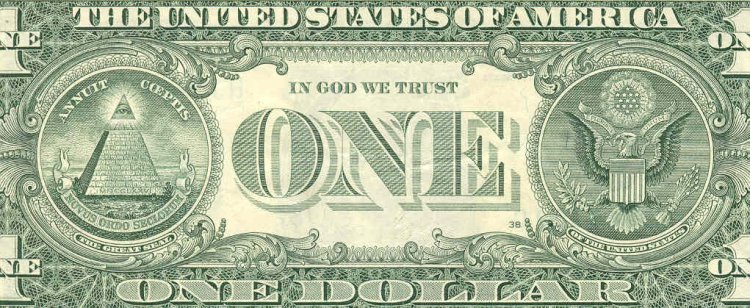
I wrote about this last week, raising questions of the First Amendment’s injunction against an established religion. In the meantime, following a spirited discussion in the comments, I spent more time digging deeper into the issue of religion and the state in the United States. I’ve always found this topic interesting, given the First Amendment’s injunction against established religion, and the Founding Fathers’ well-known suspicion of religion itself. At the same time, of course, the dollar bill in my pocket states, on its back, “IN GOD WE TRUST.” Of course, there is a difference, as the Founding Fathers well knew, between a belief in God and religion. Jefferson himself was a life-long religious skeptic, though he maintained his faith from cradle to the grave.
 The New Orleans Time-Picayune quotes a few legal scholars, who seem to be of the opinion that the now-scrapped legislation isn’t worth getting excited about, as it has no real value, it cannot lead to the establishment of religion or the enforcement of religion. Yet, in withdrawing his legislation, Carmody noted that it could’ve caused “some constitutional problems.”
And this is what I find interesting. From my own deeper reading of the issue over the past week, as well as what the legal scholars quoted in the Times-Picayune said, it does appear this was really just a tempest in a teapot. And yet, both Carmody and the New Orleans Democrat Wesley Bishop (holder of a J.D.) appear to be confused about the meaning of the First Amendment in real terms.
The Suburbanisation of Punk and Hip Hop
April 23, 2014 § Leave a comment
Questlove, the drummer and musical director of the hip hop band, The Roots (and frankly, if you don’t know just who in the hell The Roots are by now, I’m not sure there’s any hope for you), is writing a six-part series of essays on hip hop, its past, present, and future at Vulture. Not surprisingly, Questlove makes an eloquent argument in part one about the ubiquity of hip hop culture and the dangers that poses to Black America in the sense that if the powers that be wish to quash it, the ubiquity of it is all-encompassing and a quashing would be similarly so. But he also points out the dangers of the all-encompassing nature of hip hop culture.
I like Questlove’s point about the ubiquity of hip hop culture, which means that it’s no longer visible, it’s just everywhere. He also notes that it’s really the only music form that is seen to have this massive cultural phenomenon attached to it: food, fashion, etc. He says that this applies to pretty much anything black people in America do (he also wonders what the hell “hip hop architecture” is, as do I). But I think this goes beyond black America, such is the power of hip hop and the culture that follows it.
There is a relatively long tradition of white rappers, from 3rd Bass and the Beastie Boys up to Eminem and others, and the vast majority of white rappers have deeply respected the culture. More than that, as a white kid growing up in the suburbs in the late 80s, I was totally into hip hop, as were all my friends. This could get stupid, as when guys I knew pretended that life in Port Moody was akin to Compton, but, still. My point is that hip hop music, fashion, and culture has permeated the wider culture of North America entirely (something I don’t think Questlove would disagree with, but it’s irrelevant to his argument).
The only other form of music that has an ethos and culture that follows it, really, is punk. Punk and hip hop are spiritual brother movements, both arise from dispossessed working class cultures. Both originally emerged in anger (think of the spitting anger of Grandmaster Flash and the Furious Five in “The Message” or the Sex Pistols in “Anarchy in the UK”) and were heavily political and/or documented life on the downside. But, both also went viral, both exploded out of their original confines and went suburban and affluent.
Punk and hip hop are the two musical forms that informed me as a young man, they continue to do so as I hit middle age. But punk and hip hop are both deeply compromised by sinking into the affluent culture of middle class suburbia. The anger is blunted, the social message is reduced, and it becomes about “bitches and bling,” whether in hip hop (pretty much any song by Jay-Z) or punk (pretty much any song by The Offspring, Avril Lavigne, Blink-182, or any pop-punk band you hear on the radio). And then these counter-culture voices become the culture, and, as Questlove notes, they become invisible in their ubiquity. But more than that, the ethos they bring is divorced from their origins.
Questlove talks about the social contract we all subscribe to. He references three quotes that guide his series (and, I would guess, his life in general). The first comes from 16th century English religious reformer, John Bradford, who upon seeing another prisoner led to the gallows, commented, “There but for the graces of God goes John Bradford.” The second comes from Albert Einstein, “who disparagingly referred to quantum entanglement as ‘spooky action at a distance.'” Finally, Ice Cube, the main lyricist of N.W.A. (yes, there was once a time, kids, when Cube wasn’t a cartoon character), who, in the 1988 track “Gangsta Gangsta,” delivered this gem, “Life ain’t nothing but bitches and money.” Questlove also notes that Cube is talking about a world in which the social contract is frayed, “where everyone aspires to improve themselves and only themselves, thoughts of others be damned. What kind of world does that create?”
And herein lies the rub for me, at least insofar as the wider culture of hip hop and punk and their suburbanisation. If you take the politics and intelligence out of punk and hip hop, you’re left with the anger, and a dangerous form of nihilism. We’re left with Eminem fantasising about killing his wife and his mother. Charming stuff, really.
This is not to say there is no place for bangers in hip hop culture, nor is to say there’s no place for the Buzzcocks (the progenitors of pop-punk in the late 1970s), it just means that this is a many-edged sword.
Louisiana and the First Amendment
April 17, 2014 § 12 Comments
It seems that the Louisiana House of Representatives is poised to vote on a measure that would designate the Holy Bible as the “official state book” of Louisiana. Technically, this would have as much weight as the designation of the brown pelican as the official state bird of Louisiana. But, in practice, this would pack a major wallop.
But is it legal? The First Amendment of the Constitution states:
Congress shall make no law respecting an establishment of religion, or prohibiting the free exercise thereof; or abridging the freedom of speech, or of the press; or the right of the people peaceably to assemble, and to petition the Government for a redress of grievances.
And while this refers specifically to the United States Congress, the Constitution of the United States applies to the states and local governments as well (similarly, the constitutions of the various states can impact upon federal law and practices). In other words, the designation of the Holy Bible as the Official State Book of Louisiana appears to violate the part of the First Amendment that reads “Congress shall make no law respecting an establishment of religion,” in that it appears to give preferential treatment to Christianity over all other religions.
Louisiana is an overwhelmingly Christian state insofar as religious identification goes. Somewhere around 90% of the state’s population identifies as Christian. The next religious identification is no religion, at 8%, while Muslims, Buddhists, and Jews are all less than 1% of Louisiana’s population. So clearly Louisiana is a Christian state in practice. But, I’m not entirely sure it can identify as such officially.
Before someone gives me hell for saying that opposition to the Bible being designated the official book of Louisiana tramples religious freedoms, it doesn’t. That’s not how “the free exercise” of religion works under the Constitution. The free exercise of religion does not grant the right to trample upon others’ rights, nor does it allow for official religions. The First Amendment simply states that the state itself cannot impede on the free practice of religion. However, the courts maintain the right to mediate what religion actually is and how it might be practiced.
The measure has yet to pass the House of Representatives, let alone the state Senate, though I’m sure Governor Bobby Jindal would sign it into law. IF that were to happen, it will be interesting to see what comes next, whether the ACLU or any other organisation would threaten legal action. And if it were to get as far as the Supreme Court, even with the court’s recent right turn (the Roberts court has been remarkably centrist), I don’t see how it could uphold such a move by the Louisiana state government.
I find this larger discussion of the Constitution interesting given my new research project, which examines the role of history and memory in far right political circles in the United States. Central to this project is an understanding of the Constitution, as well as the intentions of the men who wrote it in Philadelphia in the summer of 1787 and its subsequent implementation, practice, and interpretation since.
The Demeaning of Language
April 15, 2014 § 5 Comments
Slavery is, by definition, a condition where one human being is owned by another. The condition of African Americans in the US South prior to the Civil War was one of slavery. Slavery is NOT an unpaid internship. It is NOT working a bad McJob. It is also not what happened to African Americans after the Civil War in the South.
After the war, many allegedly free African Americans were made to work on the same plantations they had been enslaved upon. They were not paid. They were viciously, and cruelly exploited. Their civil rights were deeply and fundamentally violated. And this is a stain on American history that is not spoken of. The standard narrative is that the slaves were freed and that was the end of that. But this status of allegedly free African Americans after the Civil War in the South was not slavery.
There is a fine distinction to be made here between the ownership of someone else’s person and the exploitation of someone else’s body or economic power. A slave has next to no rights. Slave owners in the pre-Civil War South were free to buy and sell their slaves at will. They had almost free range to do whatever they wished with and to their slaves. Men violated and raped their female slaves. Men beat and savaged their male slaves. Slave owners broke up families because they could (see my post on the Carolina Chocolate Drops for a powerful story of a freed slave woman).
The allegedly free African Americans after the war, forced to work on the same plantations they had been enslaved on, were not slaves. They were personally free, even if that freedom amounted to less than a hill of beans.
My college is hosting a partial film-screening of Sam Pollard’s 2012 film, Slavery By Another Name, this week, along with a talk by Rebecca Hill, an historian at Kennesaw State University in Georgia. I fully understand Pollard’s rhetorical point in his documentary. The term “slavery” is one of the few that still has the power to shock, and Pollard capitalises on that in drawing audiences in for his documentary and exposure of a more or less forgotten period of American History. This is a documentary that all Americans and anyone with an interest in American Civil Rights should see.
But the problem is that when we use words like this, we demean their meanings, and lessen their impact. Take, for example, the term “fascism.” That term is thrown around like it means nothing in political circles in both Canada and the USA, by all sides, to describe anyone and anything the speaker might disagree with. In the end, “fascist” doesn’t really mean much anymore, and has no shock value. That is not a good thing.
The same thing will happen with the words “slave” and “slavery,” too. Especially if otherwise well-off white, college-educated young men and women continue to use those terms to describe their unpaid internships, or if we continue to describe the plight of adjuncts in the academy as a form of slavery.
Language is symbolic. We use words to describe concrete and abstract theories and ideas. They are meant to be symbolic for the theories, ideas, and things we are describing. Language is obviously how we communicate, and if we demean and cheapen our words to the point where they lose their meaning, I’m not entirely sure how we communicate at all.
J’Accuse Mme Marois
April 8, 2014 § 1 Comment
Last night’s Québec election was about the worst outcome imaginable, as far as I’m concerned. The Parti libéral du Québec won a majority, with 70 seats in the National Assembly. The PLQ also took 42% of the popular vote. The Parti québécois got the clock cleaning it deserved, reduced to 30 seats and a scant 25% of the popular vote. Pauline Marois also lost her seat. The third place finisher was the Coalition pour l’avenir du Québec, with 22 seats and 23% of the popular vote. And finally, Québec solidaire is bringing up the rear with 3 seats and 8% of the popular vote.
The upside is the contemptible Marois is out of office and out of the National Assembly. But that’s about as far as it goes for me. Two years ago, Montréal streets were full of hundreds of thousands of protesters. The protests began when then-PLQ Premier Jean Charest declared he would lift the tuition freeze in Québec and let tuition rise. Students protested. I felt, as a professor, it was my duty to join them, to ensure that they would continue to enjoy first class education at an affordable price. A generation ago, it was my generation fighting for the right to an affordable education, this was their turn. But they needed help. But then Charest went whole hog on the protesters, and began denying their civil rights, declaring it illegal for protesters to cover their faces, amongst other things. And the Service de police de la Ville de Montréal weren’t exactly excited about allowing citizens their right to protest, quickly declaring protests illegal as an excuse to kettle, arrest, and otherwise abuse protesters. This was the tipping point, however. This is when something beautiful happened in Québec: the people came out to join the students. Not just professors, but the average Quebecer was out there, appalled at M. Charest for denying the students their rights.
This movement got dubbed the Printemps erable, a play on the Arab Spring across the world. There are all kinds of problems with this appellation, of course. Quebecers weren’t getting shot in the streets, our lives were not in danger, we were not a stifled populace under a brutal dictatorship, as in Egypt and other places.
There was a provincial election campaign in the midst of all of this. Pauline Marois got out there on the streets, wearing the carré rouge, the sign of protest, promising to undo Charest’s sins. One of the students’ leaders, Léo Bureau-Blouin, ran for the PQ in a Montréal area riding. Marois rode the tide of protest to office, though with a minority government. And almost immediately, she changed her tone. Amongst her greatest sins was the Charte des valeurs, which was to impose la laïcité on Québec, which, as I noted yesterday, in and of itself is not a bad thing. But when it’s used to target Jews and Muslims, well, then there is a problem. And in the wake of Marois’ declaration of the charte, anti-Semitic and anti-Muslim activity increased in Québec, especially in and around Montréal. Ugly times had returned.
Marois staked her case for re-election on the charte. She thought that by denigrating every single Quebecer, by appealing to the lowest common denominator, by loudly declaring that Québec is an intolerant society, she could win a majority. Happily her cynical move failed. And now she is just another failed politician. I hope she loses sleep over this.
What many Québec Anglophones fail to recognise is a degree of difference in the sovereignty movement. Thus, the PLQ can rely upon Anglo votes. For example, in the Wesmount-Saint Louis riding of Montréal, which is a predominately Anglophone riding, the PLQ member, Jacques Chagnon, was re-elected was 83.2% of the vote. The sovereignty movement has never been built on a push to get rid of Anglos, or to otherwise strip them of their rights. René Lévesque, the founder of the PQ and the modern sovereignty movement, was always clear on that, as has been pretty much every leader of the PQ, with the exceptions of the noted Anglophile Jacques Parizeau and Marois. In the 2000s, the sovereignty movement attempted to move more explicitly to a civic nationalism, one that was meant to include all Quebecers, irrespective of skin colour, mother tongue, or religion. But it failed.
It failed because of small-minded provincialists of the likes of Marois, Mathieu Bock-Côté, and opportunists like Bureau-Blouin. They thought they could fall back on exclusionary politics to achieve their goal of an independent Québec. Happily, they failed miserably.
But the outcome might be even worse. With Marois gone, candidates for leadership of the PQ have emerged, the early frontrunners are the detestable Pierre-Karl Péledeau and Jean-François Lisée. Péladeau is filthy stinking rich, a member of the 1% if ever there was one. Before entering politics last month, he ran Quebecor, one of the world’s largest printers, which had recently branched into media. It publishes the vile Sun chain of newspapers across Canada, as well as owning Sun TV. In Québec, he owned about 2/3 of the private broadcasters, as well as the Journal newspaper chain. Lysée is a small-minded academic.
And then there’s the CAQ. A right-wing sovereigntist party. Frankly, given the current situation, the only way I see forward is for the CAQ and the PQ to merge. The CAQ and its leader, François Legault, are mostly former PQ members anyway. And if Péledeau or Lysée are going to continue to push the PQ further to the right, there is no difference between the two parties.
In other words, the sovereigntist movement, which has long been based on a model of social justice, has abandoned that in recent years. It is this belief in social justice which led me to support sovereigntist parties in Québec more than anything. The PLQ isn’t exactly noted for its progressivism. In short, the PLQ is just another right-wing, pro-business, anti-labour, anti-social justice party. So now Québec will have three of those, which together garnered 90% of the vote last night.
And that, frankly, depresses me. And I see Pauline Marois as at the fault of this.
The Distinct Culture of Anglo Quebecers
April 7, 2014 § Leave a comment
I have been on this listserv of policy wonks and academics in Canada since sometime in the late 90s. Most of the time, I’m not entirely sure why I remain on it, a small handful of the approximately 100 people on it post, and some use it to beat their hobby horses to many, many deaths. But, occasionally, it serves its purpose and intelligent discussion breaks out about various world events, Canadian politics, and the like. Over the past couple of weeks, one of those broke out over the Québec election, which is underway right now.
This has been the most divisive provincial election I’ve seen in Québec in my lifetime, though, admittedly, the bar was set very low with the ruling Parti québécois’ ridiculous, offensive, and racist charte des valeurs, a sad attempt at laïcité. That in and of itself, is fine, and is perfectly consistent with the Euro-francophone world, but the way it was introduced in Québec, and the manner in which it targeted minorities, most notably Arabs and other Muslims, was appalling. And since then, it’s been a raise to the bottom between the PQ, the Parti libéral du Québec, the Coalition pour l’avenir du Québec, and the 4th party, Québec solidaire. For the uninitiated, the PQ is a former leftist, sovereigntist party; the PLQ is a rightist, federalist party, the CAQ is a right-wing, sovereigntist party, and QS is a largely irrelevant leftist sovereigntist party. For the record, I voted QS in 2012 and would’ve again this year if I was still living in Québec.
So, to return to this discussion on the listserv. It was between an Anglo political scientist in Montréal, a Québec sovereigntist, a lawyer in Vancouver, and myself. Three Quebecers and an Anglo Canadian. The discussion largely centred around the PQ and its fitness for government, though, interestingly, the major issue of the election campaign, the charte was largely ignored by three of the four in this discussion (I was the fourth). The political scientist advocated the continuation of the status quo, a PQ minority, the separatist wished for a PQ majority (and a subsequent third referendum on sovereignty), I suggested the PQ was not fit for government based on the charte, and the lawyer ridiculed the entire idea of sovereignty. Other issues raised included protection of the French language and culture of Québec, as well as the fading generation of sovereigntists.
Pauline Marois, the current leader of the PQ and (at least until later tonight) the premier of Québec, is 65 years old. This puts her at the younger end of the baby boomers, who were the ones who really carried the idea of sovereignty in Québec. Interestingly, support for sovereignty is much lower amongst my generation (Gen X) and the millennials. The political scientist noted this, the need for younger blood in the PQ.
I argued that to simply dismiss the PLQ as incapable of defending the French language and culture in Québec is simple-minded, and I mocked the PQ for the charte and also pointed out QS’ near irrelevance. This led the political scientist to assume I voted PLQ. My guess, though, is that my name had more to do with that than anything. I found this rather disappointing, given nearly everything I’ve ever said about Canada/Québec on this listserv has made it clear I am not a knee-jerk Anglo Montrealer (like one I got into an argument with on Twitter this weekend who seemed to be suggesting Anglo Quebecers are a deeply oppressed minority).
But the real silliness emerged with the lawyer, who appears to be of the opinion that Anglo Montrealers and Anglo Quebecers do not have anything distinct about their language and culture, as compared with the Rest of Canada. He opined that in leaving Montréal for Boston, I did not give up much, as opposed to a francophone who would give up nearly everything. I find this argument both fatuous and depressing.
Anglo Montreal, at the least, has a distinct culture, specific to location. Anglo Montreal is often regarded as a large village, as it seems that all Anglos are no more than 3 or 4 degrees of separation from each other. But, more concretely, as McGill linguist Charles Boberg has discovered, Anglo Montrealers speak a dialect of English that is heavily influenced by French and is rather distinct from the Canadian English dialect. This makes sense. English is the mother tongue of about 650,000 people in Québec as a whole. This out of a total population of over 8 million. Within Montréal, out of a total population of nearly 4 million, about 420,000 people are native English-speakers. In other words, Anglos are a small island in a sea of francophone culture (to borrow the metaphor about Québec adrift in the North American sea of Anglos). As such, Anglo Montreal and Anglo Quebec have their own distinct culture and history, shaped as it was by the simple demographic fact of minority. This is very different than the plight of Anglophones in the rest of most of North America (except for Mexico and the American Southwest).
In other words, despite what a lawyer in Vancouver believes, Anglo Montrealers have their own distinct culture, language and identity, one that is separate and distinct from Anglo Canadians in the rest of the country. There are both positives and negatives to this, of course.
But, my Vancouver lawyer isn’t unique. He represents and all-too-common view of Anglo Canadians. Quebecers are perceived to either be beyond the pale of the Rest of Canada (if we’re francophones, I once got told in southwest Ontario that I speak “good English”), or we’re just like everyone else (if we’re Anglos).
So look at that, Québec is a distinct culture all around (Allophones, or immigrants and their descendants also have their own distinct culture in Québec). It might even be a nation unto itself.
Happy St. Patrick’s Day: “Race” and the “True Celt”
March 17, 2014 § 2 Comments
I’m currently finishing off my Griffintown manuscript, and continuing the endless revisions of the PhD dissertation it was based on. By this point, “based on” is loose, like when movies claim to be based on a book, but you can’t really see the book in the movie. Anyway, right now I’m revising the sections on Irish nationalist sentiment amongst the Irish-Catholics of Griff in the early 20th century. And so, I’m reading Robert McLaughlin’s Irish Canadian Conflict and the Struggle for Irish Independence, 1912-1925. McLaughlin’s work, like mine, is part of a growing movement amongst historians to challenge a decades-old belief amongst Canadian historians that Irish Catholics in Canada couldn’t care less about what happened in Ireland. This is a refreshing change.
McLaughlin, unlike most of us who study the Irish in Canada, focuses on both sides of the divide, looking at both Catholics and Protestants. This is what makes his book so valuable. Off the top of my head, McLaughlin’s is the only book-length study to look at the Protestant Irish response to agitations for Home Rule and outright independence for Ireland in Canada.
As such, McLaughlin spends a fair amount of time discussing Sir Edward Carson, the leader of the Ulster Unionists in Ireland. I talked about Carson in class the other week in discussing Home Rule and Unionism. I had a picture of him up on the screen, blown up behind me. When I turned around, I kind of jumped, not really expecting Sir Edward to be so big and glaring at me.  The picture, however, is beautiful. Sir Edward looks out contemptuously at his audience, his lips pursed into a sour look, as if he had just smelled some Catholics. His jawbone is fierce, and his hair slicked back. He looks for all the world like a hard man. But, of course, he wasn’t. He was a knighted politician. But he was also the perfect avenue into discussing the “manliness problem” of the late Victorian/Edwardian British Empire, and the response, created by Lord Baden-Powell of the Boy Scouts, “muscular Christianity.” Sir Edward looks like he could tear you a new one as easily as argue the merits of Unionism versus Home Rule. And, in turn, this allowed me a direct entré into the Gaelic Athletic Association’s concept of “muscular Catholicism,” which turned muscular Christianity on its ear for Catholic Irish purposes.
At any rate, back to McLaughlin and his quoting of Sir Edward. Sir Edward wrote to his former Conservative Party colleague, Sir John Marriott in 1933, long after Irish independence and the partitioning of Ireland:
The Celts have done nothing in Ireland but create trouble and disorder. Irishmen who have turned out successful are not in any case that I know of true Celtic origin.
I find this humourous. See, by Sir Edward’s day, there was no such thing as a “true Celt” (not that Irish nationalists didn’t speak this same language). By the 18th and 19th centuries, the Irish, both Catholic and Protestant, were a wonderful mixture of Celtic Irish, Anglo-Saxons, Vikings, Spanish, English, Welsh, Scots, and so on that no one was a “pure Celt” or pure anything. But, of course, that myth persisted and still persists today.
I still have people come up to me today, in the early years of the 21st century, and want to discuss the “real Irish” or the “pure Irish” or the “real Celts” in Ireland. After disabusing them of the notion that there is such a thing (anywhere in the world, quite frankly, we’re all mutts, no matter our various ethnic heritages), I am left to just shake my head.
Happy St. Patrick’s Day.
The Problem with the Hashtag #firstworldproblems
March 14, 2014 § 2 Comments
I see the hashtag #firstworldproblems on Twitter a lot. It’s usage is alarmingly frequent. And it’s used by nearly everyone I follow, from radical lefties to far right conservatives, wealthy and poor. It’s meant to poke fun at the lives we live in Western Europe, Canada, and the United States, how we get upset and annoyed at things like our iPhones taking more than a split second to open an app, or our lattes being a tad too hot to drink right away.
Personally, I’ve never used the hashtag, and it makes me feel slightly uncomfortable seeing it. This might be because I’ve been thinking about privilege a lot of late, in part because I teach at a college with a lot of working-class, immigrant, and 2nd generation American students. A lot of my students are the first in their family to go to college. A lot of them are disadvantaged by their high school educations, their English language skills or what Richard Sennett and Jonathan Cobb termed “the hidden injuries of class.” But it also comes from discussions I’ve been involved in of late about misogyny, sexism, racism, etc.
To me, the hashtag #firstworldproblems lacks sensitivity. Not just to those in the developing world, but to those who live in poverty in Canada, the United States and Western Europe. Poverty and dislocation are real, fundamental problems. And, at least from where I sit, #firstworldproblems mocks that, mocks those who aren’t well-off enough in the so-called First World to have these “problems.” From where I sit, #firstworldproblems is just another example of how we are spoiled by our affluence.
The Value of Research
March 12, 2014 § 3 Comments
I find myself annoyed by complaints about government money being “wasted” on research. The argument is simple, and simplistic: obscure research is a waste of taxpayer money and should be stopped. There are countless examples of allegedly obscure and useless research paying off. But I like this one the most.
I recently read Siddartha Mukerjee’s epic The Emperor of all Maladies: A Biography of Cancer, a rather deserving Pulitzer Prize-winner. In it, Mukerjee tells a brief story about an obscure biophysicist, Barnett Rosenberg, at Michigan State University, who was conducting research to find out whether electrical currents would cause bacterial cell division in 1965. Exciting stuff. Mukerjee describes what happened next:
When Rosenberg turned the electricity on, he found, astonishingly, that the bacterial cells stopped dividing entirely. Rosenberg initially proposed that the electrical current was an active agent in inhibiting cell division. But the electricity, he soon determined, was merely a bystander. The platinum electrode had interacted with the salt in the bacterial solution to generate a new growth-arresting molecule that had diffused throughout the liquid. That chemical was cisplatin.
Cisplatin, it turns out, was part of the next generation of chemotherapeutic treatments of cancer in the 1970s. And it led to improved survival rates due to that treatment (as well as insane nausea).
Nevertheless, Rosenberg’s apparently obscure discovery in a lab in East Lansing, Michigan, led to thousands of lives being saved, extended, and cancers put into remission. Thus the value of research.
It turns out that this is a especially prescient given the recent state of cancer research, at least, in the United States. According to the Sunday Boston Globe last weekend, industry is coming to provide more and more research money, both in terms of absolute and relative numbers, in the past few years. At Boston’s Dana-Farber Cancer Institute, one of the world’s leading sites of cancer-related research, industry funds have risen steadily as a total of funds in the past decade; today, 22.7% of all research moneys come from industry (the remainder from the federal government). The same is true at the rest of the nation’s leading cancer centres.
The consequences of this are very real. As government cutbacks lead to reduced investments in research, industry increases its involvement. This is in and of itself not a bad thing, but pharmaceutical companies have a bottom line and are looking for profit. And it’s not unheard of for the companies to interfere in the research. For example, industry-sponsored research trials more often lead to positive results for the drug being tested. Many of the researchers interviewed for the Boston Globe story are ambivalent about industry-funded research, but recognise it can be the only source for funding.
But, industry-funded trials will not lead to the kinds of developments like that of Rosenberg, this model is not equipped for obscure research or, for that matter, long-term research and trials.
The Spanish Civil War: On Memory and Forgetting
March 10, 2014 § Leave a comment
 I have just finished reading Jeremy Treglown’s fantastic Franco’s Crypt: Spanish Culture and Memory since 1936. Treglown is a literary critic, so he approaches history and memory in a manner rather different than a historian, nonetheless, there is definite overlap in methodologies. I must say, I was originally concerned when I picked up the book and read this on the dust jacket: “True or False: Memory is not the same thing as History.” Um, yeah, true. No kidding. But, the whims of publishers are rather different than the arguments of authors.
Treglown does a fantastic job of dealing with the complexities of the Spanish Civil War of 1936-9 and then the long Francoist dictatorship from 1939 until the Generalisimo’s death in 1975 and the transition to democracy that followed. Treglown works very hard against the myth that Republicans = Good and Nationalists = bad during the Civil War. He also works hard against the myth that Franco’s régime was purely repressive and oppressive vis-à-vis art and artists, noting that a great amount of art (film, literature, music, visual art, sculpture) emerged in Francoist Spain. This is not to say that Treglown paints a rosy picture of Francoist Spain. He doesn’t. He doesn’t glorify Franco, but he seeks to complicate the dictator and the community of artists in Spain during and since the Civil War. He also deals with the complexity of characters like Camilo José Cela.
Cela was a nationalist soldier during the Civil War, and later worked as the censor for the Francoist state. And yet, he was also himself a novelist, and remarkably blunt and sensitive in his work. He began a literary journal in 1956 “as a way of countering cultural officialdom and giving space to the ideas of Spanish writers living abroad.” A noble sentiment, given that most of those expat Spanish writers were expatriates due to the Civil War and Franco’s dictatorship.
Treglown points to Cela’s most famous work, San Camilo, 1936. While San Camilo, 1936, has been criticised for a lack of morality, both due to the amount of time the characters spend in brothels and Cela’s avoidance of the larger issues of the war, it is in the details that the novel works. Cela shows the moral and actual ambiguity of war, in Treglown’s words:
Above all, San Camilo, 1936 grieves for Spain, gazing at a graveyard full of flowers of all colors, ignoring the shouts of “¡Viva la república!” and “¡Viva España!” because “it is no use being too enthusiastic when melancholy nests in the heart.
But what mostly interests me about Treglown’s discussion about San Camilo, 1936 is the intersection between memory and forgetting. As Cela writes, “No one knows whether it is better to remember or to forget. Memory is sad and forgetting on the other hand usually repairs and heals.” Nevertheless, as Treglown notes, San Camilo, 1936, is essentially a “puzzled, angry act of commemoration.” In other words, Cela and his characters remain ambivalent with what is to be done with trauma, history and memory.
I find Cela’ claims about the virtues of forgetting to be interesting. We live in an era that seems to believe the opposite in many ways. In our times, cultural historical memories have been exhumed and examined in public. Sometimes this takes the form of commemoration, (such as in Cork, Ireland, in the summer of 1997, marking the 150th anniversary of the Famine) or commissions of Truth and Reconciliation (such as in South Africa after Apartheid). Treglown himself recounts attempts by the caretakers of Franco’s memory to maintain his dignity, three decades later at the Valle de los Caidos (Valley of the Fallen), a huge monument outside of Madrid to honour the Nationalist fallen of the Civil War. Meanwhile, since the end of the dictatorship in 1975, the Spanish have attempted to exhume the bodies of massacred Republican soldiers and sympathisers. Indeed, the balance of power has tipped in favour of the Republicans, to the point where the atrocities committed by them during the Civil War have been whitewashed, just as the Francoists whitewashed the Nationalist atrocities.
Cela’s words, however, led me to think about Marc Bloch’s blistering Strange Defeat: A Statement of Evidence Written in 1940, about the quick Fall of France at the start of the Second World War. Bloch, a captain in the French Army and the country’s most famous historian, wrote this on the run from the Nazis (who eventually killed him). Strange Defeat is a searing book, almost painful to read, written by a fierce French patriot stunned and shocked his nation collapsed in defeat at the hands of the Nazis. Bloch blames France’s political and military leaders for failing to have prepared for modern warfare. And while Bloch remains an annaliste (the school of historical scholarship Bloch pioneered) in writing Strange Defeat, the immediacy of the events he’s describing and his anger and fury are clear.
Bloch was too close to the events, and too involved, to provide a long-view analysis of the Fall of France (nor, for that matter, did he wish to). The same can be said of Cela, a Nobel laureate. San Camilo, 1936 was published in 1969, thirty years after the end of the Civil War, while Franco was still alive and in power. Cela, like Bloch, was involved in the events his novel attempts (or doesn’t attempt) to deal with, and his view on the past, memory, and forgetting is perhaps not surprising.
My grandfather, Rodney Browne, was 17 when he joined the Royal Canadian Air Force in 1943. He was a tail gunner, which meant his chances of survival were pretty slim. And yet he did survive, and he came home to Montréal in 1945 with the conclusion of the war. But he was traumatised, deeply. He suffered silently, primarily by drinking. And he was restless, unable to settle into a job or family life, until his late 40s/early 50s, nearly thirty years after the war. By the time I was born, Rod was settled, married again, and he was a good grandfather. It is from him that I gained an historical consciousness about the Irish in Montréal. He didn’t talk about his past much, and he never talked about the war. I later found out that this was pretty common for men of his generation who served in the Second World War. He didn’t want to remember, which is why he drank when he got home, trying to obliterate those memories.
So maybe, it is the generation who lives through the worst of the trauma that wishes to forget, to never have to think of the atrocities they saw or committed. It is their descendants who feel the need to excavate these memories. Either way, these are not complete thoughts on memory, commemorations, and forgetting. Memory and forgetting remain incredibly powerful tools in historical scholarship.
 Matthew Barlow