Cranky White Men and Viola Desmond
December 14, 2016 § 4 Comments
Last week, the Canadian government announced a new face for the $10 bill. Canada’s first Prime Minister, Sir John A. MacDonald (1867-73; 1878-91), has long been featured on the $10, but Canada has sought to modernize our money and to introduce new faces to the $5 and $10 bills. A decision on the $5, which currently features our first French Canadian PM, Sir Wilfrid Laurier (1896-1911), will be made at a later date.

Viola Desmond will be the face of the $10 bill starting in 2018. Desmond is a central figure in Canadian history. On 8 November 1946, Desmond’s car broke down in New Glasgow, Nova Scotia. Desmond was a cosemetician, trained in Montréal and New York, and operated her own beauty school in Halifax. And she was quite successful. So, stuck in New Glasgow over night, she went to see a movie to kill some time. She bought her ticket and took her seat. Desmond was near-sighted, so she sat in a floor seat. Problem is, she was black. And Nova Scotia was segregated; whites only on the floor, black people had the balcony. She was arrested. The next morning, she was tried and convicted of fraud. Not only were black people prohibited from sitting in the main bowl of the theatre, they also had to pay an extra cent tax on their tickets. Desmond had attempted to pay this tax, but apparently was refused by the theatre. So, she was fined $20 and made to pay $6 in court costs.
Desmond is often referred to as the ‘Canadian Rosa Parks,’ but truth be told, Rosa Parks is the American Viola Desmond. Unlike Parks, though, Desmond wasn’t a community organizer, she didn’t train for her moment of civil disobedience. But, Nova Scotia’s sizeable African Canadian community protested on her behalf. But, not surprisingly, they were ignored. She also left Nova Scotia, first moving to Montréal, where she enrolled in business college, before settling in New York, where she died on 7 February 1965 of a gastrointestinal hemorrhage at the age of 50.
I am on a listserv of a collection of Canadian academics and policy wonks. I have been for a long time, since the late 1990s. A discussion has broken out, not surprisingly, about Desmond being chosen as the new face of the $10. The government initially intended to put a woman on the bill. A collection of white, middle-aged men on this listserv are not pleased. They have erupted in typical white, middle-aged male rage.
One complains that the Trudeau government commits new outrages daily and he is upset that “they are going to remove John A. Macdonald from the ten dollar bill to replace him with some obscure woman from Nova Scotia whom hardly anyone has ever heard of.” He also charges that Trudeau’s government would never do this to Laurier (another Liberal), whereas Sir John A. was a Conservative. On that he’s dead wrong.
Another complains that:
Relative to John A., Viola Desmond is no doubt a morally superior human being. If we are to avoid generating our own version of Trumpism, we must be careful not to tear down symbols of our shared history by applying current, progressive criteria to determine who figures on the currency.
Imagine with what relish Trump would tear into his opponents if the US eliminated George Washington and Thomas Jefferson from their currency. Both were slave owners – presumably far worse crimes in present terms than John A’s alcoholism or casual attitude to bribery.
Seriously. All I can say to this is “Oh, brother.” But it gets worse. A third states that:
I have to agree with —–’s sentiment here. We have to stop doing nice, progressive things just because we can. There is a culture war, and we need to be careful about arming the other side.But I would say that having such things enacted by a government elected by a minority of Canadians doesn’t help. (Likely, the NDP and the Greens and even some Conservatives would have supported such a resolution, but) it does contribute to a sense of government acting illegitimately. It contributes to cynicism and outrage to have Trump as president-in-waiting with fewer votes than Clinton, for example.
Remembering the Montreal Massacre
December 6, 2016 § 2 Comments
Today is the 27th anniversary of the École Polytechnique Massacre, also known as the Montreal Massacre. On this morning, 6 December, in 1989, an armed gunman walked into the École Polytechnique, separated the men from the women, and shot 28 people, executing 14 female students. Why? Because they were women and he felt that feminists had ruined his life. As per usual, I refuse to name him. He should be forgotten, he does not deserve infamy (he killed himself at the scene). His suicide letter contained the names of 19 other Quebec feminists he wished to kill.
For Canadians of my generation, the Massacre was and remains deeply shocking. It resonates. I remember where I was when I heard the news, I remember the shock I felt, and then the anger. I grew up in a violent household, my mother the target of my step-father during drunken outbursts. His violence appalled me. All violence against women appalls me. Deeply.
And here we are, 27 years on, and violence against women is still prevalent. For this reason, name and remember the victims of the Massacre in Montreal 27 years ago, to honour them. May they continue to rest in peace:
- Geneviève Bergeron (born 1968), civil engineering student, age 21.
- Hélène Colgan (born 1966), mechanical engineering student, age 23.
- Nathalie Croteau (born 1966), mechanical engineering student, age 23.
- Barbara Daigneault (born 1967), mechanical engineering student, age 22.
- Anne-Marie Edward (born 1968), chemical engineering student, age 21.
- Maud Haviernick (born 1960), materials engineering student, age 29.
- Maryse Laganière (born 1964), budget clerk in the École Polytechnique’s finance department, age 25.
- Maryse Leclair (born 1966), materials engineering student, age 23.
- Anne-Marie Lemay (born 1967), mechanical engineering student, age 22.
- Sonia Pelletier (born 1961), mechanical engineering student, age 28.
- Michèle Richard (born 1968), materials engineering student, age 21.
- Annie St-Arneault (born 1966), mechanical engineering student, age 23.
- Annie Turcotte (born 1969), materials engineering student age 20.
- Barbara Klucznik-Widajewicz (born 1958), nursing student, age 31.
The New York Times Re-Writes History
November 28, 2016 § 2 Comments
Fidel Castro died this weekend. He was 90. Whatever you think of him, and I am largely ambivalent, he was a giant of the past half century. He was the dictator of a tiny, poor Caribbean nation with a population about that of New York City, and yet, he was a giant on the world stage. Even after the Soviet Empire collapsed and all that support for Fidel’s Castro dried up, he maintained power. Of course, his was a totalitarian state and, yes, dissent was dealt with harshly. And, yes, millions of refugees fled in dire circumstances for the United States.
But, what I take issue with is the New York Times declaring that Castro was “the fiery apostle of revolution who brought the Cold War to the Western Hemisphere in 1959.” Um. No. He did not bring the Cold War to the Western Hemisphere. It was already here. One of the two major belligerents of the Cold War, the United States, is located just north of Cuba. The CIA, meanwhile, was already running around Latin America by the time Fidel and his revolutionaries marched into Havana in January 1959, overthrowing the corrupt American puppet-dictator, Fulgencio Batista.
In 1948, the United States interfered in a civil war in Costa Rica in favour of José Figueres Ferrer, in order to rid the country of Communist rule (hint, Costa Rica wasn’t communist). Six years later, in 1954, the democratically-elected President of Guatemala, Jacobo Arbenz Guzmán, attempted to seize land belonging to United Fruit for a land redistribution programme. Instead, he incurred the wrath of the CIA, which, at best co-operated with, at worst, bullied, the Guatemalan Army, forcing Guzmán to resign. I could go on.
And at any rate, the Cold War came to the Western Hemisphere in 1945, a cypher clerk at the Soviet Embassy in Ottawa (Apparently the Times needs a reminder that Canada is in the Western Hemisphere?) walked out of the embassy and wandered over to the Ottawa Journal newspaper offices to tell his story. It took awhile, but Gouzenko became the first defector to Canada, complete with Soviet secrets.
The Times‘s headline about Castro bringing the Cold War to the Western Hemisphere is simply factually wrong. And this is what concerns me. History and facts DO matter, and to play fast and loose with them is dangerous. It leads to mis-information running rampant in society. We are currently reeling from revelations of the role of fake news sites in the Presidential Election. The New York Times, however, is usually regarded as the leading American newspaper, amongst the most well-regarded globally. It would behoove the headline writers, writers, reporters, and editors of the august institution to learn history.
Trump and the White Working Class
November 14, 2016 § 2 Comments
The chattering classes are twisting themselves into knots to try to explain and understand how and why Donald Trump won last Tuesday. How did he win out in traditionally Democratic territory in the Rust Belt? This has been the $64,000,000,000,000 question. Me? I don’t see it as being that complicated.
Underneath it all, there is a very simple economic message that Trump has communicated to his base: he has promised to cut up NAFTA and bring the jobs back. The United States is currently reaping the consequences of ignoring the plight of a sizeable chunk of the population for nigh-on 30 years. They have lost their jobs, their self-esteem, their way of life. Time was, you could graduate from high school on Thursday. And Friday morning, wake up and head over to the HR office of the local factory or plant. They knew you; your dad worked there, so did your uncles and big brother. Your mom worked there, so did your sisters and your aunts. They hired you immediately. And on Monday, you came to work for the first time. And then you stayed there for 35-40 years. You made good money. Got married, had kids, raised them. Eventually, you retired. Your thanks for your loyalty and hard work was a generous pension plan that took care of you in return for giving your working years to the company. But that’s all gone. Deindustrialization. And free trade.
What happened when the jobs dried up? People lost their homes; their cars; their marriages. Alcoholism and addiction became more common. Re-training programs were a joke, they didn’t plan anyone for a new career in computers. Some were lucky and found a new career in the service industry. But making $9/hr to stock shelves at Walmart doesn’t pay the bills. Then there’s health insurance and benefits. With GE, those were all taken care of. Waffle House doesn’t take care of them. Their churches tried to take care of them but most of them weren’t religious to start with. And their politicians? They paid lip service for a bit, both Democrats and Republicans. But then they got bored and got obsessed with other things. And so no one had these dispossessed, under- and un- employed people’s backs.
And as a result, the Midwest joined the South as the lands of cultural carnage. They got written out of the national narrative, except when something stupid happens (don’t believe me, go read this rant from the Bitter Southerner). Think about TV and the movies. Time was, they were set in Milwaukee and Minneapolis and Savannah, GA. Now? Not so much. And when they are, you get Mike & Molly; their characters met at Overeaters’ Anonymous. And besides, it’s set in Chicago. Chicago isn’t of the Midwest anymore. It’s a national city. America no longer tells stories about the heartland anymore. There are no more little ditties about Jack and Diane. Midwesterners don’t see themselves on TV or the big screen, unless it’s a story about them going to NYC or LA. For example, The Unbreakable Kimmy Schmidt. Or Parks and Recreation, which also began as a mockumentary making fun of Lesley Knope and the residents of Pawnee, IN.
The United States has long been a deeply divided nation. We like to think it’s North-South. It’s not. It’s the coasts and Chicago vs. the ‘flyover states.’ What’s more dismissive than referring the bulk of the nation as ‘flyover’ territory? No one listens to the fears and frustrations of the former white working class. And their visceral anger brings out all their latent fears of mistrust of anyone not exactly like them: African Americans, Muslims, immigrants, LGBTQ, and so on (and this in no way excuses hatred) And then Trumpism occurs.
Donald Trump and his Cult of Personality came along in the 2016 election and he promised to be their champion, to get rid of NAFTA, to bring the jobs back. I get this argument, I think I understand the visceral nature of it as both a son of the working class and an historian of deindustrialization. My family lost out with the first FTA between Canada and the US in 1988. My Old Man lost his job as his company sold out to a larger one south of the border. And the brief period of relative prosperity we had in the mid-80s was gone. He eventually recovered, luckily for us, he was a skilled tradesman, a welder. And my mom was university-educated. But. We lost. And so many others. Their anger is visceral. Even now, 30 years on, I still maintain deep, deep suspicion to FTA agreements, for this exact reason, despite knowing the rational reasons to support it.
But Trump cannot deliver on his promises. If he tears up NAFTA and other FTAs, the American economy will collapse, and so, too, will the world’s. Those factory jobs aren’t coming back. Automation, people. The smallish factories across the region I live in, the South, do not employ more than a fraction of what they used to; automation. More to the point, Trump doesn’t care about these people any more than anyone before him did. He used them to get to the White House, he exploited their anger.
So what is going to happen when all these angry white working class people realize they’ve been lied to, again? When Trump is revealed as nothing more than a false prophet, that anger will still be there. But it will be amped up because he failed to deliver. And they will look for scapegoats, and all the people who already feel unsafe will feel it all the more. Racism, homophobia, misogyny; these will all be amplified. Maybe Trump will mollify them by blaming someone else, another shadowy group that hindered his ability to deliver on his promises as our leader. Or maybe he’ll double down on the elitists, Mexicans, Muslims, immigrants, etc., etc. I don’t feel optimistic either way.
On Chronology in History
November 7, 2016 § Leave a comment
In last month’s issue of Foreign Affairs, there is a review of what looks a fascinating book, Henry Petroski’s The Road Taken: The History and Future of America’s Infrastructure. The review, however, is plagued by an inability to keep a historical chronology. I always remind my students that chronology matters, especially in a history class. And when grading exams and essays, I find myself over and over again writing “Chronology?” in the margins.
The review, by Aaron Klein, a fellow at the Brookings Institute, is plagued by such problems. For example, he recounts Alexander Hamilton’s 1791 ‘Report on the Subject of Manufactures,’ wherein he argued that the federal government had the constitutional authority to spend on internal infrastructure. But then, in the next sentence: “Hamilton’s view was rejected by President James Madison and his successor, James Monroe, who both vetoed major infrastructure legislation passed by Congress” for constitutional reasons. Problem is, in 1791, George Washington was President. Madison was elected president in 1809, 18 years after Hamilton’s ‘Report,’ and 5 years after Hamilton was murdered in a duel by Aaron Burr.
On the next page, Klein recounts the creation of the interstate highway system in the US. President Dwight D. Eisenhower was the key here, as almost anyone knows (you know, those signs on the interstates that note they are part of the Eisenhower Interstate System. The key legislation here came in 1956. Klein writes:
Eisenhower’s highways were part of a series of great infrastructure projects that helped usher in unprecedented prosperity. Government investment and private entrepreneurship laid railroads across the continent; built huge power plants, such as the Hoover Dam; and provided universal phone coverage. Those projects generated economic growth and united the nation.
Factually, this is true. Infrastructure did aid in national growth and unity. But. The railroads were built in the late 19th century. The Hoover Dam was built from 1931-33. In other words, looooong before the interstate system. And while Klein is making a larger point about the need for government investment in the US’s ailing infrastructure, his inability to maintain a chronological reality here undercuts his argument about the importance of the Eisenhower system, given it was the last of these infrastructural developments and nearly a generation after the other examples he provides.
In short, kids, chronology matters.
Griffintown
October 31, 2016 § 2 Comments
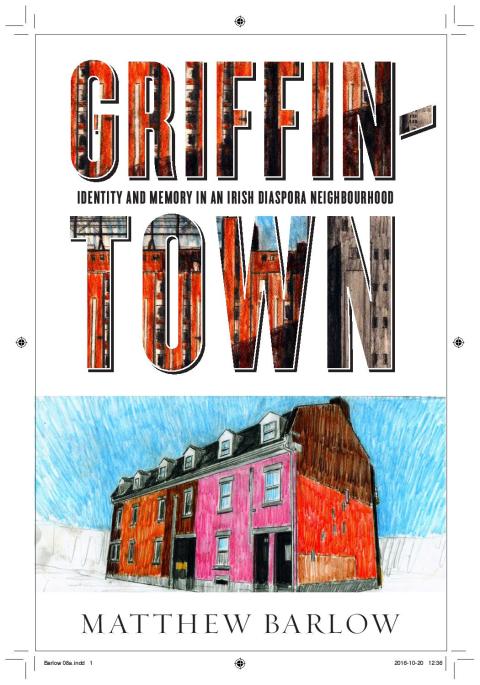
I just recently received the cover art for my forthcoming book, Griffintown: Identity & Memory in an Irish Diaspora Neighbourhood. It will be published in May 2017 by the University of British Columbia Press. To say I’m stoked is a minor understatement. The art work is by my good friend and co-conspirator on many things Griff, G. Scott MacLeod.
Gentrification: Plus ça change
September 14, 2016 § 2 Comments
I’m reading a book that is, for the lack of a better term, a biography of the Kremlin. I am at the part where the Kremlin, and Moscow itself, gets rebuilt after Napoléon’s attempt at conquering Russia. Moscow had been, until it was torched during the French occupation, a haphazard city; visitors complained it was Medieval and dirty. And it smelled. And not just visitors from Paris and Florence, but from St. Petersburg, too.
In the aftermath, Moscow was rebuilt along Western European lines, in a rational manner. And the city gentrified, the Kremlin especially:
This was definitely a landscape that belonged to the rich and the educated, to noblemen and ladies of the better sort. It is through the artists’ eyes that we glimpse the well-dressed crowds: the gentlemen with their top hats and shiny canes, the ladies in their bonnets, gloves, and crinolines. They could be leading citizens of any European state, and there is little sense of Russia (let alone romantic Muscovy) in their world.
Leaving aside the fact that there were no citizens of any European state in 1814, this sounds remarkably familiar. This is the same critique I have written many times about Griffintown and Montreal: as Montreal gentrifies, it is becoming much like any other major North American city.
But it is also true of gentrification in general. There is a part on the North Shore of Chattanooga, Tennessee, I really like. It finally dawned on me that it is because it reminds of me Vancouver architecturally, culturally, aesthetically, and in the ways in which the water (in this case the Tennessee River, not False Creek) is used by the redevelopment of this historically downtrodden neighbourhood. But. I could also be dropped into pretty much any North American city and see similarities: Toronto, Vancouver, Montreal, New York, Boston, Seattle, Portland (Oregon), Cincinnati, Cleveland, Buffalo, Chicago, Atlanta, Nashville. These are all cities (amongst others) where I have seen the same tendencies.
And, obviously, one aspect of gentrification is the cleansing of the city of danger and vice. Just like Moscow was cleaned up in the aftermath of 1812.
The Dystopian Promise of Neo-Liberalism
September 6, 2016 § 3 Comments
I spent late last week laid up with the flu. This means I read. A lot. I don’t have the patience for TV when I’m sick, unless it’s hockey. And since it’s late August, that didn’t happen. While laid up, I finished Jonathan Lethem’s early career Amnesia Moon, and also ploughed through Owen Hatherley’s The Ministry of Nostalgia. On the surface, these two books don’t have anything in common. The former is a novel set in a dystopic American future, whilst the latter is a polemic against austerity and the Conservative Party in the United Kingdom.
But both point to a golden era past. In the case of Amnesia Moon, obviously, given its dystopic future setting. And Hatherley is perplexed over the British right’s ability to control a public discourse of British history and memory.
In Amnesia Moon, the protagonist, a man named Chaos in some situations and Everett Moon in others, finds himself in Vacaville, which is actually a real place, about halfway between Sacramento and San Francisco in North Central California. In Vacaville, the residents are kept unstable by the central state: they are forced to move residences every Wednesday and Sunday. The majority of the residents work mind-numbing jobs, including Chaos’ love interest, Edie. The society is run by the gorgeous, who are featured on TV every night, parading about in an early version of reality TV. The people of Vacaville love and worship them. All of pop culture in Vacaville has been re-written to venerate the president and the ruling class. But most insidious, everything in Vacaville, for all residents, is based on ‘luck,’ a state-sponsored system based on a test administered by bureaucrats. Not surprisingly, those with the best luck are in the ruling classes. And then everyone else is organized and assigned their place in society based on their luck. Not surprisingly, our Edie has bad luck: her ex-husband has lost his mind, so she is a single mother with two children. She is also kept in place by a desperate government official, Ian Cooley, who is in love with her.
Compare this to Hatherley’s view of the United Kingdom in 2016:
We find ourselves in an increasingly nightmarish situation where an entirely twenty-first century society — constantly wired up to smartphones and the internet, living via complicated systems of derivatives, credit and unstable property investments, inherently and deeply insecure — appears to console itself with the iconography of a completely different and highly unlikely era, to which it is linked solely through the liberal use of the ‘A’ [i.e.: austerity] word.
See the similarities?
Margaret Sanger Was Not Who You Think
August 29, 2016 § 3 Comments
Margaret Sanger might be the least understood, most slandered person in American history right now. Everyday in my Twitter feed, I see arguments over her, her beliefs on birth control, abortion, and African Americans. She has been latched onto by many on the right as an example of what is purely evil with liberals in the US. The problem is that the historical reality does not bear out this demonization of Sanger.
Nonetheless, the Twitter warriors persevere:
https://twitter.com/npnikk/status/767738900198588416
https://twitter.com/peddoc63/status/767060591412412416
This isn’t limited to Twitter. New Hampshire Representative William O’Brien (R) said that Sanger was a KKK member. Herman Cain, in his run for the GOP presidential nomination in 2011, claimed that the whole point of Planned Parenthood, which Sanger founded, had a genocidal mission to prevent black babies from being born. Last fall, Ben Carson, on his own run to secure the GOP nod, declared that Sanger’s goal was to eliminate African Americans.
The belief that Sanger was a white supremacist and a member of the KKK is a particularly popular one on the American political right This photo in particular has been circulating for years, after it was uploaded to the white supremacist site Stormfront in 2008:

While it is true that Sanger gave a speech to a women’s auxiliary of the KKK, both this photo and the supposed message of her talk are lies (she talked to the KKK women about birth control and called it “one of the weirdest experiences I had in lecturing.”). But, like any good lie or meme, this one is careful to be specific, even offering us a location. This photo is a photoshopped version of this:

Very different, no?
Yes, Sanger was a believer in eugenics. So, too, were Winston Churchill, Teddy Roosevelt, H.G. Wells. Even W.E.B. DuBois believed in aspects of the eugenics, though he was vehemently opposed to the racist viewpoint of many eugenicists, for perhaps obvious reasons. And, let us not forget that the eugenics movement was one predicated on classism, racism, and almost every other -ism you can imagine. At its purest, it was a movement devoted to purifying the human race of the disabled, criminal, addicted, and many others. And that also included racism. And, of course, eugenics is part of what drove the Nazis and the Holocaust.
Eugenics, however, was a mult-faceted movement. In the United States, it was not simply a belief in sterilization of ‘undesirables’ and other medical horrors. Rather, it also included a larger public health movement that sought to make Americans healthier through exercise, the creation of parks, eradication of STDs, clinics for maternal and infant health, immunization, and other aspects of healthy living. And this is where Sanger’s beliefs largely lay. In a 1957 interview with Mike Wallace, Sanger stated that
I think the greatest sin in the world is bringing children into the world — that have disease from their parents, that have no chance in the world to be a human being practically. Delinquents, prisoners, all sorts of things just marked when they’re born. That to me is the greatest sin — that people can — can commit.
Moreover, a belief in eugenics did not necessarily equate racism in the United States. To take the case of Sanger: she did not believe in segregation, she opposed Jim Crow in the South. She was a firm believer in birth control, and she thought all women, not just wealthy, white women, should have access to it. That includes poor white women, hence the talk to the KKK auxiliary. But this belief also brought her into African American neighbourhoods in New York, Chicago to open clinics there so African American women would also have access to birth control. She also worked closely with African American ministers in her attempts to educate black women.
In her actual organization, Sanger would not tolerate racism, and fired people for racism. More to the point, in 1966, Planned Parenthood honored Rev. Martin Luther King with its Margaret Sanger Award, which is granted to people who work to ensure reproductive health and rights. King was unable to accept the award in person, sending instead his wife, Coretta Scott King. She read his acceptance speech, which included this passage:
There is a striking kinship between our movement and Margaret Sanger’s early efforts. She, like we, saw the horrifying conditions of ghetto life. Like we, she knew that all of society is poisoned by cancerous slums. Like we, she was a direct actionist – a nonviolent resister.
Thus, in the end: Sanger was not a racist, she did not advocate mass sterilizations of anyone, let alone African Americans. She was not a member of the KKK. In reality, she was a rare person in the early 20th century: she believed in racial and class equality when it came to reproductive health. And she was dead-set opposed to racial segregation and Jim Crow.
The Problem with France’s Burkini Ban UPDATED!
August 25, 2016 § 8 Comments
135_C
So 16 towns and cities in France, all on the Mediterranean Coast, have banned the so-called burkini, a body-covering garment that allows devout Muslim women to enjoy the beach and summer weather. France, of course, has been positively rocked by Islamist violence in the past 18 months or so. So you had to expect a backlash. But this is just downright stupid.
There is a historical context here (read this whole post before lambasting me, please). French society believes in laïcité, a result of the French Revolution of 1789 and the declericisation of French society and culture in the aftermath. To this end, French culture and the French state are both secularised. Religious symbols are not welcome in public, nor are the French all that comfortable with religious practice in public. Now, this makes perfect sense to me, coming as I do from Quebec, which in the 1960s, during our Revolution tranquille, also underwent a process of declericisation. Quebec adopted the French model of a secular state.
But, in Quebec as in France, not all secularism is equal. Catholic symbols still exist all over France as a product of French history, to say nothing of the grand cathedrals and more humble churches that dot the landscape. But other religious symbols, they’re not quite as welcome, meric.
Nonetheless, it is in the context of this laïcité that the burkini ban arises.
But in practice, it is something else entirely. This is racism. This is ethnocentrism. And this is stupid. Just plain stupid. French Prime Minister Manuel Valis claims that the burkini is a symbol of the ‘enslavement of women.’ The mayor of Cannes claims that the burkini is the uniform of Muslim extremism. It is neither. And the burkini bans are not about ‘liberating’ Muslim women in France. They are not about a lay, secular society. They are designed to target and marginalize Muslim women for their basic existence in France.
In the New York Times this week, Asma T. Uddin notes the problem with these bans when it comes to the European Court of Human Rights and symbols of Islam. Back in 2001, the Court found that a Swiss school teacher wearing a head scarf in the classroom was ‘coercive’ in that it would work to proselytize young Swiss children. I kid you not. And, as Uddin reports, since that 2001 decision, the Court has continually upheld European nations’ attempts to limit the rights of Muslims, especially Muslim women, when it comes to dress.
Then there was the shameful display of the police in Nice this week, which saw four armed policemen harass a middle-aged Muslim woman on the beach. She was wearing a long-sleeved tunic and bathing in the sun. The police, however, issued her a ticket for not ‘wearing an outfit respecting good morals and secularism.’ Again, I kid you not.
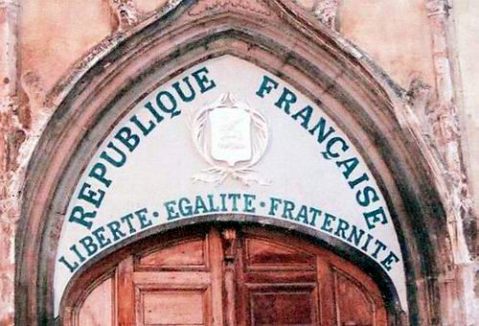
Laïcité is supposed to be not just the separation of church and state, but also the equality of all French citizens. Remember the national motto of the French republic: ‘liberté, éqalité, et fraternité.’ These are lofty goals. But the attempts to ban the burkini and attack Muslim women for their attire is not the way one goes about attaining liberté, nor égalité nor fraternité. Rather, it creates tiered culture, it creates one group of French who are apart from the rest. It is discriminatory and childish. And let’s not get on the subject of former French president Nicolas Sarkozy, who wants to run again, and promises to ensure that Muslim and Jewish students in the lycées eat pork.
I understand France’s concerns and fears. But attacking Islam is not the way to defeat terrorists who claim to be Muslim. It only encourages them. It is time for France to live up to its own mottos and goals. And Western feminists (and pro-feminist men) need to speak up on this topic.
UPDATE!!!!!
News comes this evening that the Deputy Mayor of Nice, and President of the Regional Council of Provence-Alpes-Côte d’Azur, has threatened to sue people who share images of the police attempting to enforce the burkini ban on social media. I kid you not. Christian Estrosi states that the images cause harm to the police (if that is true, that is not right, of course).
It is worth pointing out that it would be very difficult for Estrosi to find legal standing to launch a lawsuit, as French law allows citizens and media outlets to publish images and videos of the police and that, without a judicial order, French police cannot seize a photographer’s camera or phone.
 Matthew Barlow