Trauma and Memory
January 18, 2017 § 3 Comments
I read David Means’ novel, Hystopia, last week. It is an alternative history of the 1960s and 70s in the United States; a novel within a novel. Hystopia, according to the editor’s notes, was actually written by a Vietnam vet named Eugene Allen, shortly before he killed himself in 1973 or 1974. In Hystopia, JFK survived Lee Harvey Oswald’s bullet, and continued on as president and is now in his 3rd term (the scholar in me wonders how he got passed the 27th Amendment, mind you). He oversaw a massive increase in American involvement in Vietnam, much greater than that of his successor in real life, Lyndon Baines Johnson. And, of course, there was no Great Society policy initiatives. He was eventually assassinated in Springfield, IL, in 1970. But this is not the interesting part. The interesting part is what happens to Vietnam vets when they get home: they get enfolded.
A new branch of the government, Psych Corps, has attempted to use drugs to deal with the horrors that the soldiers in Vietnam saw, with a caveat: they only accept men who are not physically disabled by the war. At the Psych Corps HQ, the vets are fed an anti-psychotic drug and ‘enfolded.’ Psych Corps re-creates the source of the trauma and PTSD for soldiers, they are forced to relive it, and in so doing, their memories are essentially wiped. Thus, veterans who have been enfolded don’t remember their experience in the war, such as the ‘hero’ of the novel, a veteran named Singleton. Singleton, we eventually realise was an officer in Vietnam and commanded the unit that also included the other main characters of the book. But he has no recollection of this. The only thing that connects him to Vietnam is a horrible burn scar on his left side. Singleton’s scar comes from a friendly fire caused by a soldier calling in the wrong co-ordinates for a fire bombing, resulting in his own death.
Now employed by Psych Corps, Singleton falls in love (against regulation) with a fellow officer, Wendy, and sets off to Northern Michigan to track down Rake, a former member of his unit and a failed enfold. Rake, meanwhile, has kidnapped the beautiful but deeply troubled, Meg, whose boyfriend and first love was the soldier who got himself killed. Meg is also Eugene Allen’s sister.
Immediately after Hystopia, I picked up Bessel van der Kolk’s The Body Keeps The Score: Brain, Mind, and Body in the Healing of Trauma, for a new researh project I am undertaking. It turns out that Hystopia and The Body Keeps The Score are directly related for my purposes. I am still only about 100 pages into the book, but van der Kolk is talking about his early experiences in the field of psychiatry in the early 1970s (the same period the fictive Eugene Allen was writing his novel, incidentally) and his first clients, including Vietnam vets at the VA in Boston.
He writes about what trauma does to the brain, using a vet as an illustration. This guy was a high functioning, and very successful criminal lawyer in Boston. But, he was completely empty inside. He went through the motions at home, with his family, at work. He felt violent impulses and thus recused himself from his family, spending weekends at a time drinking heavily in an attempt to get his war experiences out of his head. He had been a platoon leader, and watched helplessly as he lead his men into an ambush. They were all killed or wounded. He was not. The next day, he took his wrath out on a Vietnamese village, killed at least one child and raped a woman.
As I read this story, and others, I couldn’t help think of Hystopia, and the vets being drugged to forget stories such as this veteran’s. In the late 1980s, van der Kolk began experimenting with PET scans and, ultimately, fMRIs, by which the traumatising event is re-created, according to a script, in order to discover which parts of the brain are triggered. It turns out it is exactly the same parts of the brain that one would expect to be triggered during a traumatic event. More to the point, the participants in these experiments reported feeling exactly as they did during the original event. And thus, van der Kolk notes, his colleagues began to wonder about how to use drugs to treat PTSD patients, using the information from the PET and fMRI scans to learn which parts of the brain neeed to be treated. Or, in other words, exactly what happens in Hystopia when the soldiers are enfolded upon return from Vietnam. The difference, of course, is that enfolding works for the majority of patients. There is no cure-all for PTSD for us in the real world.
Nonetheless, van der Kolk notes that we tend to respond to deeply traumatising events, whether something as graphic and terrifying and terrible as his Vietnam vet, or other traumas such as sexual assault, rape, being beaten as a child, etc.. And I found myself wondering about how our brains work to incorporate these memories and recast them in terms of society, how our memories and our traumas are never ours alone, but also belong to our wider society. Our memories are formed, re-formed, and re-fined in light of our interaction with society, of course. And it is difficult to tell where our individual experiences end and our societal imports begin, or vice versa.
And as I embark on a this project, I am wondering where that dividing line is between our own personal traumas and where society intervenes in the reconstructions of the narratives we tell ourselves about our experience. What makes our traumas unique and what makes them like other victims of traumatising experiences?
Trump and the White Working Class
November 14, 2016 § 2 Comments
The chattering classes are twisting themselves into knots to try to explain and understand how and why Donald Trump won last Tuesday. How did he win out in traditionally Democratic territory in the Rust Belt? This has been the $64,000,000,000,000 question. Me? I don’t see it as being that complicated.
Underneath it all, there is a very simple economic message that Trump has communicated to his base: he has promised to cut up NAFTA and bring the jobs back. The United States is currently reaping the consequences of ignoring the plight of a sizeable chunk of the population for nigh-on 30 years. They have lost their jobs, their self-esteem, their way of life. Time was, you could graduate from high school on Thursday. And Friday morning, wake up and head over to the HR office of the local factory or plant. They knew you; your dad worked there, so did your uncles and big brother. Your mom worked there, so did your sisters and your aunts. They hired you immediately. And on Monday, you came to work for the first time. And then you stayed there for 35-40 years. You made good money. Got married, had kids, raised them. Eventually, you retired. Your thanks for your loyalty and hard work was a generous pension plan that took care of you in return for giving your working years to the company. But that’s all gone. Deindustrialization. And free trade.
What happened when the jobs dried up? People lost their homes; their cars; their marriages. Alcoholism and addiction became more common. Re-training programs were a joke, they didn’t plan anyone for a new career in computers. Some were lucky and found a new career in the service industry. But making $9/hr to stock shelves at Walmart doesn’t pay the bills. Then there’s health insurance and benefits. With GE, those were all taken care of. Waffle House doesn’t take care of them. Their churches tried to take care of them but most of them weren’t religious to start with. And their politicians? They paid lip service for a bit, both Democrats and Republicans. But then they got bored and got obsessed with other things. And so no one had these dispossessed, under- and un- employed people’s backs.
And as a result, the Midwest joined the South as the lands of cultural carnage. They got written out of the national narrative, except when something stupid happens (don’t believe me, go read this rant from the Bitter Southerner). Think about TV and the movies. Time was, they were set in Milwaukee and Minneapolis and Savannah, GA. Now? Not so much. And when they are, you get Mike & Molly; their characters met at Overeaters’ Anonymous. And besides, it’s set in Chicago. Chicago isn’t of the Midwest anymore. It’s a national city. America no longer tells stories about the heartland anymore. There are no more little ditties about Jack and Diane. Midwesterners don’t see themselves on TV or the big screen, unless it’s a story about them going to NYC or LA. For example, The Unbreakable Kimmy Schmidt. Or Parks and Recreation, which also began as a mockumentary making fun of Lesley Knope and the residents of Pawnee, IN.
The United States has long been a deeply divided nation. We like to think it’s North-South. It’s not. It’s the coasts and Chicago vs. the ‘flyover states.’ What’s more dismissive than referring the bulk of the nation as ‘flyover’ territory? No one listens to the fears and frustrations of the former white working class. And their visceral anger brings out all their latent fears of mistrust of anyone not exactly like them: African Americans, Muslims, immigrants, LGBTQ, and so on (and this in no way excuses hatred) And then Trumpism occurs.
Donald Trump and his Cult of Personality came along in the 2016 election and he promised to be their champion, to get rid of NAFTA, to bring the jobs back. I get this argument, I think I understand the visceral nature of it as both a son of the working class and an historian of deindustrialization. My family lost out with the first FTA between Canada and the US in 1988. My Old Man lost his job as his company sold out to a larger one south of the border. And the brief period of relative prosperity we had in the mid-80s was gone. He eventually recovered, luckily for us, he was a skilled tradesman, a welder. And my mom was university-educated. But. We lost. And so many others. Their anger is visceral. Even now, 30 years on, I still maintain deep, deep suspicion to FTA agreements, for this exact reason, despite knowing the rational reasons to support it.
But Trump cannot deliver on his promises. If he tears up NAFTA and other FTAs, the American economy will collapse, and so, too, will the world’s. Those factory jobs aren’t coming back. Automation, people. The smallish factories across the region I live in, the South, do not employ more than a fraction of what they used to; automation. More to the point, Trump doesn’t care about these people any more than anyone before him did. He used them to get to the White House, he exploited their anger.
So what is going to happen when all these angry white working class people realize they’ve been lied to, again? When Trump is revealed as nothing more than a false prophet, that anger will still be there. But it will be amped up because he failed to deliver. And they will look for scapegoats, and all the people who already feel unsafe will feel it all the more. Racism, homophobia, misogyny; these will all be amplified. Maybe Trump will mollify them by blaming someone else, another shadowy group that hindered his ability to deliver on his promises as our leader. Or maybe he’ll double down on the elitists, Mexicans, Muslims, immigrants, etc., etc. I don’t feel optimistic either way.
Griffintown
October 31, 2016 § 2 Comments
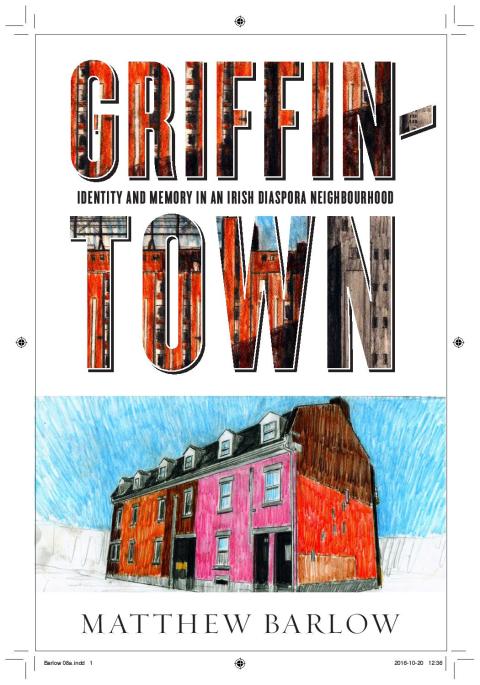
I just recently received the cover art for my forthcoming book, Griffintown: Identity & Memory in an Irish Diaspora Neighbourhood. It will be published in May 2017 by the University of British Columbia Press. To say I’m stoked is a minor understatement. The art work is by my good friend and co-conspirator on many things Griff, G. Scott MacLeod.
Margaret Sanger Was Not Who You Think
August 29, 2016 § 3 Comments
Margaret Sanger might be the least understood, most slandered person in American history right now. Everyday in my Twitter feed, I see arguments over her, her beliefs on birth control, abortion, and African Americans. She has been latched onto by many on the right as an example of what is purely evil with liberals in the US. The problem is that the historical reality does not bear out this demonization of Sanger.
Nonetheless, the Twitter warriors persevere:
https://twitter.com/npnikk/status/767738900198588416
https://twitter.com/peddoc63/status/767060591412412416
This isn’t limited to Twitter. New Hampshire Representative William O’Brien (R) said that Sanger was a KKK member. Herman Cain, in his run for the GOP presidential nomination in 2011, claimed that the whole point of Planned Parenthood, which Sanger founded, had a genocidal mission to prevent black babies from being born. Last fall, Ben Carson, on his own run to secure the GOP nod, declared that Sanger’s goal was to eliminate African Americans.
The belief that Sanger was a white supremacist and a member of the KKK is a particularly popular one on the American political right This photo in particular has been circulating for years, after it was uploaded to the white supremacist site Stormfront in 2008:

While it is true that Sanger gave a speech to a women’s auxiliary of the KKK, both this photo and the supposed message of her talk are lies (she talked to the KKK women about birth control and called it “one of the weirdest experiences I had in lecturing.”). But, like any good lie or meme, this one is careful to be specific, even offering us a location. This photo is a photoshopped version of this:

Very different, no?
Yes, Sanger was a believer in eugenics. So, too, were Winston Churchill, Teddy Roosevelt, H.G. Wells. Even W.E.B. DuBois believed in aspects of the eugenics, though he was vehemently opposed to the racist viewpoint of many eugenicists, for perhaps obvious reasons. And, let us not forget that the eugenics movement was one predicated on classism, racism, and almost every other -ism you can imagine. At its purest, it was a movement devoted to purifying the human race of the disabled, criminal, addicted, and many others. And that also included racism. And, of course, eugenics is part of what drove the Nazis and the Holocaust.
Eugenics, however, was a mult-faceted movement. In the United States, it was not simply a belief in sterilization of ‘undesirables’ and other medical horrors. Rather, it also included a larger public health movement that sought to make Americans healthier through exercise, the creation of parks, eradication of STDs, clinics for maternal and infant health, immunization, and other aspects of healthy living. And this is where Sanger’s beliefs largely lay. In a 1957 interview with Mike Wallace, Sanger stated that
I think the greatest sin in the world is bringing children into the world — that have disease from their parents, that have no chance in the world to be a human being practically. Delinquents, prisoners, all sorts of things just marked when they’re born. That to me is the greatest sin — that people can — can commit.
Moreover, a belief in eugenics did not necessarily equate racism in the United States. To take the case of Sanger: she did not believe in segregation, she opposed Jim Crow in the South. She was a firm believer in birth control, and she thought all women, not just wealthy, white women, should have access to it. That includes poor white women, hence the talk to the KKK auxiliary. But this belief also brought her into African American neighbourhoods in New York, Chicago to open clinics there so African American women would also have access to birth control. She also worked closely with African American ministers in her attempts to educate black women.
In her actual organization, Sanger would not tolerate racism, and fired people for racism. More to the point, in 1966, Planned Parenthood honored Rev. Martin Luther King with its Margaret Sanger Award, which is granted to people who work to ensure reproductive health and rights. King was unable to accept the award in person, sending instead his wife, Coretta Scott King. She read his acceptance speech, which included this passage:
There is a striking kinship between our movement and Margaret Sanger’s early efforts. She, like we, saw the horrifying conditions of ghetto life. Like we, she knew that all of society is poisoned by cancerous slums. Like we, she was a direct actionist – a nonviolent resister.
Thus, in the end: Sanger was not a racist, she did not advocate mass sterilizations of anyone, let alone African Americans. She was not a member of the KKK. In reality, she was a rare person in the early 20th century: she believed in racial and class equality when it came to reproductive health. And she was dead-set opposed to racial segregation and Jim Crow.
The Myth of the ‘Founding Fathers’
November 2, 2015 § 1 Comment
Rand Paul got in trouble recently for making up quotations he attributed to the Founding Fathers. In other words, Paul is making a habit of lying to Americans, in attempting to get their votes, by claiming the Founding Fathers said something when, in fact, it’s his own policies he’s shilling. Never mind the fact that Paul says “it’s idiocy” to challenge him on this, he, in fact, is the idiot here.
The term “Founding Fathers” has always made me uncomfortable. Amongst the reasons why this is so is that the term flattens out history, into what Andrew Schocket’s calls ‘essentialism’ in his new book, Fighting over the Founders: How We Remember the American Revolution. (I wrote about this book last week, too). The term “Founding Fathers” presumes there was once a group of men, great men, and they founded this country. And they all agreed on things.
Reality is far from this. The American Revolution was an incredibly tumultuous time, as all revolutions are. Men and women, fathers and sons, mothers and daughters, brothers, sisters, disagreed fundamentally about a multitude of issues, not the least of which was whether or not independence was a good idea or not. Rarely taught in US history classes at the high school or university level, loyalists, at the end of the War of Independence, numbered around 15-20% of the population. And there is also the simple fact that less than a majority actively supported independence, around 40-45%. The remaining 35-45% of the population did its best to avoid the war or independence, for a variety of reasons.
The Constitutional Congress, then, did not speak for all the residents of the 13 Colonies, as many Americans seem to believe. The Articles of Confederation and the Constitution were fraught affairs, with many of the men involved in their drafting in staunch opposition to each other. Aside from ego, there were deep, fundamental differences in thought. In other words, the Constitution was a compromise. The generation of men (and the women who influenced them, like Abigail Adams) who created the United States were very far from a unified whole, whether in terms of the larger population, or even within the band of men who favoured and/or fought for independence.
Thus, the term “Founding Fathers” is completely inadequate in describing the history of this country between c. 1765-1814. But, then again, most Americans tend to look back on this period in time and presume a single ethnicity (British) and religion (Protestantism) amongst the majority of residents of the new country. In fact, it is much more complicated than that, and that’s not factoring in the question of slavery.
It’s not surprising that Americans would wish a simple narrative of a complex time. Complexity is confusing and it obfuscates even more than it shows. And clearly, for a nation looking at its founding myths, complexity (or what Schocket would call ‘organicism’) is useless. You cannot forge myths and legends out of a complicated debate about independence, government, class, gender, and race. It’s much simpler to create a band of men who looked the same, talked the same, and believed the same things.
But, such essentialism obscures just as much as complexity does when it comes time to examine the actual experience of the nascent US during the Revolution. The disagreements and arguments amongst the founders of the country are just as important as the agreements. The compromises necessary to create a new country are also central. I’m not really a big believer in historical “truths,” nor do I think facts speak for themselves, but we do ourselves a disfavour when we simplify history into neat story arcs and narratives. Unlike Schocket, I do think there is something to be gained from studying history, that there are lessons for our own times in history, at least to a degree: the past is not directly analogous to our times.
Of course, as a public historian, this is what I love to study: how and why we re-construct history to suit our own needs. So, perhaps I should applaud the continuing need for familiar tropes and storylines of the founding of the US.
Immigration in the United States, plus ça change
August 7, 2014 § 8 Comments
I am doing a bit of research into the Know Nothing movement of the 1840s and 50s in the United States. The Know Nothings were a secret society that eventually evolved into a political party, based on the premise that immigration was bad for the United States. In short, the Know Nothings, who also formed one of the bases of the nascent Republican Party in the late 1850s, were nativists. They believed in a United States for Americans only. We could, of course, note the irony of that statement, given every person not of Native American heritage in this country is of immigrant stock. But, we’ll leave that alone. They were called Know Nothings not because they were ignorant (as my students always suppose), but because, as a secret society and asked about the society replied that they “knew nothing.”
I came across this list of things that Roman Catholics hate about the United States from the Boston Know-Nothing and American Crusader in July 1854. The Know-Nothing and American Crusader was one of the main newspapers of the Know Nothings, and Boston was a major centre of the nativists. Boston was ground zero, in many ways, in the ‘invasion’ of Irish immigrants and refugees in the years of the Famine and afterwards. Here’s the list:
- They HATE our Republic, and are trying to overthrow it.
- They HATE the American Eagle, and it offends them beyond endurance to see it worn as an ornament by Americans.
- They HATE our Flag, as it manifest by their grossly insulting it.
- They HATE the liberty of conscience.
- They HATE the liberty of the Press.
- They HATE the liberty of speech.
- They HATE our Common School system.
- They HATE the Bible, and would blot it out of existence if they could!
- The Priests HATE married life, and yet by them is fulfilled the Scripture, to wit: ‘more are the children or the desolate, than the children of the married wife.’
- They HATE Protestants, and are sworn to exterminate them from our country and the earth.
- They HATE the name of Washington, because he was a Republican and Protestant.
- They HATE all rulers that do not swear allegiance to the Pope of Rome.
- They HATE to be ruled by Americans, and say “WE WILL NOT BE RULED BY THEM!”
- They HATE to support their own paupers and they are left to be supported by the tax paying Americans.
- They HATE, above all, the ‘Know Nothings,’ who are determined to rid this country of their accursed power.
The author of this wonderful list signed his name as “Uncle Sam.” Newspapers in general allowed correspondents to use anonymous pseudonyms in the 19th century, so this isn’t surprising. But the nom de plume of our correspondent is telling of the cause of the Know Nothings.
As I am doing this research, I’m thinking back to my experiences in June, when I was told by a table mate that the AP Reading I was at that I don’t belong in the United States because I “don’t love America” (I don’t “love” Canada, either, for the record). And, thenthen, on the way home, at a layover in Dallas, another traveller, watching the news, told me that all immigrants should be rounded up and deported (this one didn’t know I was an immigrant). And as I watch the drama unfold about the refugee children from Central America in this country, and see the horrible rhetoric coming from the right wing, I can’t help but think that, even if 170 years have passed since “Uncle Sam” published his list of things Catholics hate in The Know-Nothing and American Crusader, in some ways, nothing has changed. The rhetoric of “Uncle Sam” echoes that of some far right politicians, commentators, and regular citizens I’ve seen on Twitter in the past month.
Of course, the Know Nothings were never a majority of Americans, any more than those so violently opposed and hard-hearted to the plight of children today are even close to a majority. The overwhelming majority of Americans then and now do not have a problem with immigration and immigrants. But, then as now, the squeaky wheel gets the grease.
Griffintown and the Importance of Urban Planning
May 12, 2014 § 6 Comments
This will be the first of a series of posts on Griffintown this week. I was in Montréal last week, mostly to finish up a bit of research on the Griffintown book, which, at least has a title, ‘The House of the Irish’: History & Memory in Griffintown, Montreal, 1900-2013. The last chapter of the manuscript deals with what I call the post-memory of Griffintown, the period of the past half-decade or so of redevelopment and gentrification of the neighbourhood. Griffintown was in desperate need of redevelopment, so let’s get that out of the way first and foremost. A large swath of near-vacant city blocks next to the Old Port, along the North Bank of the Lachine Canal, and down the hill from downtown, it was inevitable that it would attract attention.
My problem was never with redevelopment per se, then. My problem was with unsustainable development, willful neglect of the environment, of the landscape of the neighbourhood, and with blatant cash grabs by condo developers, and tax grabs on the part of the Ville de Montréal. And so that’s what we now have in Griffintown, for the most part.
In between conducting oral history interviews with my former allies in the fight for sustainable redevelopment, I wandered around Griffintown, Pointe-Saint-Charles, and Saint-Henri a fair bit. This was both professional interest and because I lived in the Pointe and Saint-Henri. I also had an interesting discussion with a clerk at Paragraphe Books on McGill College. Then there were the interviews.

Housing development, Copenhagen.
My friend Scott MacLeod says that many of the condos going up in Griffintown look like “Scandinavian social housing.” I think he’s onto something. This is a picture from a housing development in Copenhagen. It is quite similar to what’s going up in Griffintown, with one key difference. In Copenhagen, there is green space. In Griffintown, there is none.
Part of the genius of Montreal is an almost utter lack of urban planning on

Griffintown condos.
the grand scale. And in the case of Griffintown, the city has been almost negligent in its approach. During its overzealous attempt to approve any and all projects proposed by developers in Griffintown from about 2006 to 2010, the Ville de Montréal overlooked a few key components for the new neighbourhood: parks and schools. It was only after 2010 that the city thought that maybe it should earmark some land for, you know, parks. Schools? Who needs them?
Griffintown: Keegan House Saved. Really?
April 29, 2014 § Leave a comment
Montreal is a strange place. The city basically works in completely counter-intuitive ways. Last week, the Comité consultatif d’urbanisme (CCU) of the arrondissement sud-ouest of the Ville de Montréal denied permission to developer, Maitre-Carré, to tear down the oldest building in Griffintown, a grotty old house that stands at 175, rue de la Montagne. The Keegan House, as it is now known, was built sometime between 1825 and 1835, on Murray Street, a block over from its present state. It was moved to what was then McCord Street in 1865, around the same time that the handsome row of townhouses was constructed up the block.
When Maitre Carré’s plans were first made public, I was apprehensive, but also thought that perhaps the developer deserved our benefit of the doubt, insofar as it had, at least, made some nod to heritage in Griff when Hugo Girard-Beauchamp, the company’s president, bought the Horse Palace and has at least nodded to the idea of maintaining the Palace as a working stable going forward (whether this will happen in practice is a whole different kettle of fish). Indeed, as my friend, G. Scott MacLeod, a film-maker interested in Griff, said, Maitre-Carré is the only developer that has at least acknowledged the history and heritage of the neighbourhood. Indeed, other condo developers, most notably Devimco and Préval have been more interested in stuffing ugly, neo-brutalist blocks of condos down on the Griffintown landscape, completely destroying the streetscape (such as it existed) and dwarfing the original buildings.
Having said all that, at this point anyway (because one never knows in Montreal), this is an optimistic sign. Anne-Marie Sigouin, the city councillor for Saint-Paul/Émard, and the chair of the CCU, said (according to The Gazette) “We have sent the architects back to the drawing board. We want to send a clear message on heritage protection.” This is rather surprising, since the CCU and the Ville de Montréal as a whole have not demonstrated much in the way of leadership up to now in Griff.
The Distinct Culture of Anglo Quebecers
April 7, 2014 § Leave a comment
I have been on this listserv of policy wonks and academics in Canada since sometime in the late 90s. Most of the time, I’m not entirely sure why I remain on it, a small handful of the approximately 100 people on it post, and some use it to beat their hobby horses to many, many deaths. But, occasionally, it serves its purpose and intelligent discussion breaks out about various world events, Canadian politics, and the like. Over the past couple of weeks, one of those broke out over the Québec election, which is underway right now.
This has been the most divisive provincial election I’ve seen in Québec in my lifetime, though, admittedly, the bar was set very low with the ruling Parti québécois’ ridiculous, offensive, and racist charte des valeurs, a sad attempt at laïcité. That in and of itself, is fine, and is perfectly consistent with the Euro-francophone world, but the way it was introduced in Québec, and the manner in which it targeted minorities, most notably Arabs and other Muslims, was appalling. And since then, it’s been a raise to the bottom between the PQ, the Parti libéral du Québec, the Coalition pour l’avenir du Québec, and the 4th party, Québec solidaire. For the uninitiated, the PQ is a former leftist, sovereigntist party; the PLQ is a rightist, federalist party, the CAQ is a right-wing, sovereigntist party, and QS is a largely irrelevant leftist sovereigntist party. For the record, I voted QS in 2012 and would’ve again this year if I was still living in Québec.
So, to return to this discussion on the listserv. It was between an Anglo political scientist in Montréal, a Québec sovereigntist, a lawyer in Vancouver, and myself. Three Quebecers and an Anglo Canadian. The discussion largely centred around the PQ and its fitness for government, though, interestingly, the major issue of the election campaign, the charte was largely ignored by three of the four in this discussion (I was the fourth). The political scientist advocated the continuation of the status quo, a PQ minority, the separatist wished for a PQ majority (and a subsequent third referendum on sovereignty), I suggested the PQ was not fit for government based on the charte, and the lawyer ridiculed the entire idea of sovereignty. Other issues raised included protection of the French language and culture of Québec, as well as the fading generation of sovereigntists.
Pauline Marois, the current leader of the PQ and (at least until later tonight) the premier of Québec, is 65 years old. This puts her at the younger end of the baby boomers, who were the ones who really carried the idea of sovereignty in Québec. Interestingly, support for sovereignty is much lower amongst my generation (Gen X) and the millennials. The political scientist noted this, the need for younger blood in the PQ.
I argued that to simply dismiss the PLQ as incapable of defending the French language and culture in Québec is simple-minded, and I mocked the PQ for the charte and also pointed out QS’ near irrelevance. This led the political scientist to assume I voted PLQ. My guess, though, is that my name had more to do with that than anything. I found this rather disappointing, given nearly everything I’ve ever said about Canada/Québec on this listserv has made it clear I am not a knee-jerk Anglo Montrealer (like one I got into an argument with on Twitter this weekend who seemed to be suggesting Anglo Quebecers are a deeply oppressed minority).
But the real silliness emerged with the lawyer, who appears to be of the opinion that Anglo Montrealers and Anglo Quebecers do not have anything distinct about their language and culture, as compared with the Rest of Canada. He opined that in leaving Montréal for Boston, I did not give up much, as opposed to a francophone who would give up nearly everything. I find this argument both fatuous and depressing.
Anglo Montreal, at the least, has a distinct culture, specific to location. Anglo Montreal is often regarded as a large village, as it seems that all Anglos are no more than 3 or 4 degrees of separation from each other. But, more concretely, as McGill linguist Charles Boberg has discovered, Anglo Montrealers speak a dialect of English that is heavily influenced by French and is rather distinct from the Canadian English dialect. This makes sense. English is the mother tongue of about 650,000 people in Québec as a whole. This out of a total population of over 8 million. Within Montréal, out of a total population of nearly 4 million, about 420,000 people are native English-speakers. In other words, Anglos are a small island in a sea of francophone culture (to borrow the metaphor about Québec adrift in the North American sea of Anglos). As such, Anglo Montreal and Anglo Quebec have their own distinct culture and history, shaped as it was by the simple demographic fact of minority. This is very different than the plight of Anglophones in the rest of most of North America (except for Mexico and the American Southwest).
In other words, despite what a lawyer in Vancouver believes, Anglo Montrealers have their own distinct culture, language and identity, one that is separate and distinct from Anglo Canadians in the rest of the country. There are both positives and negatives to this, of course.
But, my Vancouver lawyer isn’t unique. He represents and all-too-common view of Anglo Canadians. Quebecers are perceived to either be beyond the pale of the Rest of Canada (if we’re francophones, I once got told in southwest Ontario that I speak “good English”), or we’re just like everyone else (if we’re Anglos).
So look at that, Québec is a distinct culture all around (Allophones, or immigrants and their descendants also have their own distinct culture in Québec). It might even be a nation unto itself.
 Matthew Barlow