UPDATE: The Griffintown Horse Palace
September 29, 2014 § 1 Comment
The Griffintown Horse Palace Foundation has met and exceeded its goal, and with three days to spare! As of right now, the Indiegogo page has raised $49,335! The goal was $45,000.
The Foundation is also hosting a fundraising soirée at the Horse Palace, 1226, rue Ottawa, in Griffintown, on Thursday night, 2 October, from 5pm. Tickets are $75, and can be purchased here. More details on the soirée can be found on the Foundation’s Facebook page here.
A huge thank you to all who have contributed. Even though I am no longer involved with the Foundation, I strongly believe in its mission and want to see Leo’s Horse Palace saved!
Deindustrialisation in the Rural Heartland
September 22, 2014 § 8 Comments
The Macon County Fair in Decatur, Il, was cancelled this year. The fair has been a going concern for 158 years, but it also survives through funding from the state of Illinois. Illinois, of course, is a particularly cash-strapped state, which is saying something. It has the lowest bond rating from Moody’s of all 50 states of these United States of America. So funding for county fairs in Illinois has dropped drastically since the turn of the century, from $8.16 million to $5.07 million. Meanwhile, Macon County’s population has been in steady decline since the 1980s, falling from 131,375 to 109,278 today.
We were in Decatur last summer, in our drive across the continent to my sister’s wedding in Portland, OR. It was a pretty, but sleepy town in Central Illinois. It remains a central component of the industrial/agricultural heartland of the United States. It is also the birthplace of the Chicago Bears, the franchise known as the Decatur Staleys, after its original owner, a food-processing magnate.
But Decatur is in trouble, its population also in steady decline since the 1980s. And this decline is reflected in the trouble the Macon County Fair has encountered, as the organisation that puts on the fair is carrying a $300,000 debt, and its headquarters was damaged by heavy rains in July.
What is happening in Macon County is not unique, it is symptomatic of most rural areas in the United States (and Canada) today, as corporate farming becomes further and further entrenched, in the wake of deindustrialisation. Oportunities in these areas dry up, people are left with no choice but to move away, most of them to big cities, both in the MidWest, but also Chicago and coastal cities. Most Midwestern cities continue to grow, though St. Louis seems to be bucking this trend, its population in free-fall since the mid-20th century.
The story of deindustrialisation in North America is one that has been largely limited to big coastal cities, most notably in the northeast, and the so-called “Rust Belt” that stretches around the Great Lakes on both sides of the border (for an excellent treatment of deindustrialisation in the Rust Belt, check out Steve High’s book, Industrial Sunset). Left out of this story is the affect of deindustrialisation on the rural areas across the Heartland.
Writing Deindustrialisation
September 19, 2014 § 3 Comments
I’m always surprised by how deindustrialisation and the economic and social dislocation it caused in the northern United States and Canada gets written about. Take, for example, an otherwise interesting and informative article in The Boston Globe last weekend. In an article about Sahro Hussan, a young Somali-American, and Muslim, woman who has created a business of avant-garde fashions for Muslim women, in Lewiston, ME, Linda Matchan, The Globe‘s reporter, writes:
Lewiston was one of the largest textile producers in New England, rolling out millions of yards in cotton fabrics every year. In time, though, the industry struggled to compete with Southern states where production costs were lower. Lewiston went into decline.
While there is nothing factually wrong with Matchan’s description of what happened in Lewiston (or any other industrial town across the northern portion of North America), note how any responsibility for what happened is removed from the equation. Matchan makes it sound like this was just an entirely natural process.
Deindustrialisation wasn’t a natural process, it didn’t just happen. The reason why the mills in Lewiston (or Lowell, Laurence, Lynn, or anywhere else) struggled wasn’t some random event. It happened because the corporations that owned those mills decided that they were not producing enough value for share-owners. So these corporations pulled out of places like Lewiston and moved down South. Why? Because production costs were too great in the North, the workers made too much (they were often unionised), and there was too much regulation of the workplace for the corporations’ preferences. So, they were induced to pull out and move down South where workplace regulation was minimal, where workers weren’t unionised, and the corporations could make great profits. The governments down South actively worked with these corporations to bring them South, mostly through these unregulated workplaces and tax incentives. As a friend of mine notes, this is how the South won the Civil War. But the South’s victory was shortlived, as soon, the corporations realised they could make even more money for their shareholders by moving overseas.
So. Long and short, deindustrialisation wasn’t just some random process, it was a cold, calculated manoeuvre by the corporations that owned these mills, in conjunction with cynical state and local governments in the South.
Bad Fashion and the Importance of History
September 17, 2014 § Leave a comment
 Urban Outfitters is no stranger to controversy, having a long history of doing stupid things
  and offering up offensive products to tasteless and tactless hipsters. A sample of the company’s idiocy sees anti-Semitic t-shirts and accessories, racist board games, and the like. But this week, we got an offensive sweatshirt. Urban Outfitters began selling a “vintage” Kent State University sweatshirt (at $120, a price only a clueless hipster would spend) that looked like it was spattered with blood, complete with what looked like bullet holes. This, of course, recalled the 1970 Kent State shootings, when four students were killed and nineteen injured when the Ohio National Guard opened fire on unarmed protesters. Almost immediately, the company was besieged with howls of protest, calling this move insensitive, at best (do a Twitter search for some more colourful responses). It then responded with a typical corporate nothing-speak empty apology:
If you click on the link in that tweet, you can read the end of this empty apology, which talks about sun-faded vintage clothing and discolourisation and “how saddened” the company was by public perception. Given the company’s history of provocation and offensive behaviour, I see nothing sincere here.
 It’s been a bad stretch for clothing makers, last month, Spanish clothing retail giant Zara tried selling a children’s pyjama that recalled the uniform Jewish prisoners were forced to wear in concentration and death camps during the Holocaust. Faced with a similar storm of protest on Twitter and elsewhere, Zara withdrew the item and issued a similarly empty corporate apology. In its version of the gormless apology, Zara said this pyjama shirt was meant to recall the star sheriffs wore in the American West. Sure. Right.
I won’t even get into the downright daftness of hipsters wearing aboriginal headdresses. That’s an entire dissertation on stupidity, cultural appropriation, and a how-to guide on offensiveness. (There is, however, a Tumblr devoted to mocking hipsters in headdresses).
But all of this idiocy reinforces the importance of history and the impact a little bit of historical knowledge can have on the world. Someone in my Facebook feed today suggested that fashion companies simply hire someone to be an historian-minded vettter, to ensure plain, outright stupidity like this doesn’t happen. But the very fact that these two items of clothing actually got to market displays an epic failure of corporate oversight. In order for something to get from design to retail to production means that both items went through many checks, were seen by many eyes. And no one thought, “Hey, this is a bad idea.” Or, no one cared. Certainly, one can come to that conclusion vis-à-vis Urban Outfitters, given the serial nature of its offensiveness and lack of good corporate citizenship.
Memory and the Music of U2
September 15, 2014 § 2 Comments
[We now return to regular programming here, after a busy summer spent finishing a book manuscript]
So U2 have a new album out, they kind of snuck up on us and dropped “Songs of Innocence” into our inboxes without us paying much attention. Responses to the new album have ranged from ecstatic to boredom, but I’ve been particularly interested in how the album got distributed: Apple paid U2 some king’s ransom to give it to us for free. Pitchfork says that we were subjected to the album without consent, a lame attempt to appropriate the words of the ant-rape movement to an album.
As for me, I’m still not entirely sure what I think of “Songs of Innocence.” I think it’ll ultimately be disposable for me, though it’s certainly better than their output last decade, but not as good as the surprising “No Line on the Horizon” which, obviously was not up to the standard of their heyday in the 80s and 90s. And I’m not sure about Bono’s Vox as he ages, it’s starting to sound too high pitched and thin for my tastes, whereas it used to be so warm and rich.
 Anyway. iTunes is now offering U2’s back catalogue on the cheap. I lost most of my U2 cd’s in a basement flood a few years ago, so I took a look. But looking at the album covers, I was struck by the flood of memories that came to me. For a long time, U2 were one of my favourite bands, and “The Joshua Tree” has long been in the Top 3 of my Top 5. But, just how deeply U2’s music is embedded in my memories was surprising. For example, looking at the cover of “The Unforgettable Fire,” I am immediately transported back in time, to two places. First, I’m 11 or 12, in suburban Vancouver, listening to “Pride (In the Name Of Love)” for the first time, on C-FOX, 99.3 in Vancouver. Secondly, I’m on a train to Montreal, from Ottawa, in the fall of 1991, listening to “A Sort of Homecoming” as I head back to my hometown for the first time in a long time.
 The cover of “Zooropa” takes me back to the summer of 1993, riding around Vancouver in the MikeMobile, the ubiquitous automobile of my best friend, Mike. That summer, “Zooropa” alternated with the Smashing Pumpkins’ “Siamese Twins” in the cd player, which was a discman plugged into the tape deck of the 1982 Mercury Lynx. US and the Pumpkins were occasionally swapped out for everything from Soundgarden and Fugazi to the Doughboys and Mazzy Star, but those two albums were the core.
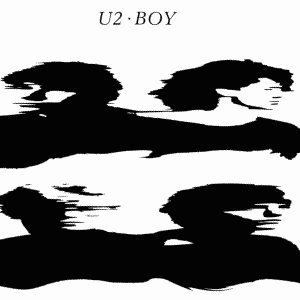 “Boy” takes me back to being a teenager, too, my younger sister, Valerie, was also a big U2 fan back in the day, and she really liked this album, so we’re listening to it on her pink cassette player (why we’re not next door, in my room, listening on my much more powerful stereo, I don’t kn0w). She went on to become obsessed with the Pet Shop Boys’ horrid, evil, and wrong cover of “Where the Streets Have No Name” (and the PSB were generally so brilliant!), to the point where she once played the song 56 times in a row on her pink cassette player, playing, rewinding, and playing the cassette single over and over.
Obviously the soundtrack of our lives (or The Soundtrack Of Our Lives, a brilliant Swedish rock band last decade) is deeply embedded in our memories, much the same way that scents can transport us back in place and time. But I was more than a little surprised how deep U2 is in my mind, how just seeing an album cover can take me back in time across decades, and in place, across thousands upon thousands of kilometres.
Nostalgia and Memory: The Long View
July 9, 2014 § 1 Comment
I was listening to Deltron 3030‘s recent album, Event II, the other day. Deltron is a project between producer Dan the Automator, rapper Del The Funky Homosapien and the turntablist, Kid Koala. Their first album, Deltron 3030, came out in 2000 and was a futuristic romp, whereas the new album is more of a dystopian view of the future. But. What struck me whilst listening to this and writing about nostalgia in Griffintown was, well, nostalgia. There is a funny skit in the midst of the album by the American comedy troupe, The Lonely Island, called “Back in the Day.” In it, two old men, “sitting on the stoop of the future” reminisce about how it was back in the day, a day that has yet to happen, I might add.
Nostalgia is a powerful force. I am also in the midst of reading Maria Rosa Menocal’s The Ornament of the World: How Muslims, Jews, and Christians Created a Culture of Tolerance in Medieval Spain. In it, she discusses the Ummayad founder of the Muslim state in Iberia in the 8th century, Abd al-Rahman. He was a rather singular figure, he was the sole survivor of the massacre of the Ummayad’s by the Abbasids in Syria when he was 20. He escaped across Northern Africa, eventually making it to Spain, where he settled in Córdoba. He was overtaken by nostalgia in his exile, however, and even the Great Mosque of Córdoba is an homage to his lost homeland. As he got older, he got more forlorn, writing poetry evoking Syria and he pined for his homeland, even going so far as to re-create his family’s Syrian estate outside Córdoba.
That Abd al-Rahman should be nostalgic for his homeland is not surprising, as any immigrant knows. But I always find it interesting to think of nostalgia and remembrances in ancient times. Nostalgic yearnings run all through the Ancient Greek, Roman, and Persian works that we have today. Carthage was the site of great museums and libraries before the Romans destroyed it in the 2nd century of the Common Era.
Sometimes it feels like we in Western Europe and North America in the late 20th/early 21st centuries invented nostalgia and yearning for an imagined past. Clearly, we did not.
Research Note: Playing hockey against priests in Griffintown
June 6, 2014 § Leave a comment
As I noted in yesterday’s post on Frank Hanley, we really do live in a different era today. In one of the chapters of The House of the Irish, I talk about hockey in Griffintown in the 1950s and 60s. I interviewed Gordie Bernier, an old Griffintowner, a few summers ago about his life and growing up in Griff and his thoughts on it today. The previous weekend, he was playing in an old-timers hockey tournament in Pointe-Claire, so clearly it was a major part of his life. I can relate.
Bernier recalled playing with the Christian Brothers who ran the School for Boys in Griff and who liked to play hockey against the young men:
Keep your head up. But the league we had, we were only young…I was only, I think 17 or so, and we were playing against men, so some of the guys were older. It was a good experience….You keep your head up [laughs]. We used to go there, I think 8 in the morning to the rink on Basin, I lived other on Duke, we used to walk with our skates on, by the time we get over there if there was snow, give us the shovels, we had to clear off all the snow, and we’d play from 8 in the morning ‘til closing time, 10 at night. We were still there, play hockey all day at the weekend. Walk back, your ankles [were all swollen and sore].
Don Pidgeon, a man who has done more than anyone to create the memory of Griff as an Irish neighbourhood, also remembers playing the Brothers, and smashing one over the boards of the outdoor rink on Basin Street Park in Griffintown, with a hip check.
The Brothers, obviously, played hard, and they played to win. And the lads of Griffintown were not about to give any quarter, as David O’Neill recalls, the Brothers were
great athletes, and a lot of them liked the rough stuff just as much as the boys, and the older boys used to try to establish themselves among their own friends, and there were a few of the priests who used to give and take as good, or better. That generated the respect from the local community towards the priests, and a lot of people respected the priests for their ability to give and take without any complaining. No punishment, except that you got decked back when you weren’t looking.
Certainly, then, this was a different era, when decking a priest, or getting hit back as hard, if not harder, was a means by which the young men and priests earned each others respect, and that of their friends and colleagues, and the wider community.
Research Note: The Legend of “Banjo” Frank Hanley
June 5, 2014 § 1 Comment

Frank Hanley, 1909-2006, in 1942
I met Frank Hanley a couple of times back in the early aughts, including one afternoon in Grumpy’s on lower Crescent St. He was holding court, drinking, I think, a club soda. He was, at this point, already in his 90s. But he was irrepressible. Even though he was 96 or 97 when he died in 2006, I was still surprised to hear the news. He got the nickname sometime back in the 1920s or 30s when he was a minstrel player in Montreal, or so he told me. He didn’t know how to play the instrument. Hanley is the kind of guy that doesn’t exist anymore, which is kind of sad. He was the city councillor for St. Ann’s Ward from 1940 until 1970. He was also the MNA for St. Ann’s from 1948-70. He didn’t belong to any parties, he was always an independent. He tended to side with ‘Le Chef’, Maurice Duplessis, in the National Assembly during the 1950s. But I just never could hold that against him. He also despised Jean Drapeau, Mayor of Montreal from 1954-7 and from 1960-86.
Griffintown was left to die in the 1960s whilst the other neighbourhoods of the sud-ouest were given makeovers, mostly in the form of slum clearances and the building of housing projects in the Pointe, Burgundy, and Saint-Henri. Griff got the rénovations urbaines part, but that was it. Nothing was built to replace what was torn down. And it was not because of the 1963 re-zoning of the area as ‘light industrial.’ All of St. Ann’s Ward was, as were other parts of the sud-ouest. Griffintown, quite simply, did not attract the attention of hôtel de ville and Drapeau’s team of rénovationistes as a site of investment. The only voice demanding Griff get some love was its councillor: Hanley. Local legend has it that Griff was left to die to hurt Hanley’s re-election chances, such was Drapeau’s enmity for him.
Anyway. Hanley was an old school populist politicians, his first real concern was his constituents. And his constituents tended to be poor in Griffintown and the Pointe. He raised money for an emergency fund to help out his constituents when they ran into trouble. Most of this money was raised from other constituents. Occasionally, of course, a few dollars would fall into his own pocket. While today we would shake our heads at this or perhaps bring Hanley up on charges of corruption, in his era, no one had any problem with that.
In the summer of 1967, Hanley ran into trouble with Revenue Canada. He had been handing out over $150 per week to his constituents in trouble for much of the past decade, maybe longer. And, of course, he took a bit for himself. So Revenue Canada threatened to take his house at 500 Dublin St. in Pointe-Saint-Charles. His constituents from Griffintown and Pointe-Saint-Charles had other ideas, and they showed up one morning in Hanley’s yard and proclaimed the ‘Republic of Hanley’ in his front yard.
In the end, Hanley and Revenue Canada reached a settlement.
Research Note: The Pont Champlain
June 4, 2014 § Leave a comment
 Nearly every time I drive over the Pont Champlain, I turn my brain off, and don’t think about the crumbling infrastructure of the bridge, I don’t think about how far it is down to the St. Lawrence. I don’t think about how deep the river is. I don’t think about the litres of ink spilled in the Montreal newspapers, in both official languages, about the bridge. I don’t think about the fact that god-knows-how-many billion dollars are being spent to fix a bridge that needs replacing whilst the politicians in Ottawa and Quebec City continue to argue about how best to replace the bridge. I don’t really think the bridge is going to fall down, of course. But.
So it was a nice change of pace to be finishing off a chapter of The House of the Irish on the dissolution of Griffntown in the 1960s, and to come across documents I’ve collected from the Library and Archives Canada in Ottawa, as well as newspaper articles from The Star, The Gazette and La Presse from the late 1950s and early 1960s, when the Pont Champlain was first opened, and it was a marvel of engineering, and then the city and federal government built the Autoroute Bonaventure into the city in preparation for Expo ’67.
The optimism! The excitement about a new bridge connecting Montreal to the South Shore! The excitement about the Bonaventure, which “sweeps majestically into the city, the river on one side, the skyline in front,” to quote one article from The Star. Next time I cross the Champlain, I’ll try to think of that.
The Problem(s) With Vikings
May 1, 2014 § 17 Comments
I recently began watching Vikings. I have two colleagues who are practically drooling over the show, so, one night when my brain was fried from work and my wife was off at her parents’, I began watching the first series. After watching Episode 1, I was not entirely sure why this was a show people got all excited about. After discussion with another friend, I was persuaded to keep going. So I binged watched, the first half of the first series in one night.
I had severe problems with the show. I’m no expert on the Vikings, though I am a big fan of Norse sagas, and I do deal with the stereotypes of the Vikings when I teach World History. I know enough to know what their culture was like, how they operated, etc. And therein lies the problem. In the first series, especially, I was deeply troubled by Gabriel Byrne’s character, Earl Haraldson. In part, Byrne was horrible in the show, rare for him. He was like a low-rent Sean Penn, between the bad hair and imperious character. But then there’s the problem with Earl Haraldson.
The Vikings lived in a kind of proto-democratic world, their leaders were not autocratic, nor could they afford to be, they required consent from the men they ruled. Interestingly, this is how the hero of the series, Ragnar Lothbrok, rolls. He asserted his authority and leadership over his men, but he did so because they trusted and respected them, and he treated them with respect and gave them some voice in decisions. Earl Haraldson, however, did not. He treated his subjects as if he was an absolutist monarch. The Vikings wouldn’t have tolerated an Earl operating like Haraldson, he would’ve been deposed and/or killed in short order. For example, Ragnar ignored Haraldson’s orders and sailed west towards England, where he plundered and brought back a small fortune with his men. Haraldson responded by confiscating nearly all of the bounty, allowing the men to keep only one item. I have a hard time believing a Viking leader would do that out of fear of upsetting his followers.
I last watched the episode where Ragnar kills Haraldson in a duel. Only at the end of his life did Haraldson act like a proper Viking leader, noting his fear (and respect) of Ragnar, a younger version of himself, and making allusions to the men who followed him and why they did. When Ragnar kills Haraldson, the rest of the men choose to follow Ragnar, who becomes the next earl. That, at least, is somewhat accurate.
I generally don’t worry too much about historical accuracy when I watch historical TV shows and movies. I recognise that story matters more than authenticity, but I also know (from my own experience, too, in working with writers, directors, and actors) that there are attempts to gain authenticity where it’s possible. Take, for example, Martin Scorcese’s The Gangs of New York. It is largely a horrible film, marred by Leonardo DiCaprio’s inability to act (though Daniel Day Lewis as Butcher Bill is brilliant). But I use the film when teaching Irish History or the Irish diaspora in the US, mostly because the setting of the film is generally pretty accurate, even if the story is not.
Vikings, however, isn’t so good at this. Other scholars have criticised it for everything from the clothing the characters wear to the depiction of the Vikings’ religion. Really, it’s a pretty bad TV show set in a fake Viking world (having said that, there is something incredibly compelling about it, I can’t stop watching it). But. When the showrunner, Michael Hirst, says “I especially had to take liberties with ‘Vikings’ because no one knows for sure what happened in the Dark Ages,” I’m just left flabbergasted.
Au contraire, we DO know a lot about what happened during the Middle Ages, and had Hirst bothered to educate himself, he would know better.
 Matthew Barlow