Stephen Harper’s War on Canada
January 30, 2015 § 6 Comments
Last weekend, the Toronto Star published a scathing article, looking at how Canada’s elected government, led by Prime Minister Stephen Harper, has muzzled, shut down, and otherwise sullied government branches. Harper has silenced scientists working for Environment Canada and Health Canada, all in an attempt to keep them from publicising the harm caused by the Tarsands in Alberta.
Then there’s Harper’s war against the Library and Archives Canada. This is the national archives and library of the country. In other words, it’s kind of important. Rather than fund it properly, ensure that Canadians have access to their national history, Harper has cut funding, shut down branches, and done everything it can to prevent us from knowing the history that his government spends too much time blaming us for not knowing. This is unacceptable, and downright terrifying.
Mark Bourrie, the author of the article notes that: “In 2008–2009, Library and Archives Canada spent $385,461 on historic documents. In 2011–2012 it spent nothing. In Washington, the Library of Congress’s acquisition budget was between $18 million and $19 million annually from 2009 to 2012.” Think about that. In 2008-09, LAC’s acquisition budget was .02% of that of the Library of Congress. In 2011-12, it was 0%. This is a national disgrace.
During Daniel Caron’s reign of error at the the LAC, he and his management team came up with a code of conduct for employees:
Caron and his management team came up with a code of conduct banning librarians and archivists from setting foot in classrooms, attending conferences and speaking at public meetings, whether on the institution’s time or their own. The 23 pages of rules, called “Library and Archives Canada’s Code of Conduct: Values and Ethics,” came into effect in January 2013. Employees could get special dispensation from their bosses, but the fine print of the gag order made it unlikely that permission would be granted. The rules called public speaking, whether to university students, genealogy groups, historians and even other archivists and librarians, “high risk” activities that could create conflicts of interest or “other risks to LAC.” The code stressed federal employees’ “duty of loyalty” not to history or to Library and Archives Canada, but rather to the “duly elected government.” Employees breaking the code could find themselves reported to LAC managers by colleagues who turned them in on what James Turk, executive director of the Canadian Association of University Teachers, called a “snitch line.”
“As public servants, our duty of loyalty to the Government of Canada and its elected officials extends beyond our workplace to our personal activities,” the code said. It reminded librarians and archivists, many of whom do not consider themselves public menaces, that they must maintain awareness of their surroundings, their audience and how their words or actions could be interpreted (or misinterpreted). They were warned not to fall into the trap of social media. And LAC employees were warned that teaching a class or speaking at a conference put them at special risk, since “such activities have been identified as high risk to Library and Archives Canada and to the employee with regard to conflict of interest, conflict of duties and duty of loyalty.”
This is appalling. I cannot think of a universe where giving a pubic talk is “high risk.” Especially for an archivist. How is it high risk? University students might learn how to use the archives? Various publics may learn how to look for their ancestors? And the very fact that Harper has farmed out aspects of LAC’s geneaology department to Ancestry.ca is criminal, and nothing short of that.
Then there’s the part about “loyalty to the Government of Canada and its elected officials.” Um, no. Civil servants DO have a loyalty to the Government. It’s part of their job. But a loyalty to the elected officials. No. Wrong. The loyalty of civil servants in Canada is to Canadians, the taxpayers and citizens. We have a right to know whether or not the tarsands are harming our environment. We have a right to be able to go to the LAC to discover our history.
Harper’s war on brains, as The Star terms is, is unacceptable, wrong, and dangerous. The way to build a healthy nation is through an educated populace. But Harper clearly does not want this. He wants Canadians to be poorly-educated, to not have the essential information they need to make decisions on matters of public policy. Stephen Harper needs to be stopped. The Government of Canada needs to recover its moral compass. The government should serve Canadians, not see them as contemptuous and a nuisance to the government.
Harper’s behaviour is nothing short of undemocratic and un-Canadian.
Memory and the Screaming Trees.
January 26, 2015 § 4 Comments
Memory works in odd ways. So this course on space, place, landscape & memory. Last Thursday, in addition to that article on Western Mass, we read Doreen Massey’s article “Places and Their Pasts,” from way ‘back in 1995. And, this got me thinking. About music. I’m currently in a hard rock phase, where everything I’m listening to has loud, very loud guitars. And inevitably, when I am in one of these phases, I come back to the Screaming Trees’ 1992 album, “Sweet Oblivion.” My favourite Trees’ song, “Nearly Lost You” is on this album. But, the album as a whole is one of my favourites of all-time. I first bought it on cassette tape, back when it came out in the fall of 1992. I bought it at the Record Runner, a legendary record store on Rideau Street in Ottawa, that closed in January 2006, after 31 years in business due to gentrification and condofication. When I moved back to Vancouver the following spring, 1993, my best friend, Mike, had the album on CD.
We spent a lot of time driving around the Vancouver region that summer and fall, in his 1982 Mercury Lynx, which I had dubbed the Mikemobile. Mike had a Sony Discman, which he plugged into the cassette player of his car to listen to CDs. It was incredibly moody and jumped when the car hit bumps. Nonetheless, “Sweet Oblivion” was in constant rotation that year. There is, however, a difference between the cassette and CD (and now, digital) versions of the album, however. Track 6, “For Celebrations Past” was not on the cassette version. I listened to the cassette version of the album a lot, but I’ve listened to the CD and digital versions of the album even more. I’ve listened to this album hundreds of times, and I’d estimate at least 80% of those plays are either the CD or digital version. And yet, every time I hear “For Celebrations Past,” it feels like a rude interlude into a classic album of my youth, even though I like this song, too.
I find it interesting that my initial memories of this album trump the memories of the version of the album I’ve heard many more times over the years. I’m not sure what to make of this, really. My memories of Ottawa in 1992-3 are not all that happy, though there was the diversion of Montreal and the Habs’ last Stanley Cup victory, but by the time Guy Carbonneau lifted Lord Stanley’s mug that spring, I was back in Vancouver. So it is bizarre, I think that, my initial memories of the album trump the happier ones, back in Vancouver. And yet, listening to the album, as I did last night, doesn’t transport me back the sub-Arctic cold of Ottawa anymore than it puts me back in the passenger seat of the Mikemobile. Unlike a lot of the music of the early 90s, it’s not evocative of that time and place. Maybe because I’ve continued to listen to the album in the years since. Yet, for me, the proper version of the album lacks “For Celebrations Past” and goes straight from the organs and guitars of “Butterfly” into the vicious punk-inflected “The Secret Kind.”
A Storm of Witchcraft: Salem in 1692 & Ballyvadlea in 1895
December 15, 2014 § 8 Comments
 I read my colleague Emerson Baker’s fantastic A Storm of Witchcraft: The Salem Trials and the American Experience this weekend. Salem bills itself as “Witch City, USA”, the image of a witch on a broom adorns the police cars here. My wife is on the board of the Salem Award Foundation, which seeks to draw
upon the lessons of the Salem Witch Trials of 1692, [to promote] awareness, understanding and empathy in support of human rights, tolerance and social justice. We advance social change through educational programming, stewardship of the Salem Witch Trials Memorial as a place of reflection, and by awarding and celebrating contemporary champions who embody our mission.

The Salem Witch Trials Memorial
As a public historian, the Hallowe’en silliness has fascinated me, as ‘ghost walks’ are held all around town, showing some of the locations sort of connected to the Witch Trials. I say ‘sort of’ because most of the action did not take place in Salem. Most of the accused came from Salem Village (then apart of Salem, now Danvers) and Andover. Some of the trials took place here, though. Nonetheless, every year, hundreds of thousands of people come to Salem, in the wake of the murder of twenty innocent people in 1692-3, most of them on Gallows Hill, to engage in revelry and have fun.
But, this is the first time I’ve engaged seriously in the actual history of the events. I knew the stories, I knew the outlines of what happened here and how those twenty people came to be killed in an explosion of mass hysteria. But, in reading Barker’s book I’ve been impressed at just how deeply held was the beliefs in witches in 17th century New England. Baker makes this argument forcefully, noting how a belief in witches, and in the wickedness of Satan drove Puritan beliefs. In this way, as he argues, witches became a convenient scapegoat in tumultuous times in Massachusetts. There was war with the aboriginals on the frontiers, from what is now Maine to towns located 15-20 miles inland from Salem, like Billerica. The economy was suffering. Puritans felt themselves under attack as religious toleration was extended.
Salem is itself named after the Hebrew word shalom, meaning peace, and is a shortened version of Jerusalem, or City of Peace. Massachusetts was established as a city on the hill, and Salem is amongst the oldest towns in Massachusetts, settled in 1626 by Roger Conant and a group of Puritans, and is two years older than Boston. In 17th century Massachusetts, Salem and Boston were the two major commercial and administrative centres in Massachusetts. All of this was under attack in the late 17th century.
The story Baker tells is not unlike that told by Angela Bourke in one of my favourite books, The Burning of Bridget Cleary, the story of the burning to death of Bridget Cleary, a 25-year old woman, by her husband, Michael, in 1895 in Ballyvadlea, in rural Co. Tipperary, Ireland. What seems a straight-forward case of domestic violence is more than that. Michael Cleary claimed his wife had been taken away by the faeries, and he killed the changeling posing as his wife, as the real Bridget would return from the nearby ringfort, where she had been held captive by the faeries. Bourke then ties the case of Bridget Cleary into larger stories of Irish nationalism and the fight for Home Rule; faeries, then, were a traditional folkway for the people of rural Ireland in a rapidly changing time.
Bridget is often called the ‘last witch’ to be burned in Ireland. She was never accused of witchcraft, so that’s unfair (yes, I am aware of my title). But what is interesting in the similarity of these two stories.
Memory and the Music of U2
September 15, 2014 § 2 Comments
[We now return to regular programming here, after a busy summer spent finishing a book manuscript]
So U2 have a new album out, they kind of snuck up on us and dropped “Songs of Innocence” into our inboxes without us paying much attention. Responses to the new album have ranged from ecstatic to boredom, but I’ve been particularly interested in how the album got distributed: Apple paid U2 some king’s ransom to give it to us for free. Pitchfork says that we were subjected to the album without consent, a lame attempt to appropriate the words of the ant-rape movement to an album.
As for me, I’m still not entirely sure what I think of “Songs of Innocence.” I think it’ll ultimately be disposable for me, though it’s certainly better than their output last decade, but not as good as the surprising “No Line on the Horizon” which, obviously was not up to the standard of their heyday in the 80s and 90s. And I’m not sure about Bono’s Vox as he ages, it’s starting to sound too high pitched and thin for my tastes, whereas it used to be so warm and rich.
 Anyway. iTunes is now offering U2’s back catalogue on the cheap. I lost most of my U2 cd’s in a basement flood a few years ago, so I took a look. But looking at the album covers, I was struck by the flood of memories that came to me. For a long time, U2 were one of my favourite bands, and “The Joshua Tree” has long been in the Top 3 of my Top 5. But, just how deeply U2’s music is embedded in my memories was surprising. For example, looking at the cover of “The Unforgettable Fire,” I am immediately transported back in time, to two places. First, I’m 11 or 12, in suburban Vancouver, listening to “Pride (In the Name Of Love)” for the first time, on C-FOX, 99.3 in Vancouver. Secondly, I’m on a train to Montreal, from Ottawa, in the fall of 1991, listening to “A Sort of Homecoming” as I head back to my hometown for the first time in a long time.
 The cover of “Zooropa” takes me back to the summer of 1993, riding around Vancouver in the MikeMobile, the ubiquitous automobile of my best friend, Mike. That summer, “Zooropa” alternated with the Smashing Pumpkins’ “Siamese Twins” in the cd player, which was a discman plugged into the tape deck of the 1982 Mercury Lynx. US and the Pumpkins were occasionally swapped out for everything from Soundgarden and Fugazi to the Doughboys and Mazzy Star, but those two albums were the core.
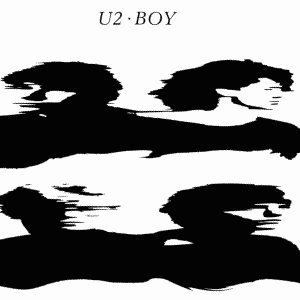 “Boy” takes me back to being a teenager, too, my younger sister, Valerie, was also a big U2 fan back in the day, and she really liked this album, so we’re listening to it on her pink cassette player (why we’re not next door, in my room, listening on my much more powerful stereo, I don’t kn0w). She went on to become obsessed with the Pet Shop Boys’ horrid, evil, and wrong cover of “Where the Streets Have No Name” (and the PSB were generally so brilliant!), to the point where she once played the song 56 times in a row on her pink cassette player, playing, rewinding, and playing the cassette single over and over.
Obviously the soundtrack of our lives (or The Soundtrack Of Our Lives, a brilliant Swedish rock band last decade) is deeply embedded in our memories, much the same way that scents can transport us back in place and time. But I was more than a little surprised how deep U2 is in my mind, how just seeing an album cover can take me back in time across decades, and in place, across thousands upon thousands of kilometres.
Nostalgia and Memory: The Long View
July 9, 2014 § 1 Comment
I was listening to Deltron 3030‘s recent album, Event II, the other day. Deltron is a project between producer Dan the Automator, rapper Del The Funky Homosapien and the turntablist, Kid Koala. Their first album, Deltron 3030, came out in 2000 and was a futuristic romp, whereas the new album is more of a dystopian view of the future. But. What struck me whilst listening to this and writing about nostalgia in Griffintown was, well, nostalgia. There is a funny skit in the midst of the album by the American comedy troupe, The Lonely Island, called “Back in the Day.” In it, two old men, “sitting on the stoop of the future” reminisce about how it was back in the day, a day that has yet to happen, I might add.
Nostalgia is a powerful force. I am also in the midst of reading Maria Rosa Menocal’s The Ornament of the World: How Muslims, Jews, and Christians Created a Culture of Tolerance in Medieval Spain. In it, she discusses the Ummayad founder of the Muslim state in Iberia in the 8th century, Abd al-Rahman. He was a rather singular figure, he was the sole survivor of the massacre of the Ummayad’s by the Abbasids in Syria when he was 20. He escaped across Northern Africa, eventually making it to Spain, where he settled in Córdoba. He was overtaken by nostalgia in his exile, however, and even the Great Mosque of Córdoba is an homage to his lost homeland. As he got older, he got more forlorn, writing poetry evoking Syria and he pined for his homeland, even going so far as to re-create his family’s Syrian estate outside Córdoba.
That Abd al-Rahman should be nostalgic for his homeland is not surprising, as any immigrant knows. But I always find it interesting to think of nostalgia and remembrances in ancient times. Nostalgic yearnings run all through the Ancient Greek, Roman, and Persian works that we have today. Carthage was the site of great museums and libraries before the Romans destroyed it in the 2nd century of the Common Era.
Sometimes it feels like we in Western Europe and North America in the late 20th/early 21st centuries invented nostalgia and yearning for an imagined past. Clearly, we did not.
Research Note: Playing hockey against priests in Griffintown
June 6, 2014 § Leave a comment
As I noted in yesterday’s post on Frank Hanley, we really do live in a different era today. In one of the chapters of The House of the Irish, I talk about hockey in Griffintown in the 1950s and 60s. I interviewed Gordie Bernier, an old Griffintowner, a few summers ago about his life and growing up in Griff and his thoughts on it today. The previous weekend, he was playing in an old-timers hockey tournament in Pointe-Claire, so clearly it was a major part of his life. I can relate.
Bernier recalled playing with the Christian Brothers who ran the School for Boys in Griff and who liked to play hockey against the young men:
Keep your head up. But the league we had, we were only young…I was only, I think 17 or so, and we were playing against men, so some of the guys were older. It was a good experience….You keep your head up [laughs]. We used to go there, I think 8 in the morning to the rink on Basin, I lived other on Duke, we used to walk with our skates on, by the time we get over there if there was snow, give us the shovels, we had to clear off all the snow, and we’d play from 8 in the morning ‘til closing time, 10 at night. We were still there, play hockey all day at the weekend. Walk back, your ankles [were all swollen and sore].
Don Pidgeon, a man who has done more than anyone to create the memory of Griff as an Irish neighbourhood, also remembers playing the Brothers, and smashing one over the boards of the outdoor rink on Basin Street Park in Griffintown, with a hip check.
The Brothers, obviously, played hard, and they played to win. And the lads of Griffintown were not about to give any quarter, as David O’Neill recalls, the Brothers were
great athletes, and a lot of them liked the rough stuff just as much as the boys, and the older boys used to try to establish themselves among their own friends, and there were a few of the priests who used to give and take as good, or better. That generated the respect from the local community towards the priests, and a lot of people respected the priests for their ability to give and take without any complaining. No punishment, except that you got decked back when you weren’t looking.
Certainly, then, this was a different era, when decking a priest, or getting hit back as hard, if not harder, was a means by which the young men and priests earned each others respect, and that of their friends and colleagues, and the wider community.
Research Note: The Legend of “Banjo” Frank Hanley
June 5, 2014 § 1 Comment

Frank Hanley, 1909-2006, in 1942
I met Frank Hanley a couple of times back in the early aughts, including one afternoon in Grumpy’s on lower Crescent St. He was holding court, drinking, I think, a club soda. He was, at this point, already in his 90s. But he was irrepressible. Even though he was 96 or 97 when he died in 2006, I was still surprised to hear the news. He got the nickname sometime back in the 1920s or 30s when he was a minstrel player in Montreal, or so he told me. He didn’t know how to play the instrument. Hanley is the kind of guy that doesn’t exist anymore, which is kind of sad. He was the city councillor for St. Ann’s Ward from 1940 until 1970. He was also the MNA for St. Ann’s from 1948-70. He didn’t belong to any parties, he was always an independent. He tended to side with ‘Le Chef’, Maurice Duplessis, in the National Assembly during the 1950s. But I just never could hold that against him. He also despised Jean Drapeau, Mayor of Montreal from 1954-7 and from 1960-86.
Griffintown was left to die in the 1960s whilst the other neighbourhoods of the sud-ouest were given makeovers, mostly in the form of slum clearances and the building of housing projects in the Pointe, Burgundy, and Saint-Henri. Griff got the rénovations urbaines part, but that was it. Nothing was built to replace what was torn down. And it was not because of the 1963 re-zoning of the area as ‘light industrial.’ All of St. Ann’s Ward was, as were other parts of the sud-ouest. Griffintown, quite simply, did not attract the attention of hôtel de ville and Drapeau’s team of rénovationistes as a site of investment. The only voice demanding Griff get some love was its councillor: Hanley. Local legend has it that Griff was left to die to hurt Hanley’s re-election chances, such was Drapeau’s enmity for him.
Anyway. Hanley was an old school populist politicians, his first real concern was his constituents. And his constituents tended to be poor in Griffintown and the Pointe. He raised money for an emergency fund to help out his constituents when they ran into trouble. Most of this money was raised from other constituents. Occasionally, of course, a few dollars would fall into his own pocket. While today we would shake our heads at this or perhaps bring Hanley up on charges of corruption, in his era, no one had any problem with that.
In the summer of 1967, Hanley ran into trouble with Revenue Canada. He had been handing out over $150 per week to his constituents in trouble for much of the past decade, maybe longer. And, of course, he took a bit for himself. So Revenue Canada threatened to take his house at 500 Dublin St. in Pointe-Saint-Charles. His constituents from Griffintown and Pointe-Saint-Charles had other ideas, and they showed up one morning in Hanley’s yard and proclaimed the ‘Republic of Hanley’ in his front yard.
In the end, Hanley and Revenue Canada reached a settlement.
The Distinct Culture of Anglo Quebecers
April 7, 2014 § Leave a comment
I have been on this listserv of policy wonks and academics in Canada since sometime in the late 90s. Most of the time, I’m not entirely sure why I remain on it, a small handful of the approximately 100 people on it post, and some use it to beat their hobby horses to many, many deaths. But, occasionally, it serves its purpose and intelligent discussion breaks out about various world events, Canadian politics, and the like. Over the past couple of weeks, one of those broke out over the Québec election, which is underway right now.
This has been the most divisive provincial election I’ve seen in Québec in my lifetime, though, admittedly, the bar was set very low with the ruling Parti québécois’ ridiculous, offensive, and racist charte des valeurs, a sad attempt at laïcité. That in and of itself, is fine, and is perfectly consistent with the Euro-francophone world, but the way it was introduced in Québec, and the manner in which it targeted minorities, most notably Arabs and other Muslims, was appalling. And since then, it’s been a raise to the bottom between the PQ, the Parti libéral du Québec, the Coalition pour l’avenir du Québec, and the 4th party, Québec solidaire. For the uninitiated, the PQ is a former leftist, sovereigntist party; the PLQ is a rightist, federalist party, the CAQ is a right-wing, sovereigntist party, and QS is a largely irrelevant leftist sovereigntist party. For the record, I voted QS in 2012 and would’ve again this year if I was still living in Québec.
So, to return to this discussion on the listserv. It was between an Anglo political scientist in Montréal, a Québec sovereigntist, a lawyer in Vancouver, and myself. Three Quebecers and an Anglo Canadian. The discussion largely centred around the PQ and its fitness for government, though, interestingly, the major issue of the election campaign, the charte was largely ignored by three of the four in this discussion (I was the fourth). The political scientist advocated the continuation of the status quo, a PQ minority, the separatist wished for a PQ majority (and a subsequent third referendum on sovereignty), I suggested the PQ was not fit for government based on the charte, and the lawyer ridiculed the entire idea of sovereignty. Other issues raised included protection of the French language and culture of Québec, as well as the fading generation of sovereigntists.
Pauline Marois, the current leader of the PQ and (at least until later tonight) the premier of Québec, is 65 years old. This puts her at the younger end of the baby boomers, who were the ones who really carried the idea of sovereignty in Québec. Interestingly, support for sovereignty is much lower amongst my generation (Gen X) and the millennials. The political scientist noted this, the need for younger blood in the PQ.
I argued that to simply dismiss the PLQ as incapable of defending the French language and culture in Québec is simple-minded, and I mocked the PQ for the charte and also pointed out QS’ near irrelevance. This led the political scientist to assume I voted PLQ. My guess, though, is that my name had more to do with that than anything. I found this rather disappointing, given nearly everything I’ve ever said about Canada/Québec on this listserv has made it clear I am not a knee-jerk Anglo Montrealer (like one I got into an argument with on Twitter this weekend who seemed to be suggesting Anglo Quebecers are a deeply oppressed minority).
But the real silliness emerged with the lawyer, who appears to be of the opinion that Anglo Montrealers and Anglo Quebecers do not have anything distinct about their language and culture, as compared with the Rest of Canada. He opined that in leaving Montréal for Boston, I did not give up much, as opposed to a francophone who would give up nearly everything. I find this argument both fatuous and depressing.
Anglo Montreal, at the least, has a distinct culture, specific to location. Anglo Montreal is often regarded as a large village, as it seems that all Anglos are no more than 3 or 4 degrees of separation from each other. But, more concretely, as McGill linguist Charles Boberg has discovered, Anglo Montrealers speak a dialect of English that is heavily influenced by French and is rather distinct from the Canadian English dialect. This makes sense. English is the mother tongue of about 650,000 people in Québec as a whole. This out of a total population of over 8 million. Within Montréal, out of a total population of nearly 4 million, about 420,000 people are native English-speakers. In other words, Anglos are a small island in a sea of francophone culture (to borrow the metaphor about Québec adrift in the North American sea of Anglos). As such, Anglo Montreal and Anglo Quebec have their own distinct culture and history, shaped as it was by the simple demographic fact of minority. This is very different than the plight of Anglophones in the rest of most of North America (except for Mexico and the American Southwest).
In other words, despite what a lawyer in Vancouver believes, Anglo Montrealers have their own distinct culture, language and identity, one that is separate and distinct from Anglo Canadians in the rest of the country. There are both positives and negatives to this, of course.
But, my Vancouver lawyer isn’t unique. He represents and all-too-common view of Anglo Canadians. Quebecers are perceived to either be beyond the pale of the Rest of Canada (if we’re francophones, I once got told in southwest Ontario that I speak “good English”), or we’re just like everyone else (if we’re Anglos).
So look at that, Québec is a distinct culture all around (Allophones, or immigrants and their descendants also have their own distinct culture in Québec). It might even be a nation unto itself.
Slave Narratives and the Carolina Chocolate Drops
March 31, 2014 § 6 Comments
Last night, we were up in Woodstock, VT, to see the Carolina Chocolate Drops, a string band from Durham, North Carolina. The band is comprised of three African-Americans and fronted by Rhiannon Giddens, who is of mixed white, black, and aboriginal descent, they play a mixture of traditional and modern folk/roots instruments. They’ve revived a number of songs from the slave era in the Deep South, most of which, according to Giddens, were set down in the 1850s, just before the onset of the Civil War. Most of these, however, come without lyrics, for perhaps obvious reasons. The band were incredibly talkative on the stage last night, which created an incredible community vibe inside this small theatre in small-town Vermont. Both Giddens and band mate Hubby Jenkins kept up a running monologue with the crowd, telling us about their songs, how they came to perform them, write them, play them, their traditional instruments, and so on.
Before one song, Giddens told us about her explorations of American history, specifically African-American history, and about a book she read that collated slave narratives, and analysed them collectively, as opposed to the usual individuated approach to slave narratives. However, Giddens also noted one story that stuck out for her, about a slave woman named Julie at the tail end of the Civil War, as the Union Army was coming over the crest of the hill towards the plantation that Julie lived on. Julie is standing with her Mistress, watching them approach in the song, “Julie.”
This video was shot last night, by someone sitting close by us, though I don’t know who shot it, I didn’t see it happening. This is one powerful song, and it got me thinking. I’m teaching the Civil War right now in my US History class, and as I cast about for sources I am intrigued by slavery apologists, then and now, who argue that the slaves were happy. But even more striking are the stories about slave owners who were shocked to their core when the war ended and their slaves took their leave quickly, looking to explore their freedom.
It seems that the slave owners had really convinced themselves that they and their slaves were “friends” and that their slaves loved them. That arrogance seems astounding to me in the early 21st century. But this song last night powerfully brought the story right back around.
The Spanish Civil War: On Memory and Forgetting
March 10, 2014 § Leave a comment
 I have just finished reading Jeremy Treglown’s fantastic Franco’s Crypt: Spanish Culture and Memory since 1936. Treglown is a literary critic, so he approaches history and memory in a manner rather different than a historian, nonetheless, there is definite overlap in methodologies. I must say, I was originally concerned when I picked up the book and read this on the dust jacket: “True or False: Memory is not the same thing as History.” Um, yeah, true. No kidding. But, the whims of publishers are rather different than the arguments of authors.
Treglown does a fantastic job of dealing with the complexities of the Spanish Civil War of 1936-9 and then the long Francoist dictatorship from 1939 until the Generalisimo’s death in 1975 and the transition to democracy that followed. Treglown works very hard against the myth that Republicans = Good and Nationalists = bad during the Civil War. He also works hard against the myth that Franco’s régime was purely repressive and oppressive vis-à-vis art and artists, noting that a great amount of art (film, literature, music, visual art, sculpture) emerged in Francoist Spain. This is not to say that Treglown paints a rosy picture of Francoist Spain. He doesn’t. He doesn’t glorify Franco, but he seeks to complicate the dictator and the community of artists in Spain during and since the Civil War. He also deals with the complexity of characters like Camilo José Cela.
Cela was a nationalist soldier during the Civil War, and later worked as the censor for the Francoist state. And yet, he was also himself a novelist, and remarkably blunt and sensitive in his work. He began a literary journal in 1956 “as a way of countering cultural officialdom and giving space to the ideas of Spanish writers living abroad.” A noble sentiment, given that most of those expat Spanish writers were expatriates due to the Civil War and Franco’s dictatorship.
Treglown points to Cela’s most famous work, San Camilo, 1936. While San Camilo, 1936, has been criticised for a lack of morality, both due to the amount of time the characters spend in brothels and Cela’s avoidance of the larger issues of the war, it is in the details that the novel works. Cela shows the moral and actual ambiguity of war, in Treglown’s words:
Above all, San Camilo, 1936 grieves for Spain, gazing at a graveyard full of flowers of all colors, ignoring the shouts of “¡Viva la república!” and “¡Viva España!” because “it is no use being too enthusiastic when melancholy nests in the heart.
But what mostly interests me about Treglown’s discussion about San Camilo, 1936 is the intersection between memory and forgetting. As Cela writes, “No one knows whether it is better to remember or to forget. Memory is sad and forgetting on the other hand usually repairs and heals.” Nevertheless, as Treglown notes, San Camilo, 1936, is essentially a “puzzled, angry act of commemoration.” In other words, Cela and his characters remain ambivalent with what is to be done with trauma, history and memory.
I find Cela’ claims about the virtues of forgetting to be interesting. We live in an era that seems to believe the opposite in many ways. In our times, cultural historical memories have been exhumed and examined in public. Sometimes this takes the form of commemoration, (such as in Cork, Ireland, in the summer of 1997, marking the 150th anniversary of the Famine) or commissions of Truth and Reconciliation (such as in South Africa after Apartheid). Treglown himself recounts attempts by the caretakers of Franco’s memory to maintain his dignity, three decades later at the Valle de los Caidos (Valley of the Fallen), a huge monument outside of Madrid to honour the Nationalist fallen of the Civil War. Meanwhile, since the end of the dictatorship in 1975, the Spanish have attempted to exhume the bodies of massacred Republican soldiers and sympathisers. Indeed, the balance of power has tipped in favour of the Republicans, to the point where the atrocities committed by them during the Civil War have been whitewashed, just as the Francoists whitewashed the Nationalist atrocities.
Cela’s words, however, led me to think about Marc Bloch’s blistering Strange Defeat: A Statement of Evidence Written in 1940, about the quick Fall of France at the start of the Second World War. Bloch, a captain in the French Army and the country’s most famous historian, wrote this on the run from the Nazis (who eventually killed him). Strange Defeat is a searing book, almost painful to read, written by a fierce French patriot stunned and shocked his nation collapsed in defeat at the hands of the Nazis. Bloch blames France’s political and military leaders for failing to have prepared for modern warfare. And while Bloch remains an annaliste (the school of historical scholarship Bloch pioneered) in writing Strange Defeat, the immediacy of the events he’s describing and his anger and fury are clear.
Bloch was too close to the events, and too involved, to provide a long-view analysis of the Fall of France (nor, for that matter, did he wish to). The same can be said of Cela, a Nobel laureate. San Camilo, 1936 was published in 1969, thirty years after the end of the Civil War, while Franco was still alive and in power. Cela, like Bloch, was involved in the events his novel attempts (or doesn’t attempt) to deal with, and his view on the past, memory, and forgetting is perhaps not surprising.
My grandfather, Rodney Browne, was 17 when he joined the Royal Canadian Air Force in 1943. He was a tail gunner, which meant his chances of survival were pretty slim. And yet he did survive, and he came home to Montréal in 1945 with the conclusion of the war. But he was traumatised, deeply. He suffered silently, primarily by drinking. And he was restless, unable to settle into a job or family life, until his late 40s/early 50s, nearly thirty years after the war. By the time I was born, Rod was settled, married again, and he was a good grandfather. It is from him that I gained an historical consciousness about the Irish in Montréal. He didn’t talk about his past much, and he never talked about the war. I later found out that this was pretty common for men of his generation who served in the Second World War. He didn’t want to remember, which is why he drank when he got home, trying to obliterate those memories.
So maybe, it is the generation who lives through the worst of the trauma that wishes to forget, to never have to think of the atrocities they saw or committed. It is their descendants who feel the need to excavate these memories. Either way, these are not complete thoughts on memory, commemorations, and forgetting. Memory and forgetting remain incredibly powerful tools in historical scholarship.
 Matthew Barlow