Diagnoses and Stigmatization in Mental Health
January 25, 2017 § 2 Comments
Today is Bell Let’s Talk Day in Canada. For every Tweet and Instagram post with the hashtag, #BellLetsTalk Bell (a major telecommunications corporation in Canada) will donate $0.05 to to Canadian mental health programs. For every txt and long distance call made on Bell’s cell and land line networks, it will donate $0.05. And for every view of a video about the initiative on Bell’s Facebook page, and every use of the Bell Let’s Talk geofilter on SnapChat, Bell will donate $0.05. See the theme here?
We can debate the fact that this is a corporate-sponsored thing. Personally, I don’t care. I am more interested in the donations to mental health programs and ending the stigma about mental health. I find it shocking and depressing that in 2017, there still exists a stigma surrounding mental health.
As I noted in a previous post, I am reading Bessel van der Kolk’s The Body Keeps the Score: Brain, Mind, and Body in the Healing of Trauma for a new research project on childhood, memory, and trauma. Van der Kolk is a psychiatrist and, it would appear, a pretty good one. One thing that has really captured my attention in reading this book is his argument about the power of diagnosis. In particular, he is concerned with Post-Traumatic Stress Disorder (PTSD), which arose out of his work with Vietnam veterans at the VA in Boston in the late 1970s. Since then, he has worked with probably thousands of children and adults suffering from PTSD and other ramifications of trauma.
I have long been sceptical of diagnoses in mental health, as they can also lead to a stigmatization of the individual in question. This is certainly an issue, and van der Kolk notes it. But he also argues that diagnosis is very important because it allows for a systematic plan to deal with mental health issues. It allows practitioners and patient/clients to draw on a great deal of expertise from researchers, clinicians, and patients/clients and a variety of treatment models that have been theorized and tested. And, he also notes, there’s the question of research and funding. For example, he notes, between 2007 and 2010, the US Department of Defence spent over $2.7 billion USD on treatment and research of PTSD in combat veterans.
In other words, there is something very valuable in the diagnosis of mental health problems. I still have serious problems with the stigmatization of diagnoses. And I still have a serious problem with the ‘disorder’ terminology used in the Diagnostic and Statistical Manual of Mental Disorders (DSM) of the American Psychiatry Association (APA). The term ‘disorder’ is a dangerous one in mental health precisely because of the stigmatization that comes with it.
Van der Kolk, to be fair, is aware of this and is also leery of what he dismisses as pseudo-scientific diagnoses. In fact, he goes on the attack of DSM-V, which was published in 2013. He recalls how before the likes of Louis Pasteur and Robert Koch, doctors were limited to treating physical symptoms, that which could be seen. Koch and Pasteur, however, pointed out that bacteria, unseen by the naked eye, caused many diseases. Thus, physicians changed their tactics to treating underlying causes, rather than the symptoms of illness. The problem with DSM-V, he argues is that with over 300 diagnoses in 945 pages, it offers ‘a veritable smorgasbord of possible labels for the problems associated with’ severe early-life trauma. He dismisses many of these labels, such as Oppositional Defiant Disorder, Intermittent Explore Disorder, and Disruptive Mood Regulation Disorder, as ‘pseudo-scientific.’
Fundamentally, he argues that the problem with all of these labels is that they are symptoms, not the actual problem.
Staging an Imagined Ireland
January 24, 2017 § 4 Comments
 In anticipation of my book, Griffintown: History & Memory in an Irish Diaspora Neighbourhood being published by University of British Columbia Press in May, I wrote an article for the Wilson Institute for Canadian History at McMaster University’s new blog, Au delà des frontières: La nouvelle histoire du Canada/At the Frontier: New Canadian History. You can read ‘Staging an Imagined Ireland’ here.
Saying No to Nostalgia
January 23, 2017 § 2 Comments
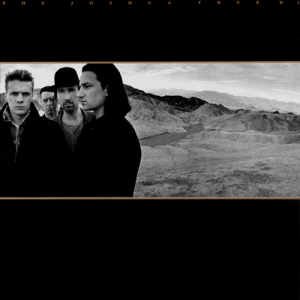 A couple of weeks ago, Pitchfork Media ran a story about U2’s plans to tour The Joshua Tree this year, celebrating the 30th anniversary of their biggest album. In it, Kyle McGovern argued that U2 had finally succumbed to being a legacy act. Of course, this being Pitchfork (or the Drunken Hipsters, as my friend Jean-Sébastien calls the site), McGovern couldn’t resist writing in the voice of a petulant 20-year old who spends too much time alone. Thus, even while noting that touring The Joshua Tree is a ‘win’ for the band, McGovern couldn’t help engaging in the old back-handed praise.
Anyway. The Joshua Tree is my favourite U2 album, not surprisingly. It was my true entrepôt to the band. I was 14 when the album came out, and while I remember heading ‘New Year’s Day’ from the 1983 album War on the radio, this was the first time I bought a U2 album and listened to it start-to-finish. The Joshua Tree tour visited Vancouver in November 1987, and I saw them at BC Place. Well, sort of. You don’t see a lot from the nose-bleeds of BC Place Stadium. The album remains my favourite, though I don’t really see it as the zenith of U2’s creativity as a band. I see it as the culmination of an epoch of the band’s history. And I very much was into their 1990s output. Since then, with the exception of the blip, 2009’s No Line on the Horizon, I’ve found everything they’ve done since the turn of the millennium to suck.
I thought long and hard about whether I wanted to go see the 30th anniversary of The Joshua Tree, especially because they’re headlining Bonnaroo this summer. The festival takes place nearby. When I was 16, my parents got all excited to go see The Rolling Stones at BC Place. And they got all nostalgic about a band that had sucked for most of the past decade. I thought this sad (though I did get them to snag me a Living Colour t-shirt, one of my favourite bands that opened the show). I even mocked them. They took it in stride. I guess they figured my time would come. And it has. Many of my favourite bands of youth have reformed and toured, some of have even released new music of varying quality. Some clearly reformed for the money (hi, there, Stone Roses), some reformed because they missed making music together. And, well, nostalgia.
In 2004, the Pixies reformed and went on a massive reunion tour, wherein it seemed that they actually got along. I saw them in Montréal at the CEPSUM Arena at the Université de Montréal. It was a brilliant show. I didn’t buy a t-shirt, but I did buy the instant-pressed CD of the show. I still listen to it. It was entirely a trip in nostalgia. The Pixies didn’t have any new music to play us. And I hadn’t seen them since 1992, when they opened for, of all bands, U2 at the Montreal Forum. They didn’t disappoint. Their more recent attempts at being a real band, releasing new music, well, that’s a bit different. The Pixies have moved on from being a nostalgia act.
Now nostalgia is not in and of itself a bad thing. The brilliant late scholar, Svetlana Boym, argues that nostalgia shouldn’t be just dismissed as a simple glance backwards with rose-tinted glasses. Nor should it be overlooked or patronised by scholars and journalists. Boym studied nostalgia for communism in Eastern Europe in the 1990s and discovered it to be neither facile nor kitschy. Instead, she argued it’s a ‘sentiment of loss and displacement.’ It is an orientation outwards; a reminder of loss and displacement, and is refracted through an ambivalence towards the present-day, and it is also a romance constructed by our own memories.
In the case of ageing rock bands, then, my parents went to see the Stones in 1989 and I saw the Pixies in 1994 because they were selling something we wanted to buy. Even though the Stones were older and the Pixies were older, they were still symbols of our youth. And we were there to worship at the altar of youth, our displacement into middle age for my parents, and my 30s for me. So, of course, framed in this manner, it doesn’t take a rocket scientist to see our respective ambivalence towards the present-day and our ageing bodies and the complications of daily life.
So back to U2 and The Joshua Tree. Should I go? Should I attempt recreate how I felt when I was 14 years old? No. Of course I shouldn’t go! Why? Because it’s been 30 years. The Edge and Larry Mullen, Jr., are 55. Adam Clayton and Bono are 56. In other words, they’re a decade older than the Rolling Stones were when my parents saw them in 1989. I don’t need to see this. I don’t need to hear and see their ageing. I can see my own, thanks. I don’t need to listen to Bono attempt to hit the notes he sang in 1987, when he was 26. As he’s aged, Bono Vox’s voice has become thinner and higher. This is what happens, of course. But he can’t sing like he did 30 years ago. And this will just depress me, because he can’t sing like he did 30 years ago. And the band, while they have played together for over 40 years, well, they don’t and can’t play like they did 30 years ago either.
In other words, I don’t need a trip down Nostalgia Ave., to rediscover my lost youth, the idealism of youth, or anything else like that. U2 were once my favourite band. But that was a long time ago. We’re all getting older. I’ll try to live in my own life and time this summer, thanks.
Trauma and Memory
January 18, 2017 § 3 Comments
I read David Means’ novel, Hystopia, last week. It is an alternative history of the 1960s and 70s in the United States; a novel within a novel. Hystopia, according to the editor’s notes, was actually written by a Vietnam vet named Eugene Allen, shortly before he killed himself in 1973 or 1974. In Hystopia, JFK survived Lee Harvey Oswald’s bullet, and continued on as president and is now in his 3rd term (the scholar in me wonders how he got passed the 27th Amendment, mind you). He oversaw a massive increase in American involvement in Vietnam, much greater than that of his successor in real life, Lyndon Baines Johnson. And, of course, there was no Great Society policy initiatives. He was eventually assassinated in Springfield, IL, in 1970. But this is not the interesting part. The interesting part is what happens to Vietnam vets when they get home: they get enfolded.
A new branch of the government, Psych Corps, has attempted to use drugs to deal with the horrors that the soldiers in Vietnam saw, with a caveat: they only accept men who are not physically disabled by the war. At the Psych Corps HQ, the vets are fed an anti-psychotic drug and ‘enfolded.’ Psych Corps re-creates the source of the trauma and PTSD for soldiers, they are forced to relive it, and in so doing, their memories are essentially wiped. Thus, veterans who have been enfolded don’t remember their experience in the war, such as the ‘hero’ of the novel, a veteran named Singleton. Singleton, we eventually realise was an officer in Vietnam and commanded the unit that also included the other main characters of the book. But he has no recollection of this. The only thing that connects him to Vietnam is a horrible burn scar on his left side. Singleton’s scar comes from a friendly fire caused by a soldier calling in the wrong co-ordinates for a fire bombing, resulting in his own death.
Now employed by Psych Corps, Singleton falls in love (against regulation) with a fellow officer, Wendy, and sets off to Northern Michigan to track down Rake, a former member of his unit and a failed enfold. Rake, meanwhile, has kidnapped the beautiful but deeply troubled, Meg, whose boyfriend and first love was the soldier who got himself killed. Meg is also Eugene Allen’s sister.
Immediately after Hystopia, I picked up Bessel van der Kolk’s The Body Keeps The Score: Brain, Mind, and Body in the Healing of Trauma, for a new researh project I am undertaking. It turns out that Hystopia and The Body Keeps The Score are directly related for my purposes. I am still only about 100 pages into the book, but van der Kolk is talking about his early experiences in the field of psychiatry in the early 1970s (the same period the fictive Eugene Allen was writing his novel, incidentally) and his first clients, including Vietnam vets at the VA in Boston.
He writes about what trauma does to the brain, using a vet as an illustration. This guy was a high functioning, and very successful criminal lawyer in Boston. But, he was completely empty inside. He went through the motions at home, with his family, at work. He felt violent impulses and thus recused himself from his family, spending weekends at a time drinking heavily in an attempt to get his war experiences out of his head. He had been a platoon leader, and watched helplessly as he lead his men into an ambush. They were all killed or wounded. He was not. The next day, he took his wrath out on a Vietnamese village, killed at least one child and raped a woman.
As I read this story, and others, I couldn’t help think of Hystopia, and the vets being drugged to forget stories such as this veteran’s. In the late 1980s, van der Kolk began experimenting with PET scans and, ultimately, fMRIs, by which the traumatising event is re-created, according to a script, in order to discover which parts of the brain are triggered. It turns out it is exactly the same parts of the brain that one would expect to be triggered during a traumatic event. More to the point, the participants in these experiments reported feeling exactly as they did during the original event. And thus, van der Kolk notes, his colleagues began to wonder about how to use drugs to treat PTSD patients, using the information from the PET and fMRI scans to learn which parts of the brain neeed to be treated. Or, in other words, exactly what happens in Hystopia when the soldiers are enfolded upon return from Vietnam. The difference, of course, is that enfolding works for the majority of patients. There is no cure-all for PTSD for us in the real world.
Nonetheless, van der Kolk notes that we tend to respond to deeply traumatising events, whether something as graphic and terrifying and terrible as his Vietnam vet, or other traumas such as sexual assault, rape, being beaten as a child, etc.. And I found myself wondering about how our brains work to incorporate these memories and recast them in terms of society, how our memories and our traumas are never ours alone, but also belong to our wider society. Our memories are formed, re-formed, and re-fined in light of our interaction with society, of course. And it is difficult to tell where our individual experiences end and our societal imports begin, or vice versa.
And as I embark on a this project, I am wondering where that dividing line is between our own personal traumas and where society intervenes in the reconstructions of the narratives we tell ourselves about our experience. What makes our traumas unique and what makes them like other victims of traumatising experiences?
Cranky White Men and Viola Desmond
December 14, 2016 § 4 Comments
Last week, the Canadian government announced a new face for the $10 bill. Canada’s first Prime Minister, Sir John A. MacDonald (1867-73; 1878-91), has long been featured on the $10, but Canada has sought to modernize our money and to introduce new faces to the $5 and $10 bills. A decision on the $5, which currently features our first French Canadian PM, Sir Wilfrid Laurier (1896-1911), will be made at a later date.

Viola Desmond will be the face of the $10 bill starting in 2018. Desmond is a central figure in Canadian history. On 8 November 1946, Desmond’s car broke down in New Glasgow, Nova Scotia. Desmond was a cosemetician, trained in Montréal and New York, and operated her own beauty school in Halifax. And she was quite successful. So, stuck in New Glasgow over night, she went to see a movie to kill some time. She bought her ticket and took her seat. Desmond was near-sighted, so she sat in a floor seat. Problem is, she was black. And Nova Scotia was segregated; whites only on the floor, black people had the balcony. She was arrested. The next morning, she was tried and convicted of fraud. Not only were black people prohibited from sitting in the main bowl of the theatre, they also had to pay an extra cent tax on their tickets. Desmond had attempted to pay this tax, but apparently was refused by the theatre. So, she was fined $20 and made to pay $6 in court costs.
Desmond is often referred to as the ‘Canadian Rosa Parks,’ but truth be told, Rosa Parks is the American Viola Desmond. Unlike Parks, though, Desmond wasn’t a community organizer, she didn’t train for her moment of civil disobedience. But, Nova Scotia’s sizeable African Canadian community protested on her behalf. But, not surprisingly, they were ignored. She also left Nova Scotia, first moving to Montréal, where she enrolled in business college, before settling in New York, where she died on 7 February 1965 of a gastrointestinal hemorrhage at the age of 50.
I am on a listserv of a collection of Canadian academics and policy wonks. I have been for a long time, since the late 1990s. A discussion has broken out, not surprisingly, about Desmond being chosen as the new face of the $10. The government initially intended to put a woman on the bill. A collection of white, middle-aged men on this listserv are not pleased. They have erupted in typical white, middle-aged male rage.
One complains that the Trudeau government commits new outrages daily and he is upset that “they are going to remove John A. Macdonald from the ten dollar bill to replace him with some obscure woman from Nova Scotia whom hardly anyone has ever heard of.” He also charges that Trudeau’s government would never do this to Laurier (another Liberal), whereas Sir John A. was a Conservative. On that he’s dead wrong.
Another complains that:
Relative to John A., Viola Desmond is no doubt a morally superior human being. If we are to avoid generating our own version of Trumpism, we must be careful not to tear down symbols of our shared history by applying current, progressive criteria to determine who figures on the currency.
Imagine with what relish Trump would tear into his opponents if the US eliminated George Washington and Thomas Jefferson from their currency. Both were slave owners – presumably far worse crimes in present terms than John A’s alcoholism or casual attitude to bribery.
Seriously. All I can say to this is “Oh, brother.” But it gets worse. A third states that:
I have to agree with —–’s sentiment here. We have to stop doing nice, progressive things just because we can. There is a culture war, and we need to be careful about arming the other side.But I would say that having such things enacted by a government elected by a minority of Canadians doesn’t help. (Likely, the NDP and the Greens and even some Conservatives would have supported such a resolution, but) it does contribute to a sense of government acting illegitimately. It contributes to cynicism and outrage to have Trump as president-in-waiting with fewer votes than Clinton, for example.
Do Not Make Hatred Mainstream, or, Don’t Feed the Trolls
November 30, 2016 § Leave a comment
Donald Trump is the first man elected President of the United States with the support of the Ku Klux Klan and other white supremacist groups since, well, before the Civil War (Andrew Johnson was elected Vice-President, but he did so as Lincoln’s junior partner and after taking a hard-line against Confederates, which he later walked away from). I refuse to call these people the alt-right. They’re not. They’re white supremacists.
But in the wake of Trump’s election, the media has been bending and tripping over itself to normalize white supremacy. Perhaps those in the media behind this would claim that they’re just attempting to understand. But there is nothing to understand. White supremacy is pretty bloody obvious. There is no need to explain it differently, it is deeply offensive to let members attempt to explain themselves and argue for the justness of their cause in public. There is no justness of their cause.
I came of age in the early 90s, when racist skinheads could still be found wandering around Canadian cities like Ottawa, Toronto, and Montreal. There, they beat on black people, harassed and intimidated non-white people, targeted LGBTQ people. Violently. And since that era, white supremacy has faded into the background, usually affiliated with violent racist fringe groups.
Until now. President-Elect Trump has appointed Steve Bannon, an anti-Semitic, misogynist white supremacist as his Chief Counsel. And much of the so-called liberal media in the United States has attempted to normalize it, like this is just a run-of-the-mill appointment.
But it gets worse. Starting the morning after the election, on November 10, NPR was interviewing white supremacists on Morning Edition, as if that was to be expected. The New York Times has alternated between shaming the incoming administration for its ties to white supremacists and normalizing those same ties. The BBC has allowed the editor of The Weekly Standard, a deeply conservative, and apparently racist, publication, onto its set to claim that the KKK does not exist and, moreover, even if it did, to compare it with the Catholic fraternal organization, the Knights of Columbus. Nearly every media platform I consume has had some commentary from David Duke crowing about how happy he is. And CNN had a man on last week asking whether or not Jews are people. I refuse to provide links to this. Search them yourselves if you want to see/read.
This is disgraceful. This is giving screen-time to white supremacists, it is making them acceptable members of the body politic. It is allowing white supremacy to gain a beach head in the mainstream. This is wrong. So very wrong. None of these clowns deserve support, or attention. There’s a reason they were almost personae non gratae in the mainstream for the past two-plus decades: they’re extremists. And watching the media feed these trolls is nauseating.
Post-Truth Is A Lie
November 18, 2016 § 7 Comments
Liberal news media sites are all a-gog with the rise of the ‘post-truth’ politician. Donald Trump is the most egregious example, nearly everything that comes out of his mouth is a lie. But Boris Johnson. Nigel Farage. Marine Le Pen. I could go on. It’s so bad that the venerable Oxford Dictionary has named ‘post-truth’ its word of the year for 2016.
I do not like the term ‘post-truth.’ I believe this is a case where a spade is a spade. These politicians are liars. They’re lying. They tell lies. Untruths. Fibs. Fiction. Calling it ‘post-truth’ normalizes their lying. It makes it seem ok. Like, we’re all in on the joke. Like none of this matters.
It matters. Deeply. In the country I live, the United States, we have just elected a president who has determined that Donald Trump speaks the truth exactly 4% of the time. Four per cent. A further 11% of his public utterances are ‘mostly true.’ And 15% are ‘half true.’ But half-true is still a lie. I learned the term from a lawyer friend, who notes lawyers love terms like this, because it means something is essentially a lie, but because there’s some factual veracity to it, it’s copacetic. So. Even if we want to be generous to Trump, 30% of his public utterances contain factual veracity. The other 70%, the overwhelming majority of what he says? Well, they’re ‘mostly false’ (19%), ‘false’ (34%), and the remainder, 17%, are what PoliFact calls ‘pants on fire,’ as in that children’s rhyme: ‘Liar, liar, pants on fire!’
Yes. The United States has just elected a man who speaks God’s honest truth 4% of the time he opens his mouth in public.
This is not ‘post-truth.’ This is lying. Donald Trump is a liar. Boris Johnson is a liar. Marine Le Pen is a liar. Nigel Farage is a liar. We need to call this what it is if we wish to combat it. The decisions people like Trump and Johnson get to make as head of state and government minister, respectively, impact the lives of millions of people, and not just in their own countries.
A lie is a lie is a lie.
Trump and the White Working Class
November 14, 2016 § 2 Comments
The chattering classes are twisting themselves into knots to try to explain and understand how and why Donald Trump won last Tuesday. How did he win out in traditionally Democratic territory in the Rust Belt? This has been the $64,000,000,000,000 question. Me? I don’t see it as being that complicated.
Underneath it all, there is a very simple economic message that Trump has communicated to his base: he has promised to cut up NAFTA and bring the jobs back. The United States is currently reaping the consequences of ignoring the plight of a sizeable chunk of the population for nigh-on 30 years. They have lost their jobs, their self-esteem, their way of life. Time was, you could graduate from high school on Thursday. And Friday morning, wake up and head over to the HR office of the local factory or plant. They knew you; your dad worked there, so did your uncles and big brother. Your mom worked there, so did your sisters and your aunts. They hired you immediately. And on Monday, you came to work for the first time. And then you stayed there for 35-40 years. You made good money. Got married, had kids, raised them. Eventually, you retired. Your thanks for your loyalty and hard work was a generous pension plan that took care of you in return for giving your working years to the company. But that’s all gone. Deindustrialization. And free trade.
What happened when the jobs dried up? People lost their homes; their cars; their marriages. Alcoholism and addiction became more common. Re-training programs were a joke, they didn’t plan anyone for a new career in computers. Some were lucky and found a new career in the service industry. But making $9/hr to stock shelves at Walmart doesn’t pay the bills. Then there’s health insurance and benefits. With GE, those were all taken care of. Waffle House doesn’t take care of them. Their churches tried to take care of them but most of them weren’t religious to start with. And their politicians? They paid lip service for a bit, both Democrats and Republicans. But then they got bored and got obsessed with other things. And so no one had these dispossessed, under- and un- employed people’s backs.
And as a result, the Midwest joined the South as the lands of cultural carnage. They got written out of the national narrative, except when something stupid happens (don’t believe me, go read this rant from the Bitter Southerner). Think about TV and the movies. Time was, they were set in Milwaukee and Minneapolis and Savannah, GA. Now? Not so much. And when they are, you get Mike & Molly; their characters met at Overeaters’ Anonymous. And besides, it’s set in Chicago. Chicago isn’t of the Midwest anymore. It’s a national city. America no longer tells stories about the heartland anymore. There are no more little ditties about Jack and Diane. Midwesterners don’t see themselves on TV or the big screen, unless it’s a story about them going to NYC or LA. For example, The Unbreakable Kimmy Schmidt. Or Parks and Recreation, which also began as a mockumentary making fun of Lesley Knope and the residents of Pawnee, IN.
The United States has long been a deeply divided nation. We like to think it’s North-South. It’s not. It’s the coasts and Chicago vs. the ‘flyover states.’ What’s more dismissive than referring the bulk of the nation as ‘flyover’ territory? No one listens to the fears and frustrations of the former white working class. And their visceral anger brings out all their latent fears of mistrust of anyone not exactly like them: African Americans, Muslims, immigrants, LGBTQ, and so on (and this in no way excuses hatred) And then Trumpism occurs.
Donald Trump and his Cult of Personality came along in the 2016 election and he promised to be their champion, to get rid of NAFTA, to bring the jobs back. I get this argument, I think I understand the visceral nature of it as both a son of the working class and an historian of deindustrialization. My family lost out with the first FTA between Canada and the US in 1988. My Old Man lost his job as his company sold out to a larger one south of the border. And the brief period of relative prosperity we had in the mid-80s was gone. He eventually recovered, luckily for us, he was a skilled tradesman, a welder. And my mom was university-educated. But. We lost. And so many others. Their anger is visceral. Even now, 30 years on, I still maintain deep, deep suspicion to FTA agreements, for this exact reason, despite knowing the rational reasons to support it.
But Trump cannot deliver on his promises. If he tears up NAFTA and other FTAs, the American economy will collapse, and so, too, will the world’s. Those factory jobs aren’t coming back. Automation, people. The smallish factories across the region I live in, the South, do not employ more than a fraction of what they used to; automation. More to the point, Trump doesn’t care about these people any more than anyone before him did. He used them to get to the White House, he exploited their anger.
So what is going to happen when all these angry white working class people realize they’ve been lied to, again? When Trump is revealed as nothing more than a false prophet, that anger will still be there. But it will be amped up because he failed to deliver. And they will look for scapegoats, and all the people who already feel unsafe will feel it all the more. Racism, homophobia, misogyny; these will all be amplified. Maybe Trump will mollify them by blaming someone else, another shadowy group that hindered his ability to deliver on his promises as our leader. Or maybe he’ll double down on the elitists, Mexicans, Muslims, immigrants, etc., etc. I don’t feel optimistic either way.
Gentrification: Plus ça change
September 14, 2016 § 2 Comments
I’m reading a book that is, for the lack of a better term, a biography of the Kremlin. I am at the part where the Kremlin, and Moscow itself, gets rebuilt after Napoléon’s attempt at conquering Russia. Moscow had been, until it was torched during the French occupation, a haphazard city; visitors complained it was Medieval and dirty. And it smelled. And not just visitors from Paris and Florence, but from St. Petersburg, too.
In the aftermath, Moscow was rebuilt along Western European lines, in a rational manner. And the city gentrified, the Kremlin especially:
This was definitely a landscape that belonged to the rich and the educated, to noblemen and ladies of the better sort. It is through the artists’ eyes that we glimpse the well-dressed crowds: the gentlemen with their top hats and shiny canes, the ladies in their bonnets, gloves, and crinolines. They could be leading citizens of any European state, and there is little sense of Russia (let alone romantic Muscovy) in their world.
Leaving aside the fact that there were no citizens of any European state in 1814, this sounds remarkably familiar. This is the same critique I have written many times about Griffintown and Montreal: as Montreal gentrifies, it is becoming much like any other major North American city.
But it is also true of gentrification in general. There is a part on the North Shore of Chattanooga, Tennessee, I really like. It finally dawned on me that it is because it reminds of me Vancouver architecturally, culturally, aesthetically, and in the ways in which the water (in this case the Tennessee River, not False Creek) is used by the redevelopment of this historically downtrodden neighbourhood. But. I could also be dropped into pretty much any North American city and see similarities: Toronto, Vancouver, Montreal, New York, Boston, Seattle, Portland (Oregon), Cincinnati, Cleveland, Buffalo, Chicago, Atlanta, Nashville. These are all cities (amongst others) where I have seen the same tendencies.
And, obviously, one aspect of gentrification is the cleansing of the city of danger and vice. Just like Moscow was cleaned up in the aftermath of 1812.
 Matthew Barlow