21 Short Films About Griffintown
March 30, 2017 § Leave a comment
As regular readers will know, I have been working on the history and memory of Griffintown, Montreal for many years now. My book, Griffintown: Identity and Memory in an Irish Diaspora Neighbourhood, is out in May (the paperback will be out in the fall). And, of course, I have been working for a few years now with Montreal film-maker, artist, animator, and purveyor of all things creative, G. Scott MacLeod. Our project, 21 Short Films About Griffintown, is now up on the web for all to see.
This project is based on a walking tour of Griff Scott developed, and can be followed on your smart phone. We have 21 very short films of 21 sites around Griff, about their history and significance.
I like these clips, partly because Scott has done some great work contextualizing my stories of these sites with archival footage, his animations, and music, because all of this also minimizes my screen time. But also because it was a fun day that we spent wandering around Griff filming these. It was a hot August day in 2012, a day or two before I left Montreal for good. I had my dog, Boo, with me. He was all stressed out because of the move and had scratched his face raw. So he was with me because I had to keep him from scratching the infection. He trundled along with us in the 30C heat, usually with my foot on his leash as we filmed. Boo was a massive dog, around 150lbs, a Mastiff/Shepherd cross. He was a big, gentle giant. Boo died last year, so I see this project as a bit of a memorial to him, even if he doesn’t appear on screen. 
History & Memory and Abraham Lincoln
March 27, 2017 § 12 Comments
Lincoln’s birthday came and went in February, largely ignored in Tennessee and other Southern states. In the wake of his birthday, this image came floating through my Twitter feed. This is an interesting take on the question of history and memory of the Civil War. It fascinates me on both levels.

Factually, there is not much in this that is true. And the interpretation presented in this poster is, well, wrong. The part on top, with the spelling and grammatical mistakes, was tacked onto the Wanted poster by someone as it travelled through the right wing, Confederate social media world. I don’t know who did it.
Note how the unknown commentator claims that Lincoln waged an unholy war against the South. The Civil War, of course, was begun by the Confederacy, when it attacked Fort Sumter, in the harbour of Charleston, SC, on 11 April 1865. Thus, the war is not the fault of the Union. Fort Sumter was a fort held by the United States military, constructed in the wake of the War of 1812. There are no ‘hard facts’ that can be presented to deny this historical truth.
But, of course, fact and memory are not the same thing. And this is why the question of history and memory fascinates me. It’s not simply a matter of how we remember history as individuals, as our own individual memories are a function of society as well, but it’s also a question of how all of our individual memories work in concert with each other to form cultural memory.
Certainly, in the South, the Civil War is remembered differently from the North. And it is not always remembered in a cartoonish, neo-Confederate manner as this. On a more basic level, many Southerners can express distaste for the actual causes of the war and the war aims of the Confederacy and a deep pride in their ancestors’ gallantry in battle against the North. Hence the romance and popularity of Civil War re-enactors and their romance of the Confederacy. And, of course, there is a careful parsing of the larger context of the Confederacy and its reasons for fighting the war in the first place.
Slavery is the first or second thing mentioned in every single Confederate state’s articles of secession. It was central to the war aims of the Confederacy. It was not, however, central to the war aims of the Union, despite what many Northerners believe. It was not until the Emancipation Proclamation came into effect on 1 January 1863, nearly two years into the war, that the end of slavery became a Northern war aim. In short, then, the Civil War happened, from the perspective of the Confederacy, over slavery. Not states’ rights (had it been, the fight over the entry of new states to the Union and whether they’d be slave states or not, would not have happened).
And clearly, Lincoln is remembered differently on either side of the Mason-Dixon line. But there is also a question of history. When the Republican Party tweeted a fake quote from Lincoln for Lincoln’s Birthday (in a tweet that has since been deleted), it wasn’t the fake quote that amused me, it was the GOP’s statement. Lincoln certainly did not bring the nation together. His election was the excuse the Confederacy used to justify secession.

But at any rate, to return to the original issue here of the differing memories of the Civil War and un-reconstructed Southerners: One could indeed argue that Lincoln violated the Constitution. Many people have made this argument, including respected historians and constitutional scholars. Lincoln was very aware of his expansionist reading of the Constitution and reminded his opponents that they could question him, through the ballot box and via the court system. Ultimately, however, his expansion of the Constitution has been recognized by scholars as an historical fact, more or less.
But there is also the question of other means of bending the Constitution. In the case of habeus corpus, Art. I. Sec. 9, cl. 2 of the Constitution reads:
The Privilege of the Writ of Habeus Corpus shall not be suspended, unless when in Cases of Rebellion or Invasion the public safety may require it.
However, Article I of the Constitution lays out the powers of Congress, not the Executive (that’s Article II). However, Congress can delegate authorities to the Executive, and has (for example, during World War I, the Food and Fuel Control Act of 1917). But, Congress had not delegated this power to Lincoln. Thus, in ex parte Merryman, a federal court decision in 1861, Justice Roger Taney, who was the Chief Justice of the Supreme Court, but sitting as a federal court justice, found Lincoln’s suspension of habeus corpus and his delegating of this power to United States Army officers to be beyond the law, that the suspension of habeus corpus was limited to Congress, which could, of course, delegate this power. Merryman, however, was ignored by Lincoln on the grounds of necessity due to the unusual circumstances of the war. He argued that the Civil War was exactly situation noted in the Constitution, a case of rebellion. And, furthermore, he argued that the President has had to act many times when Congress was not in session. Indeed, this is true, dating back at least Jefferson’s era. In these cases, the President is expected to seek post facto permission for his actions from Congress. Indeed, in 1863, Congress passed An Act relating to Habeas Corpus, and regulating Judicial Proceedings in Certain Cases.
Indeed, in my copy of Richard Beeman’s Penguin Guide to the United States Constitution, which I assign every semester, as it annotates the Declaration of Independence and the Constitution, Beeman merely states the following:
On at least a few occasions American presidents have suspended while either suppressing rebellion or protecting public safety.
Beeman then uses President Lincoln and the Civil War and President George W. Bush in the wake of 9/11 as examples. That’s all. In other words, this is a recognized power of the president, though Beeman does note that Bush based his actions on the USA Patriot Act, which is obviously an act of Congress.
As for the treason claimed in the Wanted post, I’m not sure where this comes from, given that the attempted secession by the Confederacy was, by definition, a treasonous act. Treason is an attempt to overthrow or betray one’s country. Certainly, the Confederates felt that the American government had overstepped its bounds and was attempting to claim the right to rebel, as the Founding Fathers had in the Declaration of Independence.
Nor did Lincoln imprison 40,000 Northerners in military prisons during the war. I’m not even certain where such a number would come from.
As for the question of the plight of Southerners under Union occupation, that is another thing entirely. Certainly, federal troops did commandeer supplies and property. They did rape Southern women. But, the argument about the loss of civil rights, well, the Confederacy did start the war. There was no official declaration of war, given that the Union refused to recognize the Confederacy, nonetheless, there was most certainly a war And the war was fought in Southern territories. Thus, the suspension of civil liberties in a territory of open rebellion should not be surprising.
Nonetheless, while I would not state that the vision of Abraham Lincoln in this Wanted poster is a common one in the South, there is a small fringe that does view him in this manner. And I also do not find this surprising, given the romanticization of the Civil War in the minds of many (and not just in the South). Lincoln was the enemy, obviously. And so it should not be surprising that someone, thinking it clever, created this Wanted poster (though I cannot speak to the editorialization attached to it).
In this romanticized version of the Civil War I have seen up close, at County Fairs and the like in Alabama and Tennessee, something interesting happens to the Civil War. Race is removed from it, in that the Sons of the Confederacy, the ones who dress up and Civil War garb and re-enact the war, insist they have no racial malice and that there is no racial malice behind their play-acting nor flying of the Confederate Battle Flag (whether or not this is true is a matter for another blog post). Rather, they claim, they are celebrating the gallantry of their ancestors against the Northern incursion (and, of course, the reasons for that incursion are elided).
And this brings me to what I see as the greatest irony of the lionizing of the Confederacy. I had a student who wrote an MA thesis on the Confederate soldiers between the Battle of Shiloh in southwestern Tennessee in April 1862 and the Battle of Mobile Bay in southern Alabama in August 1864. She used soldiers’ diaries as a major primary source. Shiloh was their first battle and many of these men responded much as you’d expect: abject terror at the actual grizzly face of mid-19th century war. And almost overnight, these young men went from being keen to be battle-tested to bitter. They were bitter at their inadequate supplies and medical care and leadership. But they were also bitter that they were being compelled to fight for the right of rich men to own slaves. As they marched South, chased by the Union Army through Mississippi and Alabama to Mobile Bay, they became increasingly angry and bitter. Those that survived did fight, against insane odds. And generally lost in this theatre of war, which was very different than the one commanded by Robert E. Lee in Virginia. In Tennessee, Alabama, and Mississippi, they were outgunned, outmanned, and victim to poor leadership. But even the soldiers in Lee’s Army of Virginia were well aware of the irony that they, too poor to own slaves, were laying their lives on the line for the rich slave owners.
It’s certainly a historical truism that poor men are the cannon fodder for the rich. Even today, the US Armed Forces tend to draw their recruits from the poorer areas of the South. So that the poor white men of the South found themselves in grey uniforms and fighting the US Army should not be surprising. So, in many ways, this is what these men, the Civil War Confederate re-enactors are interested in: the plight of poor men. And celebrating their ancestors. But, their ancestors were on the wrong side of history. And the wrong side of the Civil War.
And so they’re left with the uncomfortable problem of unsorting the simple fact of slavery and racism from their views of the Civil War. Hence the rise of the states’ rights claim. Or others. The simple fact is that they’re confronted with a double dose of difficult knowledge in confronting the Confederacy and the Civil War. First, the slavery issue. Second, their ancestors’ plight of fighting and dying for rich, slave-owning plantation owners. And perhaps this is their way out of the racial conundrum: these men and women, their ancestors weren’t the slave owners.
Writing the History of the Trump Era
February 14, 2017 § 4 Comments
A couple of weeks ago, I was asked how future historians will be able to tell our history? We live in what is allegedly a post-fact era. First things first, whatever you want to call it, post-fact, post-truth, alternative facts, these are all just lies. I have already commented on this. Nonetheless, whether this is just a re-labelling of lying, we are still in this cultural moment. Every day the Trump administration deals in what White House Counsel KellyAnne Conway calls ‘alternative facts.’ What is the truth now, my interlocutor wanted to know?
I have been asked this question in a variety of ways in the past year and it is a real challenge we face. But we don’t face in terms of future historians, academics and journalists are already facing the problem. Michael A. Innes, a good friend of mine, has been thinking about this of late too. He notes that
Media outlets come in all shapes and sizes. Some are loud and boisterous, while others are more stoic. “Newspapers of record” are a recognized form of the latter. Some try to report what happened, while others try to convince readers why and how they happened. Media output, in other words, can serve more than one purpose, and only one of them is to provide researchers and analysts with a source of evidence needed to determine the factual basis of past events: what happened, when it happened, who was involved, what they said about what happened and so on. Reconstructing past events is a tricky business, and some media environments are so highly politicized – the rhetoric so overheated and contentious – that verifiable facts are almost impossible to discern from the collection of color and misdirection in which they’re embedded.
Indeed. The reconstruction of the past is indeed a tricky bit and I will go further than Innes and argue that it is an inherently political act. This is true whether it’s on the minor scale, such as I did in reconstructing a version of the history of Griffintown, Montreal (and yes, I am enjoying linking my own book). But it’s also what societies and cultures do anyway.
When we reconstruct the past, we do so from a variety of sources, including printed records, including government documents, diaries, published work, literature. We also use film, TV shows, documentaries, and music. We use oral sources, both those already collected and ones we collect. And we also make use of the digital: Twitter, Facebook, Reddit, blogs, etc. We have to make decisions in what gets included in our reconstructed histories.
Historians, we tend to go further than journalists. Innes notes that some media outlets report on what happened, whilst others focus on why and how they happened. And quite often the latter try to convince you of the version of events they are pushing. This is the difference between, say, The New York Times and Breitbart, or the CBC and FoxNews. The Times and the CBC deal in facts in reporting the news, and editorials are clearly labelled. In the case of Breitbart and FoxNews, there is a blurring of ‘news’ and editorials.
When I teach, I always remind my students that we are more interested in the how and the why of history, we need to move beyond facts and into interpretation. How do we do that? Logic and reasoning. We use other scholars as guides. We read what other historians have written on the subject, or an analogous subject. We consider their interpretations based on the evidence. We agree or disagree. Or we agree and see another possibility. And so on.
Back in Grade 2 or thereabouts, my teacher introduced us to the who, what, when, where, why and how? The key questions for all situations. So in writing history, we begin with the who, what, when, and where. We establish the facts. And we establish these from our sources. Even in this post-fact era, there are still facts. They still get reported, they’re still plain to find in doing research. And from there, we ascertain the why and the how.
So how do we source that in the post-truth world? Innes notes the guerrilla archiving of data, creating an archive of truth and records of the real world to counter the post-factual. But there are other, more simpler ways we do this through the ‘reading’ of our sources, whether they are government documents, newspapers, novels, films, music, Twitter, and so on. When we read these sources, we do so within a cultural context, of course. And we do tend to have strong bullshit detectors.
My MA thesis tells the story of the Corrigan Affair, which erupted in Sainte-Sylvestre, Quebec, in late 1855 when neighbourhood bully, an apostate, Robert Corrigan, was beaten to death by a gang of his Irish-Catholic neighbours at the county fair. When his murderers evaded capture for the next six months, all hell broke loose in a highly sectarian Canada. Anglo-Protestant politicians and newspapers were beside themselves over the fact that these Irish-Catholic ‘hooligans’ managed to evade the state’s attempts to bring them to justice. They did so through the help of their neighbours and an intimate knowledge of geography of the Appalachian foothills of southern Quebec.
The local Anglican priest in Saint-Sylvestre, Rev. William King, was ground zero for the ‘alternative facts’ of the Corrigan Affair. In daily dispatches to government ministers and the Quebec City press, Rev. King constructed an alternate reality where the Irish-Catholics of Sainte-Sylvestre were parading around openly armed and threatening Anglo-Protestant, beating them nearly to death for fun. He told of marauding gangs of Irish-Catholics breaking into homes in the middle of the night and tearing homes to pieces and beating the men and boys of the house. Rev. King’s invented reality was accepted verbatim by government ministers and the Quebec City press.
So how did I find out what happened in Saint-Sylvestre in the fall and winter of 1855-56? I reconstructed events through a mixture of sources, both government and official and vernacular. I relied on petitions from the Irish-Catholics of Saint-Sylvestre, who claimed to be brutalized by the Orange Order. I relied on the French Canadian press of Quebec, which watched both sides with bemusement. I read the depositions of the French Canadians of Saint-Sylvestre, who were similarly bemused by their neighbours’ actions. and from these varying sources, I reconstructed the events of the Corrigan Affair. I learned to tell fact from fiction, or at least something that looked more likely to have occurred than not.
And this is what historians will do when they tell the story of our time. They will look at the lies that are produced at the White House and then compare that to what other sources say about what is going on, including the media, but also our Twitter feeds, our Facebook posts, our Reddit commentary. Maybe even blogs like mine.
We will continue to examine history as we always have, sifting through varying and contradictory versions of events to reconstruct what actually did happen. And, of course, being a public historian first and foremost, I will be fascinated by the myth-making at the White House, and the puncturing of that myth by the rest of society, about the hows and whys we choose to remember this time.
Punk as the Establishment
February 10, 2017 § Leave a comment
When Joe Corré, son of Malcolm McLaren and Vivienne Westwood, torched his Sex Pistols memorabilia in November, I was left very conflicted as an ageing punk and a public historian. I felt equally conflicted when I learned that British Conservative Prime Minister Theresa May wears Vivienne Westwood designs. Or, rather, I was horrified at that, so I pondered Corré’s argument the more. And I wrote a post for the National Council on Public History‘s blog, History@Work. It got published today.
Saying No to Nostalgia
January 23, 2017 § 2 Comments
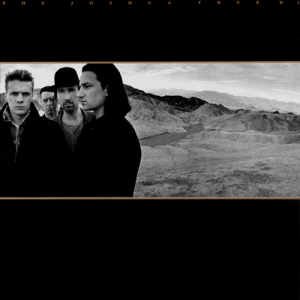 A couple of weeks ago, Pitchfork Media ran a story about U2’s plans to tour The Joshua Tree this year, celebrating the 30th anniversary of their biggest album. In it, Kyle McGovern argued that U2 had finally succumbed to being a legacy act. Of course, this being Pitchfork (or the Drunken Hipsters, as my friend Jean-Sébastien calls the site), McGovern couldn’t resist writing in the voice of a petulant 20-year old who spends too much time alone. Thus, even while noting that touring The Joshua Tree is a ‘win’ for the band, McGovern couldn’t help engaging in the old back-handed praise.
Anyway. The Joshua Tree is my favourite U2 album, not surprisingly. It was my true entrepôt to the band. I was 14 when the album came out, and while I remember heading ‘New Year’s Day’ from the 1983 album War on the radio, this was the first time I bought a U2 album and listened to it start-to-finish. The Joshua Tree tour visited Vancouver in November 1987, and I saw them at BC Place. Well, sort of. You don’t see a lot from the nose-bleeds of BC Place Stadium. The album remains my favourite, though I don’t really see it as the zenith of U2’s creativity as a band. I see it as the culmination of an epoch of the band’s history. And I very much was into their 1990s output. Since then, with the exception of the blip, 2009’s No Line on the Horizon, I’ve found everything they’ve done since the turn of the millennium to suck.
I thought long and hard about whether I wanted to go see the 30th anniversary of The Joshua Tree, especially because they’re headlining Bonnaroo this summer. The festival takes place nearby. When I was 16, my parents got all excited to go see The Rolling Stones at BC Place. And they got all nostalgic about a band that had sucked for most of the past decade. I thought this sad (though I did get them to snag me a Living Colour t-shirt, one of my favourite bands that opened the show). I even mocked them. They took it in stride. I guess they figured my time would come. And it has. Many of my favourite bands of youth have reformed and toured, some of have even released new music of varying quality. Some clearly reformed for the money (hi, there, Stone Roses), some reformed because they missed making music together. And, well, nostalgia.
In 2004, the Pixies reformed and went on a massive reunion tour, wherein it seemed that they actually got along. I saw them in Montréal at the CEPSUM Arena at the Université de Montréal. It was a brilliant show. I didn’t buy a t-shirt, but I did buy the instant-pressed CD of the show. I still listen to it. It was entirely a trip in nostalgia. The Pixies didn’t have any new music to play us. And I hadn’t seen them since 1992, when they opened for, of all bands, U2 at the Montreal Forum. They didn’t disappoint. Their more recent attempts at being a real band, releasing new music, well, that’s a bit different. The Pixies have moved on from being a nostalgia act.
Now nostalgia is not in and of itself a bad thing. The brilliant late scholar, Svetlana Boym, argues that nostalgia shouldn’t be just dismissed as a simple glance backwards with rose-tinted glasses. Nor should it be overlooked or patronised by scholars and journalists. Boym studied nostalgia for communism in Eastern Europe in the 1990s and discovered it to be neither facile nor kitschy. Instead, she argued it’s a ‘sentiment of loss and displacement.’ It is an orientation outwards; a reminder of loss and displacement, and is refracted through an ambivalence towards the present-day, and it is also a romance constructed by our own memories.
In the case of ageing rock bands, then, my parents went to see the Stones in 1989 and I saw the Pixies in 1994 because they were selling something we wanted to buy. Even though the Stones were older and the Pixies were older, they were still symbols of our youth. And we were there to worship at the altar of youth, our displacement into middle age for my parents, and my 30s for me. So, of course, framed in this manner, it doesn’t take a rocket scientist to see our respective ambivalence towards the present-day and our ageing bodies and the complications of daily life.
So back to U2 and The Joshua Tree. Should I go? Should I attempt recreate how I felt when I was 14 years old? No. Of course I shouldn’t go! Why? Because it’s been 30 years. The Edge and Larry Mullen, Jr., are 55. Adam Clayton and Bono are 56. In other words, they’re a decade older than the Rolling Stones were when my parents saw them in 1989. I don’t need to see this. I don’t need to hear and see their ageing. I can see my own, thanks. I don’t need to listen to Bono attempt to hit the notes he sang in 1987, when he was 26. As he’s aged, Bono Vox’s voice has become thinner and higher. This is what happens, of course. But he can’t sing like he did 30 years ago. And this will just depress me, because he can’t sing like he did 30 years ago. And the band, while they have played together for over 40 years, well, they don’t and can’t play like they did 30 years ago either.
In other words, I don’t need a trip down Nostalgia Ave., to rediscover my lost youth, the idealism of youth, or anything else like that. U2 were once my favourite band. But that was a long time ago. We’re all getting older. I’ll try to live in my own life and time this summer, thanks.
The Centre Of The Universe?
December 2, 2016 § 2 Comments
An interesting thing has occurred in the realm of Canadian sports journalism in the past few weeks. For those of you who don’t know, the English-language Canadian media is centred in Toronto, which every media outlet will remind you is “Canada’s largest city.” The much smaller French-language media is centred in Montréal, which is Canada’s second largest city. Toronto’s got a population of around 4.7 million, compared to Montréal’s 3.8 million. Vancouver is third, closing in on 2 million. And Edmonton, Calgary, and Ottawa are all around 1 million. So we’re not looking at the situation in the UK, where London is the largest city and about 5 times larger than the second city, Birmingham.
But, reading Canadian sports media these days, and you’d be convinced that Toronto is the only city in Canada and that its sports teams are all wondrous, virtuous conquering heroes. Never mind the fact that Toronto teams don’t really win much of anything ever. The basketball Raptors and soccer Toronto FC have never won anything. The hockey Maple Leafs last won the Stanley Cup in 1967. And the Blue Jays last won in 1993. The Argonauts of the Canadian Football League are the really the only continually successful Toronto sports team, having last won the Grey Cup in 2012 (but, the CFL is a 9-team league, so law of averages…).
Toronto FC was engaged in a tense two-leg Eastern Conference final in the MLS Cup Playoffs against the Impact de Montréal, or IMFC. An all-Canadian conference final should be one of those things that grip the nation, or at least get the media to recognize its import. And while Sportsnet, the second of Canada’s sports networks, largely has, TSN, the largest sports network and MLS rights holder, has not. It has openly and blatantly cheered for a TFC victory, and its coverage has exclusively treated IMFC as an interloper in TFC’s eventual, wondrous assent to the top of the North American soccer world. On Wednesday afternoon, in advance of the second leg of the series, to be played at BMO Field in Toronto, TSN posted this article about the five keys to the match as its headline on TSN.ca. Note that it’s all about what TFC needs to do to win. This is just the most egregious example. The rest of the coverage on TSN.ca Wednesday afternoon was all slanted towards TFC: its mindset heading into the match, which players it needs to excel, and so on. Not a word from IMFC’s perspective, except for a feel-good story about the club’s 38-year old captain, and Montréal native, Patrice Bernier.
In the aftermath of the TFC’s victory Wednesday night, in a tense 5-2 match that went to Extra Time, allowing TFC to advance 7-5 on aggregate, TSN’s homepage was a torrent of TFC. And while this is a good thing, and deserved, TFC won, it’s also still one-sided. This was especially true of the headline that said “TFC MAKES CANADIAN SOCCER HISTORY.” Factually, yes, it did. It made the finals of the MLS Cup for the first time and is the first Canadian club to do so. But, it did so after making history in an all-Canadian conference final. And there was not a single story about IMFC and its own very improbable run to the conference finals. TSN has continually picked against IMFC all season. It predicted the Montréal side would miss the playoffs. Then it wouldn’t get past DC United in the first round, or New York Red Bulls in the second round. And so on.
On Thursday morning, TSN.ca’s home page featured no fewer than 12 features and stories about TFC out of the 28 in total. Of the remaining 16 stories and features, 10 were about the Maples Leafs (7), Raptors (2), and Blue Jays (1). One story was about how the Calgary Flames pummeled the Maple Leafs Wednesday night and another mocked Montréal Canadiens winger Andrew Shaw and his bad temper. There’s a reason why Canadians in the Rest of Canada tend to dismiss TSN as Toronto’s Sports Network.
Meanwhile: Hockey. The top team in the NHL right now is the Montréal Canadiens. But, TSN’s coverage is almost exclusively about the amazing, wondrous Toronto Maple Leafs, who have a collection of burgeoning young stars and actually look like they might be a good team again one day. There are also, you might note, five more Canadian teams in the NHL. Sucks to be a fan of one of them: TSN just doesn’t care, other than to note the ways in which they’re failing.
And then Sportsnet. Sportsnet is the rights holder for the NHL in Canada. And while its coverage tends to be more national in nature, in that it notes that there are indeed teams in Vancouver, Calgary, Edmonton, Winnipeg, Ottawa, and Montréal, besides Toronto, how about them kids in the T-Dot, y’all? But Sportsnet can even out-do TSN. On Wednesday, the American-based Forbes published its annual list of NHL teams ranked by value. As always, the New York Rangers are the most valuable hockey team. The Rangers are worth $1.25 billion USD. But Sportsnet’s headline reads: “Maple Leafs Rank Third in Forbes’ Annual Most Valuable Team List.” So, you think, well, that makes sense. But, wait, what’s the second most valuable team in the National Hockey League? Chicago? Los Angeles? The New York Islanders? Nope. It’s the Montréal Canadiens.
Now, I know we Quebecers had ourselves a couple of referenda on leaving the country, and we still harbour a pretty strong separatist movement; at any given time, around 35% of us want out of Canada. But, in both 1980 and 1995, we chose to stay. And 65% of us at any given time want to stick around in Canada. And we keep giving Canada Prime Ministers. In my lifetime, five of 9 prime ministers have been Quebecers.
So, in other words, my dear TSN and Sportsnet, Québec is part of Canada. And Montréal remains one of the largest cities in North America, and also remains a major centre of global commerce. And its soccer team isn’t that bad, even if its appearance in the Conference Finals is a surprise. And its hockey team, which is, after all, the most decorated hockey team in the world, is the most valuable Canadian team.
And, if you just so happen to be one of those provincials from the rest of the country, well, as we say back home, tant pis.
Do Not Make Hatred Mainstream, or, Don’t Feed the Trolls
November 30, 2016 § Leave a comment
Donald Trump is the first man elected President of the United States with the support of the Ku Klux Klan and other white supremacist groups since, well, before the Civil War (Andrew Johnson was elected Vice-President, but he did so as Lincoln’s junior partner and after taking a hard-line against Confederates, which he later walked away from). I refuse to call these people the alt-right. They’re not. They’re white supremacists.
But in the wake of Trump’s election, the media has been bending and tripping over itself to normalize white supremacy. Perhaps those in the media behind this would claim that they’re just attempting to understand. But there is nothing to understand. White supremacy is pretty bloody obvious. There is no need to explain it differently, it is deeply offensive to let members attempt to explain themselves and argue for the justness of their cause in public. There is no justness of their cause.
I came of age in the early 90s, when racist skinheads could still be found wandering around Canadian cities like Ottawa, Toronto, and Montreal. There, they beat on black people, harassed and intimidated non-white people, targeted LGBTQ people. Violently. And since that era, white supremacy has faded into the background, usually affiliated with violent racist fringe groups.
Until now. President-Elect Trump has appointed Steve Bannon, an anti-Semitic, misogynist white supremacist as his Chief Counsel. And much of the so-called liberal media in the United States has attempted to normalize it, like this is just a run-of-the-mill appointment.
But it gets worse. Starting the morning after the election, on November 10, NPR was interviewing white supremacists on Morning Edition, as if that was to be expected. The New York Times has alternated between shaming the incoming administration for its ties to white supremacists and normalizing those same ties. The BBC has allowed the editor of The Weekly Standard, a deeply conservative, and apparently racist, publication, onto its set to claim that the KKK does not exist and, moreover, even if it did, to compare it with the Catholic fraternal organization, the Knights of Columbus. Nearly every media platform I consume has had some commentary from David Duke crowing about how happy he is. And CNN had a man on last week asking whether or not Jews are people. I refuse to provide links to this. Search them yourselves if you want to see/read.
This is disgraceful. This is giving screen-time to white supremacists, it is making them acceptable members of the body politic. It is allowing white supremacy to gain a beach head in the mainstream. This is wrong. So very wrong. None of these clowns deserve support, or attention. There’s a reason they were almost personae non gratae in the mainstream for the past two-plus decades: they’re extremists. And watching the media feed these trolls is nauseating.
The New York Times Re-Writes History
November 28, 2016 § 2 Comments
Fidel Castro died this weekend. He was 90. Whatever you think of him, and I am largely ambivalent, he was a giant of the past half century. He was the dictator of a tiny, poor Caribbean nation with a population about that of New York City, and yet, he was a giant on the world stage. Even after the Soviet Empire collapsed and all that support for Fidel’s Castro dried up, he maintained power. Of course, his was a totalitarian state and, yes, dissent was dealt with harshly. And, yes, millions of refugees fled in dire circumstances for the United States.
But, what I take issue with is the New York Times declaring that Castro was “the fiery apostle of revolution who brought the Cold War to the Western Hemisphere in 1959.” Um. No. He did not bring the Cold War to the Western Hemisphere. It was already here. One of the two major belligerents of the Cold War, the United States, is located just north of Cuba. The CIA, meanwhile, was already running around Latin America by the time Fidel and his revolutionaries marched into Havana in January 1959, overthrowing the corrupt American puppet-dictator, Fulgencio Batista.
In 1948, the United States interfered in a civil war in Costa Rica in favour of José Figueres Ferrer, in order to rid the country of Communist rule (hint, Costa Rica wasn’t communist). Six years later, in 1954, the democratically-elected President of Guatemala, Jacobo Arbenz Guzmán, attempted to seize land belonging to United Fruit for a land redistribution programme. Instead, he incurred the wrath of the CIA, which, at best co-operated with, at worst, bullied, the Guatemalan Army, forcing Guzmán to resign. I could go on.
And at any rate, the Cold War came to the Western Hemisphere in 1945, a cypher clerk at the Soviet Embassy in Ottawa (Apparently the Times needs a reminder that Canada is in the Western Hemisphere?) walked out of the embassy and wandered over to the Ottawa Journal newspaper offices to tell his story. It took awhile, but Gouzenko became the first defector to Canada, complete with Soviet secrets.
The Times‘s headline about Castro bringing the Cold War to the Western Hemisphere is simply factually wrong. And this is what concerns me. History and facts DO matter, and to play fast and loose with them is dangerous. It leads to mis-information running rampant in society. We are currently reeling from revelations of the role of fake news sites in the Presidential Election. The New York Times, however, is usually regarded as the leading American newspaper, amongst the most well-regarded globally. It would behoove the headline writers, writers, reporters, and editors of the august institution to learn history.
 Matthew Barlow