On Chronology in History
November 7, 2016 § Leave a comment
In last month’s issue of Foreign Affairs, there is a review of what looks a fascinating book, Henry Petroski’s The Road Taken: The History and Future of America’s Infrastructure. The review, however, is plagued by an inability to keep a historical chronology. I always remind my students that chronology matters, especially in a history class. And when grading exams and essays, I find myself over and over again writing “Chronology?” in the margins.
The review, by Aaron Klein, a fellow at the Brookings Institute, is plagued by such problems. For example, he recounts Alexander Hamilton’s 1791 ‘Report on the Subject of Manufactures,’ wherein he argued that the federal government had the constitutional authority to spend on internal infrastructure. But then, in the next sentence: “Hamilton’s view was rejected by President James Madison and his successor, James Monroe, who both vetoed major infrastructure legislation passed by Congress” for constitutional reasons. Problem is, in 1791, George Washington was President. Madison was elected president in 1809, 18 years after Hamilton’s ‘Report,’ and 5 years after Hamilton was murdered in a duel by Aaron Burr.
On the next page, Klein recounts the creation of the interstate highway system in the US. President Dwight D. Eisenhower was the key here, as almost anyone knows (you know, those signs on the interstates that note they are part of the Eisenhower Interstate System. The key legislation here came in 1956. Klein writes:
Eisenhower’s highways were part of a series of great infrastructure projects that helped usher in unprecedented prosperity. Government investment and private entrepreneurship laid railroads across the continent; built huge power plants, such as the Hoover Dam; and provided universal phone coverage. Those projects generated economic growth and united the nation.
Factually, this is true. Infrastructure did aid in national growth and unity. But. The railroads were built in the late 19th century. The Hoover Dam was built from 1931-33. In other words, looooong before the interstate system. And while Klein is making a larger point about the need for government investment in the US’s ailing infrastructure, his inability to maintain a chronological reality here undercuts his argument about the importance of the Eisenhower system, given it was the last of these infrastructural developments and nearly a generation after the other examples he provides.
In short, kids, chronology matters.
The Cubs Win the World Series?!?
November 4, 2016 § 2 Comments
I grew up as a fan of the Montreal Expos, or ‘Nos Amours,’ as they were known. I went to my first game with my dad in 1978, not long before my sister was born, when I was 5 years old. I was transfixed by the experience at Olympic Stadium in Montreal. It was still new, it had not yet become the albatross hanging around the neck of the franchise. It was glorious. So were the hot dogs, consistently ranked amongst the best in Major League Baseball. I don’t remember who the ‘Spos played that day, I don’t remember the score. But I remember the centrefielder, Andre “The Hawk” Dawson. He quickly became my favourite player. Others loved Gary Carter, the charismatic catcher. Or Tim Raines, the left fielder. And eventually, ‘Le Gros Chat,’ first baseman Andres Gallarraga.

In 1987, Dawson left the Expos. His knees were bad and the notoriously horrible artificial turf at Olympic Stadium made them worse. He signed with the Chicago Cubs. For a brief moment, I shifted my allegiances. It made sense to me, I was a kid. Plus, I was a Chicago Bears’ fan, and had been since I first discovered the beauty that was Sweetness, the Bears running back, Walter Payton, 4-5 years earlier. So I got a Cubs cap. And I was a Cubs’ fan. But old allegiances die hard, and in my heart, I remained an Expos fan. Imagine my disappointment in 1994.
But, underneath, I remained a Cubs partisan, and experienced heartbreak after heartbreak. But then Major League Baseball colluded and Nos Amours were stolen from Montreal in a skeezy deal that saw them move, eventually, to Washington and the horrible owners of the Expos, Jeffrey Loria, get the Miami franchise, while the owner of the Miami franchise, John Henry, moved up to Boston to take over the Red Sox. I was angry and devastated. I swore off baseball. Even today, I refuse to recognize the validity of the Washington team.
And then, in 2012, we relocated from Montreal to Boston. And I needed to cheer for at least one Boston team. See, the problem is this: I hate the fucking Boston Bruins. Hate them. The only thing on God’s Green Earth I hate is that team. Cheaters. Liars. Dirty SOBs. Hate them. And that deep, abiding hatred for the Bs seeped out to the other Boston teams, especially the Patriots. But, when I was a kid, the Toronto Blue Jays and the Boston Red Sox tended to be the two teams that rivaled each other for the AL East title. And I always cheer against the Jays, so, by default, I kinda cheered for the Sox. So, I took up a fandom for the Boston Red Sox. The fact that they play in Fenway Park helped. I love that stadium. And, they also won the World Series in 2013, which I appreciated, it being my first full year in Boston and all.
But I always kept an eye on the Cubs. In 2015 I tuned into a baseball game and watched it start-to-finish, without doing something else, but actually watched it, for the first time in forever. On 30 August 2015, the Cubs, beat the LA Dodgers 2-0. And pitcher Jake Arrieta got a no hitter. The last time I watched a complete baseball game was on 28 July 1991, when those very same Dodgers were victim to another no hitter, this time a perfect game, against the Expos and the brilliant pitcher, Dennis “El Presidente” Martinez. So I felt I had come full circle. I was still a Red Sox fan, but my affection for the Cubbies remained.
I enjoyed the 2016 baseball season. Both the Red Sox and Cubs were contenders, both won their division. Both made the post-season, though the Sox crashed out in the ALDS to Cleveland (I will not use that team’s nickname, as it is racist). The Cubs, on the other hand, made it to the World Series, against Cleveland.
On Wednesday night, the Cubbies won the World Series for the first time in 116 years. The last time they won was 1908. The last time they even made the World Series was 1945. In my lifetime, since Dawson signed there, they had met heartbreak after heartbreak. In 1989, they won the NL Central, but were easily defeated in the NLCS by the San Francisco Giants. They made the playoffs a handful of times between 1989 and 2015, and each time came up short. And let’s not get into that Bartman incident.
I was at a concert in Nashville Wednesday night, but kept checking my phone for the score. I was really caught up in it. I thought they had it in the bag when it was 6-3 in the 6th. But then, all of the sudden, it was 6-6, after Aroldis Chapman gave up a homerun. And it went to extra innings. And then there was a rain delay. All of this meant that by the time we got back to the car for the drive home, the game was still going on. We found it on the radio, and caught the final out and the victory. And it happened. The Cubs won the World Series.
I was down in Atlanta yesterday running errands. Wearing my Cubbies hat. And had all of these conversations with people. Everyone kept asking how it felt. I felt a little bad, not being a die-hard Cubs fan, but, I still found myself saying that it didn’t feel real. It doesn’t. It doesn’t feel real. I can only imagine what a real Cubs fan feels.
Griffintown
October 31, 2016 § 2 Comments
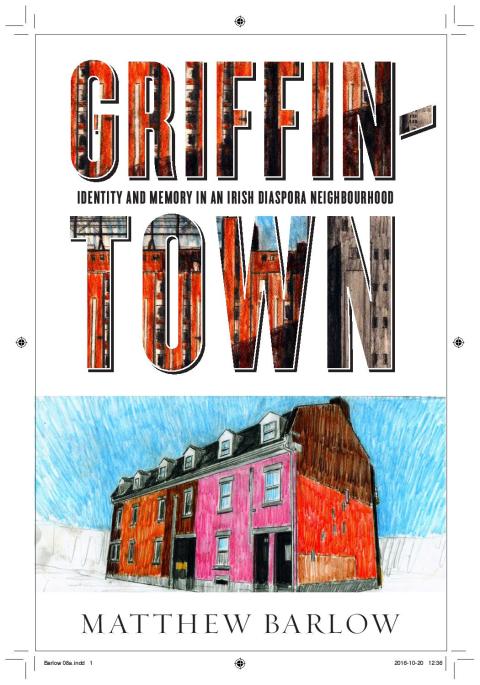
I just recently received the cover art for my forthcoming book, Griffintown: Identity & Memory in an Irish Diaspora Neighbourhood. It will be published in May 2017 by the University of British Columbia Press. To say I’m stoked is a minor understatement. The art work is by my good friend and co-conspirator on many things Griff, G. Scott MacLeod.
Gentrification: Plus ça change
September 14, 2016 § 2 Comments
I’m reading a book that is, for the lack of a better term, a biography of the Kremlin. I am at the part where the Kremlin, and Moscow itself, gets rebuilt after Napoléon’s attempt at conquering Russia. Moscow had been, until it was torched during the French occupation, a haphazard city; visitors complained it was Medieval and dirty. And it smelled. And not just visitors from Paris and Florence, but from St. Petersburg, too.
In the aftermath, Moscow was rebuilt along Western European lines, in a rational manner. And the city gentrified, the Kremlin especially:
This was definitely a landscape that belonged to the rich and the educated, to noblemen and ladies of the better sort. It is through the artists’ eyes that we glimpse the well-dressed crowds: the gentlemen with their top hats and shiny canes, the ladies in their bonnets, gloves, and crinolines. They could be leading citizens of any European state, and there is little sense of Russia (let alone romantic Muscovy) in their world.
Leaving aside the fact that there were no citizens of any European state in 1814, this sounds remarkably familiar. This is the same critique I have written many times about Griffintown and Montreal: as Montreal gentrifies, it is becoming much like any other major North American city.
But it is also true of gentrification in general. There is a part on the North Shore of Chattanooga, Tennessee, I really like. It finally dawned on me that it is because it reminds of me Vancouver architecturally, culturally, aesthetically, and in the ways in which the water (in this case the Tennessee River, not False Creek) is used by the redevelopment of this historically downtrodden neighbourhood. But. I could also be dropped into pretty much any North American city and see similarities: Toronto, Vancouver, Montreal, New York, Boston, Seattle, Portland (Oregon), Cincinnati, Cleveland, Buffalo, Chicago, Atlanta, Nashville. These are all cities (amongst others) where I have seen the same tendencies.
And, obviously, one aspect of gentrification is the cleansing of the city of danger and vice. Just like Moscow was cleaned up in the aftermath of 1812.
The Dystopian Promise of Neo-Liberalism
September 6, 2016 § 3 Comments
I spent late last week laid up with the flu. This means I read. A lot. I don’t have the patience for TV when I’m sick, unless it’s hockey. And since it’s late August, that didn’t happen. While laid up, I finished Jonathan Lethem’s early career Amnesia Moon, and also ploughed through Owen Hatherley’s The Ministry of Nostalgia. On the surface, these two books don’t have anything in common. The former is a novel set in a dystopic American future, whilst the latter is a polemic against austerity and the Conservative Party in the United Kingdom.
But both point to a golden era past. In the case of Amnesia Moon, obviously, given its dystopic future setting. And Hatherley is perplexed over the British right’s ability to control a public discourse of British history and memory.
In Amnesia Moon, the protagonist, a man named Chaos in some situations and Everett Moon in others, finds himself in Vacaville, which is actually a real place, about halfway between Sacramento and San Francisco in North Central California. In Vacaville, the residents are kept unstable by the central state: they are forced to move residences every Wednesday and Sunday. The majority of the residents work mind-numbing jobs, including Chaos’ love interest, Edie. The society is run by the gorgeous, who are featured on TV every night, parading about in an early version of reality TV. The people of Vacaville love and worship them. All of pop culture in Vacaville has been re-written to venerate the president and the ruling class. But most insidious, everything in Vacaville, for all residents, is based on ‘luck,’ a state-sponsored system based on a test administered by bureaucrats. Not surprisingly, those with the best luck are in the ruling classes. And then everyone else is organized and assigned their place in society based on their luck. Not surprisingly, our Edie has bad luck: her ex-husband has lost his mind, so she is a single mother with two children. She is also kept in place by a desperate government official, Ian Cooley, who is in love with her.
Compare this to Hatherley’s view of the United Kingdom in 2016:
We find ourselves in an increasingly nightmarish situation where an entirely twenty-first century society — constantly wired up to smartphones and the internet, living via complicated systems of derivatives, credit and unstable property investments, inherently and deeply insecure — appears to console itself with the iconography of a completely different and highly unlikely era, to which it is linked solely through the liberal use of the ‘A’ [i.e.: austerity] word.
See the similarities?
The Point of Privilege
September 1, 2016 § 2 Comments
Unless you’ve been living under a rock, you know that San Francisco 49ers quarterback Colin Kaepernick refused to stand for the national anthem last weekend. Asked to explain himself, Kaepernick said:
I am not going to stand up to show pride in a flag for a country that oppresses black people and people of color. To me, this is bigger than football and it would be selfish on my part to look the other way. There are bodies in the street and people getting paid leave and getting away with murder…This is not something that I am going to run by anybody. I am not looking for approval. I have to stand up for people that are oppressed. … If they take football away, my endorsements from me, I know that I stood up for what is right.
It is moments like this where I very much do feel like a stranger in a strange land in the United States. Where I come from, I have seen the ‘O Canada’ booed, cheered, ignored, and everything in between. We do tend to stand for our anthem, some of us sing it, some of us sing in both official languages. But not always. But here, in the US, everyone is expected to stand, hand over heart, and belt out ‘The Star Spangled Banner.’
Critics have been all over Kaepernick like Von Miller. They have said he’s grandstanding. That he’s trying to attract attention to his failing career. That he’s privileged. That he is disrespecting veterans. That his protest doesn’t count because he is biracial and was adopted by white people. And so on on and so on. Kaepernick is not the first black athlete to refuse to stand for the anthem. Jackie Robinson refused, for much the same reason. And, of course, so did Muhammad Ali. And Kaepernick is only the latest African American professional athlete to comment on the plight of black people in this country, following Dwyane Wade, Carmelo Anthony, and LeBron James. The most famous protest came from the WNBA, where a number of players, both black and white and including the entire Minnesota Lynx, wore Black Lives Matters t-shirts during warmups.
As for the criticism of Kaepernick, I can’t help but feel it rings hollow. The First Amendment guarantees us the right to freedom of expression. Critics say that Kaepernick lacks patriotism. But what’s the point of enforced patriotism? Doesn’t that just make it hollow and knee-jerk?
The fact that Kaepernick is biracial and was adopted by white parents when he was a small child has not been lost on critics. Former NFL safety and current NBC analyst Rodney Harrison claimed Kaepernick isn’t black. I’ve seen worse on Twitter. The argument here is that because of his upbringing, Kaepernick has no idea what it’s like to be black. This is specious logic. Of course he knows what it’s like to be black. He’s long since figured out that due to his skin colour, he can never be white. He has had police pull guns on him and a friend in college when moving out of an apartment. He has seen inequality in the world around him.
As for his declining career and the argument he is not Robinson or Ali. Sure, no one is Robinson or Ali. But Kaepernick is still a former Pro Bowl QB, who carried his team to the Super Bowl. Some argue that this makes it harder for the 49ers to cut him. I doubt it. The NFL is a business and its mercenary. The New York Giants’ kicker Josh Brown has acknowledged he beat his ex-wife, to the point where she called the police over 20 times for over 20 separate instances. Think the Giants care? Of course not. Teams have also cut players for supporting marriage equality and medicinal marijuana. And even if the 49ers cut him, maybe they’ll get a bit of flack, but life will go on. Levi Stadium is still sold out. Fans will still buy 9ers gear.
As for his privilege: Of course he’s privileged. That’s the whole point. Kaepernick has made something like $20 million in the NFL. He’s a very recognisable player. So he has a platform upon which to make a statement. Privilege works in many different ways. And the only way the world gets better is if those with privilege use it for good. And Kaepernick is using his to point out American hypocrisy regarding African Americans. Kaepernick refusing to stand for the anthem and then explaining his motivations clearly and patiently is a much bigger deal than the average punter refusing. Kaepernick’s privilege here is what allows the statement.
And that, gentle reader, is how privilege should be used.
Margaret Sanger Was Not Who You Think
August 29, 2016 § 3 Comments
Margaret Sanger might be the least understood, most slandered person in American history right now. Everyday in my Twitter feed, I see arguments over her, her beliefs on birth control, abortion, and African Americans. She has been latched onto by many on the right as an example of what is purely evil with liberals in the US. The problem is that the historical reality does not bear out this demonization of Sanger.
Nonetheless, the Twitter warriors persevere:
https://twitter.com/npnikk/status/767738900198588416
https://twitter.com/peddoc63/status/767060591412412416
This isn’t limited to Twitter. New Hampshire Representative William O’Brien (R) said that Sanger was a KKK member. Herman Cain, in his run for the GOP presidential nomination in 2011, claimed that the whole point of Planned Parenthood, which Sanger founded, had a genocidal mission to prevent black babies from being born. Last fall, Ben Carson, on his own run to secure the GOP nod, declared that Sanger’s goal was to eliminate African Americans.
The belief that Sanger was a white supremacist and a member of the KKK is a particularly popular one on the American political right This photo in particular has been circulating for years, after it was uploaded to the white supremacist site Stormfront in 2008:

While it is true that Sanger gave a speech to a women’s auxiliary of the KKK, both this photo and the supposed message of her talk are lies (she talked to the KKK women about birth control and called it “one of the weirdest experiences I had in lecturing.”). But, like any good lie or meme, this one is careful to be specific, even offering us a location. This photo is a photoshopped version of this:

Very different, no?
Yes, Sanger was a believer in eugenics. So, too, were Winston Churchill, Teddy Roosevelt, H.G. Wells. Even W.E.B. DuBois believed in aspects of the eugenics, though he was vehemently opposed to the racist viewpoint of many eugenicists, for perhaps obvious reasons. And, let us not forget that the eugenics movement was one predicated on classism, racism, and almost every other -ism you can imagine. At its purest, it was a movement devoted to purifying the human race of the disabled, criminal, addicted, and many others. And that also included racism. And, of course, eugenics is part of what drove the Nazis and the Holocaust.
Eugenics, however, was a mult-faceted movement. In the United States, it was not simply a belief in sterilization of ‘undesirables’ and other medical horrors. Rather, it also included a larger public health movement that sought to make Americans healthier through exercise, the creation of parks, eradication of STDs, clinics for maternal and infant health, immunization, and other aspects of healthy living. And this is where Sanger’s beliefs largely lay. In a 1957 interview with Mike Wallace, Sanger stated that
I think the greatest sin in the world is bringing children into the world — that have disease from their parents, that have no chance in the world to be a human being practically. Delinquents, prisoners, all sorts of things just marked when they’re born. That to me is the greatest sin — that people can — can commit.
Moreover, a belief in eugenics did not necessarily equate racism in the United States. To take the case of Sanger: she did not believe in segregation, she opposed Jim Crow in the South. She was a firm believer in birth control, and she thought all women, not just wealthy, white women, should have access to it. That includes poor white women, hence the talk to the KKK auxiliary. But this belief also brought her into African American neighbourhoods in New York, Chicago to open clinics there so African American women would also have access to birth control. She also worked closely with African American ministers in her attempts to educate black women.
In her actual organization, Sanger would not tolerate racism, and fired people for racism. More to the point, in 1966, Planned Parenthood honored Rev. Martin Luther King with its Margaret Sanger Award, which is granted to people who work to ensure reproductive health and rights. King was unable to accept the award in person, sending instead his wife, Coretta Scott King. She read his acceptance speech, which included this passage:
There is a striking kinship between our movement and Margaret Sanger’s early efforts. She, like we, saw the horrifying conditions of ghetto life. Like we, she knew that all of society is poisoned by cancerous slums. Like we, she was a direct actionist – a nonviolent resister.
Thus, in the end: Sanger was not a racist, she did not advocate mass sterilizations of anyone, let alone African Americans. She was not a member of the KKK. In reality, she was a rare person in the early 20th century: she believed in racial and class equality when it came to reproductive health. And she was dead-set opposed to racial segregation and Jim Crow.
Oh, Canada. :-(
August 26, 2016 § 5 Comments
Earlier this week, I wrote of some vile tweets about Prime Minister Justin Trudeau in the wake of the Tragically Hip’s final show in Kingston lat Saturday night. It turns out this was hardly the worst.
I read this article on The Walrus’ site last night. This is disgusting. There are people on Facebook blatantly calling for Trudeau’s assassination. Others, riffing on the Conservative Party of Canada’s pathetic milk carton ad, have descended to hoping the Prime Minister dies in an avalanche like his younger brother, Michel did in British Columbia in 1998.

I got into a discussion with an old friend on Facebook in the wake of Monday’s post. He was of the opinion that this animus against Trudeau was really nothing new, recalling the Mulroney era. I argued otherwise. That this IS new, it is the Americanisation of our political discourse.
I also wonder where the hell the RCMP is in all of this? Should it not be investigating calls to assassinate the Prime Minister?
The Problem with France’s Burkini Ban UPDATED!
August 25, 2016 § 8 Comments
135_C
So 16 towns and cities in France, all on the Mediterranean Coast, have banned the so-called burkini, a body-covering garment that allows devout Muslim women to enjoy the beach and summer weather. France, of course, has been positively rocked by Islamist violence in the past 18 months or so. So you had to expect a backlash. But this is just downright stupid.
There is a historical context here (read this whole post before lambasting me, please). French society believes in laïcité, a result of the French Revolution of 1789 and the declericisation of French society and culture in the aftermath. To this end, French culture and the French state are both secularised. Religious symbols are not welcome in public, nor are the French all that comfortable with religious practice in public. Now, this makes perfect sense to me, coming as I do from Quebec, which in the 1960s, during our Revolution tranquille, also underwent a process of declericisation. Quebec adopted the French model of a secular state.
But, in Quebec as in France, not all secularism is equal. Catholic symbols still exist all over France as a product of French history, to say nothing of the grand cathedrals and more humble churches that dot the landscape. But other religious symbols, they’re not quite as welcome, meric.
Nonetheless, it is in the context of this laïcité that the burkini ban arises.
But in practice, it is something else entirely. This is racism. This is ethnocentrism. And this is stupid. Just plain stupid. French Prime Minister Manuel Valis claims that the burkini is a symbol of the ‘enslavement of women.’ The mayor of Cannes claims that the burkini is the uniform of Muslim extremism. It is neither. And the burkini bans are not about ‘liberating’ Muslim women in France. They are not about a lay, secular society. They are designed to target and marginalize Muslim women for their basic existence in France.
In the New York Times this week, Asma T. Uddin notes the problem with these bans when it comes to the European Court of Human Rights and symbols of Islam. Back in 2001, the Court found that a Swiss school teacher wearing a head scarf in the classroom was ‘coercive’ in that it would work to proselytize young Swiss children. I kid you not. And, as Uddin reports, since that 2001 decision, the Court has continually upheld European nations’ attempts to limit the rights of Muslims, especially Muslim women, when it comes to dress.
Then there was the shameful display of the police in Nice this week, which saw four armed policemen harass a middle-aged Muslim woman on the beach. She was wearing a long-sleeved tunic and bathing in the sun. The police, however, issued her a ticket for not ‘wearing an outfit respecting good morals and secularism.’ Again, I kid you not.
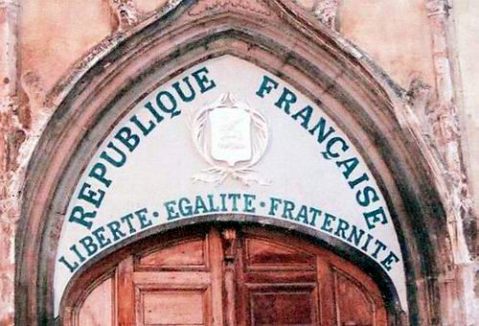
Laïcité is supposed to be not just the separation of church and state, but also the equality of all French citizens. Remember the national motto of the French republic: ‘liberté, éqalité, et fraternité.’ These are lofty goals. But the attempts to ban the burkini and attack Muslim women for their attire is not the way one goes about attaining liberté, nor égalité nor fraternité. Rather, it creates tiered culture, it creates one group of French who are apart from the rest. It is discriminatory and childish. And let’s not get on the subject of former French president Nicolas Sarkozy, who wants to run again, and promises to ensure that Muslim and Jewish students in the lycées eat pork.
I understand France’s concerns and fears. But attacking Islam is not the way to defeat terrorists who claim to be Muslim. It only encourages them. It is time for France to live up to its own mottos and goals. And Western feminists (and pro-feminist men) need to speak up on this topic.
UPDATE!!!!!
News comes this evening that the Deputy Mayor of Nice, and President of the Regional Council of Provence-Alpes-Côte d’Azur, has threatened to sue people who share images of the police attempting to enforce the burkini ban on social media. I kid you not. Christian Estrosi states that the images cause harm to the police (if that is true, that is not right, of course).
It is worth pointing out that it would be very difficult for Estrosi to find legal standing to launch a lawsuit, as French law allows citizens and media outlets to publish images and videos of the police and that, without a judicial order, French police cannot seize a photographer’s camera or phone.
Rue Shamrock, Montréal
August 24, 2016 § 1 Comment
When I was in Montreal in the spring, I was interviewed by Tricia Toso, a PhD candidate in Communications at Concordia University/Université du Québec à Montréal, about the Montreal Shamrocks Lacrosse Club. Tricia is a multi-media practitioner and does some pretty wild stuff, and this particular interview was for a podcast on rue Shamrock, which is up next to Marché Jean-Talon in the north end of the city. The market is on the site of the old Shamrocks LC grounds.
Tricia posted the podcast last week on Soundcloud, and it’s turned out brilliantly. You can listen to it here.

 Matthew Barlow