Feel-Good Advertizing and Colonialist Guilt

September 21, 2015 § 1 Comment

Technology companies have developed this annoying habit in advertizing lately.  I think Facebook was the first to do this, but now Microsoft is.  I’m not talking about the insanely pretentious ads Apple produces.  I’m talking about ads made to make white liberals in North America, Western Europe, and Oceania feel better about the world.  These ads show kids in the Developing World, and pretending that they have the same chances as kids in Western Europe and North America, because they have the internet, or Facebook, or Windows 10.

To this, I call bullshit.  Windows 10, like Facebook, is not going to lift a child out of poverty in Africa or Asia.  Nor, for that matter, in an inner-city neighbourhood of New York City or Berlin. Nor on an aboriginal reserve in Canada or the US or Australia.  These ads are simplistic and, well, frankly, stupid.

In order to correct poverty in the developing world (or parts of North America, Western Europe, and Oceania), children need a lot more than Facebook and Microsoft Windows 10.  They need poverty eradication programmes that encourage families to let their kids stay in school.  They need their parents to have an opportunity to succeed.  They need the chance to have good nutrition. They need a chance to go to university.  And that’s just a start.

Certainly, Facebook, Microsoft, and countless other technology companies, including Apple and Google, DO attempt to make a difference in the developing world, Western inner-cities, and even sometimes aboriginal reserves.  But these ads are little more than an attempt to assuage our collective first world guilt for the basic systems of exploitation that ensure that Bangladesh, for example.  Until we think about where our products come from (my MacBook, for example, upon which this blog post/rant is being written, was made in China), and we try to do something about it, nothing will change for all these bright kids in the developing world, no matter how much Facebook and Microsoft wants us to think otherwise.

On the upside, at least, Microsoft acknowledges at the end of the ad that we need to make sure these kids get what they need.  On the downside, the answer is Window 10.

“War is Hell”: Public History?

September 16, 2015 § 2 Comments
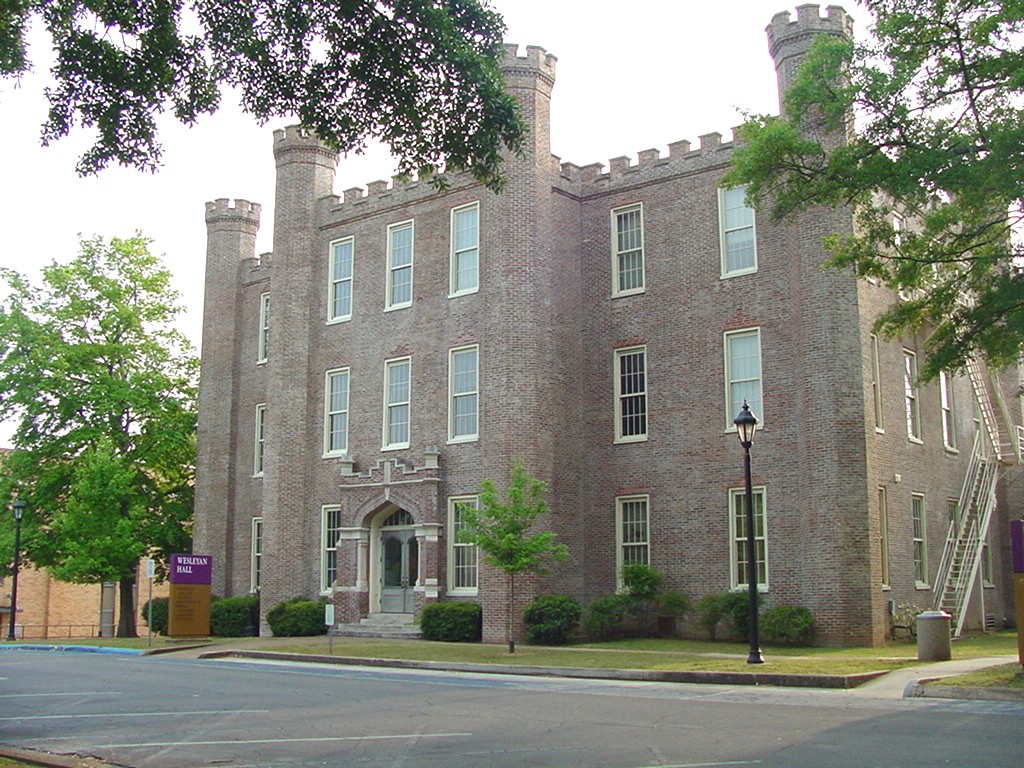
Wesleyan-hall-6-07

This is Wesleyan Hall on the campus of the University of North Alabama.  It is the oldest building on campus, dating back to 1855.  Florence, the town in which the university is located, was over-run by both Union and Confederate troops during the Civil War.  Parts of northern Alabama were actually pro-Union during the war and at least one town held a vote on seceding from the Confederate States of America.  This was made all the more complicated by the fact that the CSA was actually created in Montgomery, Alabama’s capital, and the first capital of the CSA, before it moved to Richmond, Virginia.

Wesleyan allegedly is still marked by the war, with burn marks in the basement from when Confederate troops attempted to burn it down in 1864.  A local told me this weekend that there is allegedly a tunnel out of the basement of Wesleyan that used to run down to the Tennessee River some 2 miles away.

The most famous occupant of Wesleyan Hall during the war was William Tecumseh Sherman.  It is in this building that he is alleged to have said that “war is hell” for the first time.  Of course, there are 18 other places where he is alleged to have said this.  And herein lies the position of the public historian.

Personally, I think Sherman said “war is hell” multiple times over the course of the Civil War, and why wouldn’t he?  From what I know of war, from literature, history, and friends who have seen action, war is indeed hell.  But I am less interested in where he coined the phrase than I am in the multiple locales he may or may not have done so.  What matters to me is not the veracity of the claim, but the reasons for the claim.

So why would people in at least 19 different locations claim that Sherman coined the phrase at that location?  This, to me, seems pretty clear. It’s a means of connecting a location to a famous event, to a famous man, to raise a relatively obscure location (like, say, Florence, Alabama) to a larger scale, onto a larger stage.  It ties the University of North Alabama to the Civil War.  But more than that, since we already know the then LaGrange College was affected by the war, but the attempt to claim Sherman’s most famous utterance creates both fame for the university, and makes the claim that something significant connected to the war occurred on the campus.  There are no major battlefields in the immediate vicinity of northern Alabama, so, failing that, we can claim Sherman declared that ‘war is hell’ in Wesleyan Hall.

Search Terms

August 28, 2015 § 3 Comments

Occasionally I look at the search terms that bring people to my blog.  I did so yesterday.  Amongst the usual searches that have to do with Ireland, Irish history, Montreal, Griffintown, etc., come two brilliant search terms: “somewhere a village idiot is missing its idiot” and “Stephen Harper inferiority complex.”  I can’t help but think that those two searches were related.

The Alabama Cultural Resource Survey

August 27, 2015 § 5 Comments

Alabama is one of the forgotten states.  The chair of my department calls it a fly-over state, a place you look down upon when flying from Miami to Chicago.  The only time Alabama ever seems to enter the national discussion is when something bad happens here, or when the University of Alabama or Auburn University’s football teams are ranked in the Top 25.  But otherwise, Alabama only makes the national news when bad things happen.  It’s like Alabama is the butt of a joke the entire country is in on.

Not surprisingly, I find this problematic.  Alabama is a surprisingly diverse place, both in terms of racial politics, politics in general, and culture.  Like most states, the population and culture is not homogenous. Where I live, in Northern Alabama, the area is more culturally attuned to Nashville and Tennessee as a whole, rather than Birmingham or Montgomery.

The town I live in, Florence, is an amazingly funky little college town.  We have a bustling downtown with restaurants, cafés, nightclubs, and stores.  There are a series of festivals here and the people of Florence take pride in their downtown, which has been rejuvenated despite the fact the city is ringed with stripmalls, including two Wal-Marts.  Like many other towns and cities across the state, Florence is the beneficiary of Main Street Alabama, dedicated to the revival of the urban cores of the state.

Across the Tennessee River are three more towns (Muscle Shoals, Sheffield, and Tuscumbia) and collectively, the region is known as The Shoals.  Anyone who knows anything about music knows about the rich musical history of the Shoals area.  Every time I turn around, I see more potential public history projects.

One thing that we are involved in is the Alabama Cultural Resource Survey. This project is a collaboration between the Public History programme here at the University of North Alabama and the Auburn University History Department.  Since I arrived in Alabama last month, I have been to a series of meetings around Northern Alabama talking to people about the survey and its importance in leading up to the 2019 Alabama Bicentennial.  This project is unique, I cannot think of anywhere else in the United States or Canada where such a project has been undertaken.  We are asking the people of Alabama to contribute to a telling of their history for the Bicentennial.  Eventually, this survey will migrate over to the Archives of Alabama website.

So far the response has been impressive.  Alabamians are anxious to tell their stories, multiple and multifold as they are, to have them entered into this massive database for themselves and their descendants to use.

But this isn’t the kind of thing that Alabama makes the news for.  Maybe that’s a good thing, we can keep all the good stuff going on in our state to ourselves.

Emmett Till and the Security of African Americans

August 25, 2015 § Leave a comment

My department is co-sponsoring an exhibit on the murder of Emmett Till at the Florence-Lauderdale Public Library.  The exhibit itself opened Monday, 17 August, and will end on 17 September.  Yesterday was the 60th anniversary of the events that led to Till’s murder at the hands of Roy Bryant and JM Milam.  In conjunction with the exhibit, our department is sponsoring a speaker’s series.  The first was last night, by my colleague, Ansley Quiros.  She talked about Till’s murder in the context of the long struggle for African-American freedom.

By coincidence, I was talking about slavery in my US history class today.  In particular, we were looking at the Fugitive Slave Laws of 1793 and 1850 and the fallout of Prigg v. Pennsylvania, an 1842 Supreme Court decision.  The case arose several years earlier when Prigg, a bounty hunter from Maryland, crossed into Pennsylvania to capture an alleged slave, Margaret Morgan.  Morgan had lived as a free-woman in Maryland (a slave state) before moving with her family (which included her husband, John, and at least three children) to Pennsylvania (a free state).  Prigg attempted to remove Margaret and her children to Maryland and into slavery.  When a Pennsylvania magistrate refused to grant Prigg a Certificate of Removal, due to her free status (John Morgan had been born free in Pennsylvania, as had at least one of their children), he and his partners kidnapped Margaret and her children.  They were indicted for kidnapping.  After a stand-off between Maryland and Pennsylvania, Prigg and his men were convicted.  Their conviction was upheld by the Pennsylvania Supreme Court.  The Supreme Court in DC, however, overturned their conviction. (All of this was too late for Margaret Morgan and her children, who were sold into slavery and never heard from again).

The Supreme Court found that the 1793 Fugitive Slave Law, which had been passed by Congress, was problematic in that it guaranteed due process for the alleged fugitive slave, which was part of the problem for Prigg in the Morgan case.  Due process had worked in favour of Margaret Morgan and her kids.  The Supreme Court, though, found that any state laws that impeded the right of slave owners were de facto unconstitutional.  And more than that, alleged escape slaves were not entitled to due process by dint of the fact that they were not citizens of the United States.

In practical terms, Prigg nationalized the racial basis of slavery.  Any African American in a slave state could be presumed to be a slave.  With Prigg, however, this was nationalized: any African American in a non-slave state could now be presumed to be a fugitive slave . And this is exactly what happened to Solomon Northrup, the man whose story was dramatized in the 2013 film, Twelve Years a Slave.  In short, the 175,000 free African Americans in the non-slave states were in danger of being kidnapped and sold into slavery due to Prigg.

Emmett Till, a fourteen-year old boy was killed a century after Solomon’s ordeal, for the crime of making a comment of an undetermined nature to Carolyn Bryant.  She testified at Till’s murderers’ trial (one of the accused was her husband) that Till had made lewd comments to her.  It is pretty obvious she perjured herself.  Till’s case sparked a national furore and helped to spark the Civil Rights movement of the 1950s and 60s.

But in the past several years, mass indignation has emerged again, as a series of unarmed black men have been murdered at the hands of the police and private citizens, with next to no impunity, as was the case with Till’s murderers (Bryant and Milam confessed to the crime in Look magazine in 1956, as they could not be re-tried for the crime they were acquitted for the year earlier).  When Trayvon Martin was murdered by George Zimmerman, a trigger-happy neighbourhood watch captain (who has since been in trouble with the law for a series of violent incidents), indignation erupted, made all the more intense when Zimmerman was acquitted.

President Obama was particularly struck by Martin’s murder, noting that if he had had a son, he might have looked like Martin. But this was just the first case of unarmed black men being murdered, the catalyst, so to speak of the #blacklivesmatter campaign.

After Ansley’s talk tonight, there were very few actual questions.  Instead, some older African Americans in the audience talked about their experiences growing up in the Jim Crow South.  It was powerful.  One man talked of growing up in DC, but whenever he went to Virginia, his mother reminded him to behave himself and to defer to white people. One woman talked movingly of her own experiences, including her mother being poisoned in a Mississippi restaurant after she attempted to take advantage of her civil rights in the 1960s.  This woman expressed fear for her grandchildren, about their security.

I couldn’t help thinking about what I was talking about in class today.  One of my students was incredulous about the Prigg decision and the consequences of it: she noted that African Americans were forced to live in fear.  There wasn’t much I could say in response to that.  She also drew on our previous class, noting that slavery was a system based on mutual terror.  The slaves were terrorized into compliance and the slave owners were terrified of a slave revolt.  Another student then noted that African Americans have never had much cause to feel much freedom.  Listening to these elders speak tonight after Ansley’s talk brought it home very powerfully for me.

Remembering the Victims in Charleston

June 23, 2015 § 7 Comments

Sometime last week, someone in my Facebook world posted a Morrissey video.  I haven’t thought about Morrissey in a long time, other than when he says something profoundly stupid and embarrassing in public.  And then I think, “Oh yeah, there was a time when Mozzer was my favourite pop star.”  And then I feel slightly embarrassed.  But.  This video was “The Last of the International Playboys,” from Mozza’s 1990 classic, Bona Drag. 

The lyrics:

In our lifetime,
Those who kill,
The newsworld hands them stardom

have really caught my attention in the past few days.

Last week, something horrible and heinous happened in Charleston, South Carolina.  If you live under a rock and don’t know what happened, follow this link.  This act of domestic terrorism appalled, sickened, and depressed me.  This was just one more example of why #blacklivesmatter.  I felt hopeless, powerless, and lost. It doesn’t matter if you’re American or not (I’m not, I just live here).  And the tut-tutting from Canadians, Brits, and others about American violence is equally pointless.  On the other hand, President Obama is right: this doesn’t happen in other advanced nations.

And now, I am completely inundated with images of the racist jackass who committed this terrorist act in Charleston. I can’t escape it. I can’t escape him (I will not name him, I refuse. Why? Read this about the Montréal Massacre of 1989).  My Facebook feed, Twitter, the basic internet: All I see is this terrorist’s stupid, smirking face. I don’t want to.  I don’t want to see him, I don’t want to hear from him, I don’t care.  Others can care, they can worry why he committed an act of terror in African Methodist Episcopal Church (a Church! A place of sanctuary!) in Charleston.

This terrorist is being given a form of stardom for his heinous acts.  What should matter is the victims.  They are:

  • Cynthia Marie Graham Hurd, 54. She was a manager of the Charleston County Public Library system; her brother is Malcolm Graham, a member of the South Carolina Senate.
  • Susie Jackson, 87. A member of the church choir and a veteran of the civil rights movement.
  • Ethel Lee Lance, 70.  She was the church sexton.
  • Depayne Middleton-Doctor, 59. A school administrator and admissions co-ordinate at Southern Wesleyan University.
  • Clementa Pinckney, 41.  She was the church pastor and a South Carolina State Senator.
  • Tywanza Sanders, 26.  He was Susie Jackson’s nephew.
  • Daniel Simmons, 74.  He was a pastor at the Greater Zion African Methodist Episcopalian Church in Awendaw, South Carolina.
  • Sharonda Coleman-Singleton, 45. Also a pastor, she was a speech therapist and track and field coach at Goose Creek High School.
  • Myra Thompston, 59.  She was a Bible studies teacher.

That’s nine people.  Think of the constellations of their relationships, partners, aunts, uncles, parents, kids, nieces, nephews, co-workers, students, friends, etc.  Think of all the people who are grieving.  That is more important than the terrorist who killed them.

Filthy Lucre

June 15, 2015 § 1 Comment

Last week, news broke that the Sex Pistols, those paragons of punk rock, were going to be featured on new Virgin Money credit cards in the UK. Not surprisingly, the response has been pretty passionate in attacking the Pistols for “selling out.” Even I posted a firmly tongue-in-cheek tweet:

https://twitter.com/Matthew_Barlow/status/608287409420304385

But in all honesty, I don’t quite see what all the hubbub is about.  Johnny Rotten and the Sex Pistols were pretty clear about their motivations in the song, “Pretty Vacant” off Never Mind the Bollocks:

I look around your house, you got nothing to steal
I kick you in the brains when you get down to kneel
And pray, you pray to your god

And if that wasn’t obvious enough, the 1996 reunion tour, which spanned 6 months, was entitled “The Filthy Lucre Tour.”  There’s even a live album.  The Pistols were always about making money, that’s not changed, and, frankly, despite all the hot air ridiculous marketing lines from Virgin Money, a Sex Pistols credit card is about the most punk rock thing the band can do at this point. C’mon, they’re a bunch of punters in their 50s dancing around like they’re still 22.  What else did you expect?

Success at Failure!

June 12, 2015 § 2 Comments

Last spring at the NCPH’s annual conference, I, along with colleagues, presented a roundtable discussion on what happens when we encounter failure as public historians.  The roundtable was a huge success, leading to other conference-goers referring to me as “Mr. Failure” for a day or two afterwards. One of those colleagues, Margo Shea, and I just had a short piece published in The American Historian.  You can read it here.  As always, let me know what you think in the comments section.

Irish History

April 23, 2015 § 4 Comments

It’s the tail end of the semester, and I’m marking stacks upon stacks of papers.  I am teaching Irish History this semester, for the 5th time in the past 3 years.  Irish history tends to depress me, as it is largely a story of imperialism and resistance, with great atrocity on both sides.  The Famine, in particular, gets me down.  The ambiguity of Irish history is difficult to come to terms with, as well.  It’s also very hard to teach Irish history, especially here in the diaspora.  Whenever I’ve taught Irish history, my class is overwhelmingly (over 90%) comprised of the sons and daughters of the diaspora.

It’s difficult because we of the diaspora have been raised on simplistic narratives of British malfeasance and Irish heroism; these stories are deeply ingrained in the American and Canadian Irish diasporas.  But, Irish history is massively complicated.  My students have a hard time dealing with the fact that the Irish continually lose when they rebel, in large part because of in-fighting or because only a small part of the country rises up.  I explain, partly to remind myself, that this is because the idea of Ireland as a country is a 19th-century creation, growing out of the Catholic Emancipation and Repeal movements led by Daniel O’Connell.

O’Connell is the one who re-drew the “Irish nation” from one that was Protestant (the Ascendancy, of course) to one that was Catholic.  But even then, Ireland was a divided nation, by religion (as it was during the Ascendancy, obviously).  So the idea of a unified Ireland is an elusive one.

My students handed in papers on Sebastian Barry’s brilliant novel, A Long, Long Waylast week.  It is the tale of young Willie Dunne, the son of the Chief of Police of Dublin, who enlists in the Royal Dublin Fusiliers in the First World War.  Willie is shipped off to Flanders to fight the Germans, like a few hundred thousand of his fellow Irish Catholics did.  But, he is subjected to British anti-Irish attitudes on the part of many of his commanding officers.  And when he’s home on furlough at Easter 1916, he’s pressed into action against the rebels at the GPO in Dublin.  He’s confused.  He doesn’t understand who he’s fighting, thinking, at first, maybe the Germans have invaded Ireland.  When he realizes he’s shooting at fellow Irish men, he’s even more confused.  And, like most Irish Catholics, he gets radicalized in the aftermath of the Easter Rising, when the British respond with draconian punishments for the rebel leaders.  This leads to a rift with his father, who is a Unionist, despite being Catholic.

One of my students writes of an epiphany he has had regarding Irish history.  He says it’s easy to be anti-British when you read and learn about the atrocities they committed in Ireland.  But, when you learn of the brutality of the rebels during the Irish Revolution, things become more complicated.  He’s left rather conflicted about Irish history, about the justness of either side, or the moral evil of both sides.

Of course, it need not be an either/or situation. I always fall back on Joep Leerson’s idea that ambiguity is part and parcel of Irish history, it is a “both/and” situation.  And, ultimately, I have been reminded as to why I love Irish history: it is ambiguous, it is complicated, it is not simple.

And I suppose this is why I love teaching; feeling worn out from teaching all this Irish history, I am energized reading of my student’s epiphany.

Ben Affleck Speaks

April 22, 2015 § 10 Comments

Well, Ben Affleck has spoken.  And he has said what I would have hoped he’d have said the first go around.  He posted on his Facebook page last evening:

After an exhaustive search of my ancestry for “Finding Your Roots,” it was discovered that one of my distant relatives was an owner of slaves.

I didn’t want any television show about my family to include a guy who owned slaves. I was embarrassed. The very thought left a bad taste in my mouth.

Skip decided what went into the show. I lobbied him the same way I lobby directors about what takes of mine I think they should use. This is the collaborative creative process. Skip agreed with me on the slave owner but made other choices I disagreed with. In the end, it’s his show and I knew that going in. I’m proud to be his friend and proud to have participated.

It’s important to remember that this isn’t a news program. Finding Your Roots is a show where you voluntarily provide a great deal of information about your family, making you quite vulnerable. The assumption is that they will never be dishonest but they will respect your willingness to participate and not look to include things you think would embarrass your family.

I regret my initial thoughts that the issue of slavery not be included in the story. We deserve neither credit nor blame for our ancestors and the degree of interest in this story suggests that we are, as a nation, still grappling with the terrible legacy of slavery. It is an examination well worth continuing. I am glad that my story, however indirectly, will contribute to that discussion. While I don’t like that the guy is an ancestor, I am happy that aspect of our country’s history is being talked about.

Ben Affleck

Obviously, I wish he had said this last October, but kudos to Affleck to taking this head on.  I don’t think anyone can have issue with anything he (or, more likely his PR people) say here.  I would like, though, to see him do  more than just make this statement, I would like to see a Hollywood mega star actually start a discussion on the legacies of slavery.  But.  I suppose I’m asking for too much.